
The right USB hub can turn a port-limited laptop or desktop into a more capable workstation. Whether you need extra USB-A connections, USB-C expansion, HDMI output, or powered access for multiple peripherals, the best choice depends on your devices and daily workload.
We selected 10 USB hubs ranging from compact travel models to high-capacity powered hubs, emphasizing port selection, transfer speeds, power handling, convenience, and compatibility.
Best 10 USB Hubs Picks for 2026
Best Compact USB Hub

- Four USB-A ports
- Up to 5Gbps data transfer
- Slim 2-foot-cable design
Best For: Everyday USB-A peripherals
Best USB-C Multiport Hub

- 4K HDMI output
- 100W USB-C PD input
- Includes three USB-A ports
Best For: USB-C laptops and mobile workstations
Best Powered USB-A Hub

- Four 5Gbps USB-A ports
- Optional 5V USB-C power input
- Includes a 2-foot cable
Best For: Stable USB-A peripheral expansion
Best Powered USB Hub for Desks
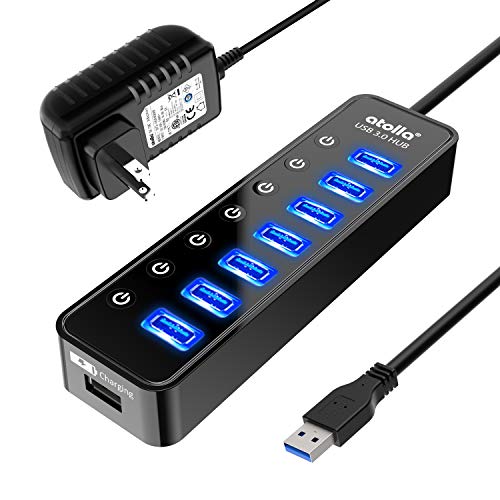
- Seven 5Gbps data ports
- Dedicated smart charging port
- Individual on/off switches
Best For: Multi-device desktop workstations
Best for Easy Setup

- Adds four USB-A ports
- Up to 5Gbps transfer speeds
- Slim, lightweight design
Best For: Travel and everyday USB-A peripherals
Best Versatile USB-C Hub

- Includes HDMI and card readers
- Supports up to 100W PD charging
- Offers USB-A and USB-C data ports
Best For: USB-C laptops with display and storage needs
Best USB Hub With Switches

- Seven USB 3.0 ports
- Individual switches and indicator lights
- Up to 5Gbps data transfer
Best For: Multi-device desktop and gaming setups
Best Long-Reach USB Hub

- Seven USB-A ports for peripherals and storage
- 5Gbps USB 3.0 data transfer
- 4-foot cable and aluminum enclosure
Best For: Desktop setups needing multiple USB-A data connections
Best USB-C Hub for Laptops

- 4K HDMI output at 60Hz
- SD/TF readers plus USB-A and USB-C data ports
- Up to 85W laptop charging via USB-C PD
Best For: Compatible USB-C laptops, MacBooks, and mobile workstations
Best Powered USB Hub
Wenter 11-Port Hub with Switches

- Ten USB 3.0 data ports and one charging port
- Individual switches with LED indicators
- Includes 12V/3A power adapter
Best For: Powered desktop workstations with many USB peripherals
Best Compact USB Hub – Anker 4-Port USB 3.0 Hub
If you need a straightforward way to add ports, this Anker model is one of the simpler USB hubs for laptops, desktops, keyboards, mice, and flash drives. It provides four USB-A ports with data speeds up to 5Gbps in a slim, lightweight design.
Best For: Users who need four extra USB-A data ports for everyday peripherals.
Pros:
- Four USB-A ports expand one computer port.
- Supports data transfer speeds up to 5Gbps.
- Slim, 1.28-ounce design with a 2-foot cable.
- Includes an 18-month warranty.
Cons:
- Not designed to charge connected devices.
- Provides USB-A connectivity only.
This is a practical choice for expanding basic USB connectivity without adding video output or charging features. Its compact build and fast data support suit a simple desk or travel setup.
Best USB-C Multiport Hub – UGREEN 5-in-1 USB-C Adapter
This UGREEN adapter is one of the more versatile USB hubs for USB-C laptops and tablets. It combines 4K HDMI, USB-C Power Delivery input up to 100W, one 5Gbps USB-A port, and two USB-A ports rated at 480Mbps.
Best For: USB-C MacBook and compatible laptop users who need display output, charging pass-through, and peripheral connectivity.
Pros:
- Includes 4K HDMI output.
- Supports up to 100W USB-C Power Delivery.
- Offers one 5Gbps USB-A port and two 480Mbps USB-A ports.
- Portable aluminum construction with plug-and-play operation.
Cons:
- USB-A ports do not all support the same transfer speed.
- Compatibility is centered on USB-C devices.
Choose this model when a basic port splitter is not enough. Its HDMI and PD features make it better suited to a compact workstation or mobile setup than a hub intended only for USB-A accessories.
Best Powered USB-A Hub – Acer 4-Port USB 3.0 Hub
This Acer hub expands a USB-A connection into four USB 3.0 data ports, making it useful for peripherals such as flash drives, keyboards, mice, and printers. A USB-C power input can help stabilize data transfer when using higher-demand devices such as hard drives.
Best For: Laptop and desktop users who want four USB-A ports with optional supplemental power.
Pros:
- Four USB 3.0 ports support speeds up to 5Gbps.
- USB-C power input can improve stability for connected hard drives.
- Works with Windows, macOS, ChromeOS, and Linux.
- Includes a 2-foot cable, LED indicator, and plug-and-play setup.
Cons:
- Wall charger and power cable are not included.
- The USB-C port supplies power only; it does not transfer data or charge other devices.
The Acer is a useful middle ground for buyers who want fast USB-A expansion and the option of external power. Remember to use a suitable 5V USB-C power source when extra stability is needed.
Best Powered USB Hub for Desks – Atolla 7-Port USB 3.0 Hub
For a busy desk with many accessories, this Atolla unit is one of the more capable powered USB hubs in the group. It provides seven USB 3.0 data ports, a dedicated smart charging port, individual on/off switches, and a 5V/4A power adapter.
Best For: Desktop users managing multiple peripherals, storage devices, and charging needs from one hub.
Pros:
- Seven USB 3.0 data ports support speeds up to 5Gbps.
- Dedicated charging port can provide up to 2.4A with the included adapter.
- Individual switches make it easy to control connected devices.
- Includes a power adapter and 100cm USB cable.
Cons:
- Requires external power and is less travel-focused than compact hubs.
- The dedicated charging port is separate from the seven data ports.
This is the strongest fit for a permanent workstation where port quantity and control matter more than minimal size. The included power supply helps support a larger collection of connected USB devices.
Best for Easy Setup – UGREEN 4-Port USB 3.0 Hub
If you need a simple way to add ports, this compact UGREEN USB hub turns one USB-A connection into four USB-A ports. Its USB 3.0 interface supports transfer speeds up to 5Gbps, making it practical for everyday peripherals and file transfers.
Best For: Travelers, laptop users, and anyone who needs extra USB-A ports for keyboards, mice, flash drives, or similar devices.
Pros:
- Expands one USB-A port into four USB-A ports.
- Supports data transfer speeds up to 5Gbps.
- Compact, 0.4-inch-thick design weighs 33g.
- Plug-and-play compatibility with Windows, macOS, Linux, and Chrome OS.
Cons:
- Provides USB-A ports only, with no HDMI, card readers, or USB-C connectivity.
- It is intended for peripherals and data, not described as a powered hub for high-demand devices.
This UGREEN model is a straightforward choice among USB hubs when portability and extra USB-A connections matter more than a broad selection of ports.
Best Versatile USB-C Hub – Acer 7-in-1 USB-C Adapter
This Acer USB-C hub is designed for users who need more than basic USB expansion. It combines USB-A and USB-C data ports with HDMI, SD and microSD readers, plus USB-C Power Delivery for a more flexible laptop or tablet setup.
Best For: USB-C laptop users who connect displays, memory cards, external peripherals, and a charger through one adapter.
Pros:
- Seven-in-one design includes HDMI, two USB-A 3.1 ports, USB-C data, SD, microSD, and USB-C PD.
- Supports HDMI output up to 4K at 30Hz when the host USB-C port supports DP Alt Mode.
- USB-C Power Delivery supports up to 100W charging.
- Aluminum housing provides durability and heat dissipation.
Cons:
- HDMI output is limited to 4K at 30Hz and does not support 4K at 60Hz or 2K at 144Hz.
- The host device must support compatible USB-C video and PD functions.
- The USB-C data port does not support video or audio.
Among USB hubs, this Acer adapter stands out for combining display output, card readers, charging, and 5Gbps data in one compact aluminum unit, provided your device supports the required USB-C features.
Best USB Hub With Switches – ONFINIO 7-Port USB 3.0 Hub
The ONFINIO USB hub adds seven USB 3.0 ports to a computer while giving each connection its own on/off switch and indicator light. That makes it useful for controlling frequently connected peripherals without repeatedly unplugging them.
Best For: Desktop, laptop, and gaming setups with several USB peripherals that benefit from individual port control.
Pros:
- Provides seven USB 3.0 ports from one connection.
- Individual on/off switches and indicator lights simplify device management.
- Supports data transfer speeds up to 5Gbps.
- Works with Windows, macOS, Linux, and Chrome OS and supports hot swapping.
Cons:
- Power-hungry devices may require an additional power supply.
- The plastic hub is larger than ultra-compact four-port designs.
- It does not provide HDMI, USB-C, or memory-card ports.
This ONFINIO model is a practical pick among USB hubs for managing many USB-A accessories, especially when independent switches are more useful than multimedia expansion.
Best Long-Reach USB Hub – 7-Port USB 3.0 Aluminum Hub
If you need more USB-A connections without crowding your desk, this 7-port USB hub adds flexible expansion for desktops and laptops. Its 4-foot cable helps with placement, while USB 3.0 supports data transfer speeds up to 5Gbps.
Best For: Desktop setups that need several USB-A data ports and extra cable length.
Pros:
- Seven USB-A ports for connecting peripherals and storage devices.
- USB 3.0 data transfers up to 5Gbps.
- Aluminum enclosure and 4-foot cable support a stable, flexible setup.
- Compatible with Windows, macOS, Linux, Chrome OS, and Unix.
Cons:
- Supports data transmission only and is not designed for charging.
- The Type-C port is specified for power delivery to connected devices, not general charging use.
This hub is a practical choice for expanding a desktop or laptop with multiple USB-A accessories. Choose it when port count and cable reach matter more than video output or laptop charging.
Best USB-C Hub for Laptops – Anker 7-in-1 Hub with 4K HDMI
This compact USB hub is designed for USB-C laptops that need one-cable access to displays, storage, memory cards, and power. It combines 4K HDMI output, USB-A and USB-C data ports, SD and TF readers, and USB-C Power Delivery input in one metal adapter.
Best For: USB-C laptops and MacBooks that support DisplayPort Alt Mode and Power Delivery.
Pros:
- 7-in-1 design includes HDMI, two USB-A ports, USB-C data, SD, and TF card slots.
- HDMI supports 4K video at 60Hz.
- USB-A and USB-C data ports support transfer speeds up to 5Gbps.
- Supports up to 85W laptop charging through the USB-C PD input.
Cons:
- Video output is available only through HDMI; the USB-C port is data-only.
- Charger is not included.
- Requires a compatible USB-C device with video and Power Delivery support for the relevant features.
For compatible USB-C computers, this is a versatile travel and desk hub with useful display, card-reader, data, and charging connections. Its main limitation is that the host device must support the required USB-C standards.
Best Powered USB Hub – Wenter 11-Port Hub with Switches
When a standard USB hub cannot provide enough connections or power, this powered USB hub offers 11 ports alongside a dedicated charging port. Individual switches and LED indicators make it easier to control connected devices without repeatedly unplugging them.
Best For: Desktops with many USB peripherals, external drives, printers, or devices that benefit from powered expansion.
Pros:
- Ten USB 3.0 data ports plus one dedicated smart-charging port.
- Data transfers reach up to 5Gbps.
- Individual on/off switches and LED status indicators simplify device management.
- Includes a 12V/3A power adapter and longer USB and power cables.
Cons:
- Requires an AC power adapter, so it is less portable than an unpowered hub.
- Uses a plastic enclosure.
- The supplied notes list varying power-cable lengths, so buyers should verify the included configuration.
This is the strongest fit for a busy workstation where port quantity, external power, and per-device control are priorities. It supports a broad range of USB generations and operating systems, but its powered design is better suited to a fixed desk than travel.
How We Picked These USB Hubs
We compared the selected models by looking at port count, connector type, stated USB speeds, power features, physical design, and the kinds of devices they support. The lineup includes simple USB-A splitters, USB-C multiport adapters, and powered hubs designed for several peripherals at once.
We also considered practical details such as cable length, individual port switches, indicator lights, charging support, HDMI output, and whether a hub is better suited to travel, office use, or a stationary desktop setup. Specifications can vary by computer, operating system, cable, and connected device, so confirm compatibility before buying.
Quick Comparison
- Best for basic expansion: A compact four-port USB-A hub is a sensible choice for a mouse, keyboard, flash drive, and similar accessories.
- Best for USB-C laptops: A multiport USB-C adapter with HDMI and Power Delivery can add display output, charging pass-through, and traditional USB ports.
- Best for many accessories: An eight-, 10-, or 11-port powered hub provides more capacity and steadier power for several connected devices.
- Best for desktop organization: Longer cables, individual switches, and status lights make a larger hub easier to manage at a workstation.
Key Buying Factors for USB Hubs
Port Type and Compatibility
Check whether your computer has USB-A, USB-C, or Thunderbolt ports, and make sure the hub’s host connector matches. A USB-C hub may offer more functions, but not every USB-C port supports video output or charging.
Data Transfer Speed
USB 3.0 and USB 3.2 Gen 1 hubs commonly advertise speeds up to 5Gbps under suitable conditions. The actual result is limited by the computer, cable, storage device, and other active connections. For keyboards and mice, speed matters less than it does for external SSDs and large file transfers.
Power Requirements
Bus-powered hubs draw power from the computer and are convenient for low-demand accessories. Powered models use an external adapter and are generally better for multiple drives, webcams, hard-to-power peripherals, or frequent charging. A charging port may not provide the same function as full laptop Power Delivery.
Video and Charging Features
If you want HDMI output or pass-through charging, verify the supported resolution, refresh rate, and wattage. Features such as 4K at 60Hz depend on the host device and connection standards, not just the hub’s product listing.
Who Should Buy Which USB Hubs?
Travelers and minimalists should choose a small four-port hub that adds the connections they need without taking up much space. USB-C laptop owners who connect monitors, storage, and accessories should consider a multiport adapter with HDMI and Power Delivery. Creative professionals and desktop users managing several devices should prioritize an externally powered hub with enough ports and a suitably long cable. Finally, users who frequently disconnect peripherals may appreciate individual switches and indicator lights, which make power and cable management more convenient.