
The best docking stations turn a laptop into a more capable desktop by adding displays, USB ports, networking, and charging through a single connection.
We selected 10 docking stations for different setups, from compact USB-C hubs to high-bandwidth Thunderbolt 4 models built for multiple 4K screens.
Best 10 Docking Stations Picks for 2026
Best Value Dual-Monitor Dock
Anker 8-in-1 USB-C Docking Station

- Dual HDMI supports up to two 4K displays
- Includes Ethernet, SD, microSD, and USB-A ports
- Up to 85W pass-through charging
Best For: USB-C laptop users building an affordable dual-monitor workspace
Best for Business Workstations
Dell Pro Thunderbolt 4 Smart Dock

- Supports up to four 4K displays
- Up to 130W Dell laptop charging
- Includes 2.5GbE and remote Wi-Fi management
Best For: Managed offices and high-performance multi-monitor workstations
Best High-Power USB-C Dock
Anker Prime 14-in-1 Docking Station

- 14-in-1 expansion with dual HDMI
- 160W total output for up to four devices
- Up to 10Gbps data transfer
Best For: Power users managing multiple peripherals and dual displays
Best Triple-Display Dock
Plugable USB-C 12-in-1 Docking Station

- Supports three extended HDMI displays
- DisplayLink expands Mac and PC monitor options
- 100W charging with six USB 3.0 ports
Best For: Triple-monitor workstations and hybrid office deployments
Best Office Dual-Display Value
Dual 1080p HDMI Universal Dock

- Drives two HDMI displays up to 1920x1200
- Works with USB-C and USB-A laptops
- Includes 10 ports for office connectivity
Best For: Mixed-device office fleets needing dual monitors
Best for Triple-Monitor Workstations
13-in-1 USB-C Dock with 100W Charging
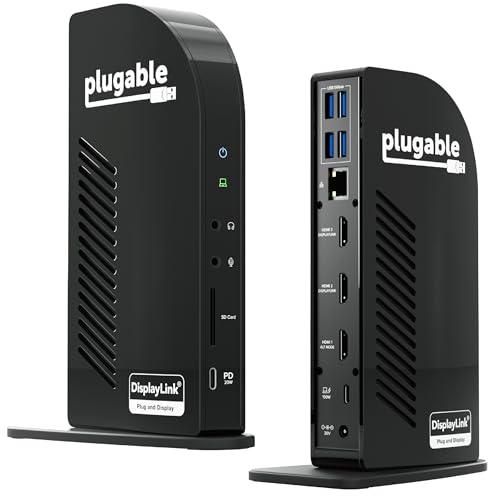
- Supports up to three extended HDMI displays
- Provides 100W laptop and 20W device charging
- Offers 13 ports for a complete desk setup
Best For: Multi-monitor desks requiring charging and broad connectivity
Best Managed Business Dock
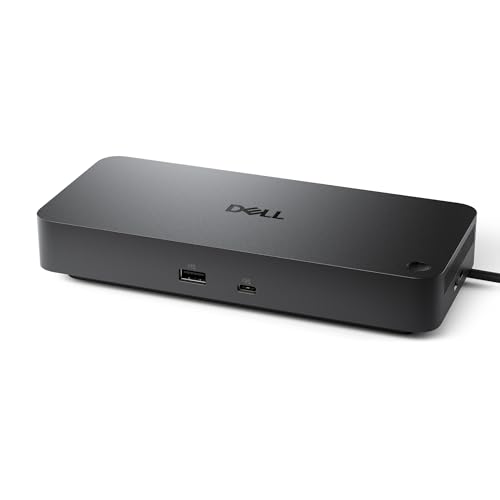
- Supports up to four high-resolution displays
- Provides up to 100W laptop power delivery
- Built for manageability and commercial deployments
Best For: IT-managed offices using compatible business PCs
Best Budget Dual-Monitor Dock

- Dual HDMI output for HD productivity displays
- Gigabit Ethernet, audio, and six USB ports
- Two-year coverage with lifetime support
Best For: Windows, Mac, and ChromeOS productivity setups
Best Feature-Packed Dock

- 14 ports with HDMI, DisplayPort, Ethernet, and card readers
- Flexible multi-monitor output combinations
- Up to 100W USB-C Power Delivery
Best For: Multi-monitor workstations requiring maximum connectivity
Best Dual-4K USB-C Dock

- Dual HDMI outputs support 4K at 60Hz
- Up to 90W laptop charging from 100W input
- Fast USB ports plus SD and microSD readers
Best For: USB-C laptop users building a dual-4K HDMI workstation
Best Value Dual-Monitor Dock – Anker 8-in-1 USB-C Docking Station
If you need practical docking stations for a USB-C laptop and two external displays, this Anker 8-in-1 hub combines dual HDMI, Ethernet, card readers, USB-A ports, and pass-through charging in a compact design. It supports one 4K display at 60Hz or two at 4K 30Hz, though the charger and USB-C cable for power delivery are not included.
Best For: Home offices and everyday Windows or ChromeOS users who want dual-display connectivity and essential expansion from one USB-C port.
Pros:
- Two HDMI ports support up to two 4K displays at 30Hz.
- Includes Ethernet, SD and microSD readers, and two USB-A data ports.
- Supports up to 85W USB-C pass-through charging.
Cons:
- Dual-monitor output is mirrored on macOS.
- Not compatible with Linux.
- 100W PD wall charger and USB-C cable are required but not included.
This is a compact, capable choice when dual HDMI output and card-reader access matter more than premium Thunderbolt features. Verify your laptop supports DP Alt Mode and Power Delivery before buying.
Best for Business Workstations – Dell Pro Thunderbolt 4 Smart Dock
Among high-end docking stations, the Dell Pro Thunderbolt 4 Smart Dock stands out for demanding office and workstation setups. It can drive up to four 4K displays, provides 130W charging for Dell systems, and adds fast networking, Thunderbolt 4 connectivity, and remote management features.
Best For: Business users, creative professionals, and managed IT environments that need multi-display support, high-power charging, and security controls.
Pros:
- Supports up to four 4K monitors through HDMI, DisplayPort, USB-C, and Thunderbolt 4.
- Delivers up to 130W to Dell laptops and up to 96W to other devices.
- Offers 2.5GbE, Wi-Fi management, WPA3, PXE boot, and MAC filtering.
- Uses 65% recycled plastic and fully recycled packaging.
Cons:
- Its feature set may be excessive for basic home-office needs.
- Full functionality depends on compatible USB-C, Thunderbolt 4, HDMI, or DisplayPort devices.
This dock is designed less as a simple port expander and more as a managed workstation platform. It is a strong fit for organizations standardizing desks, displays, security, and remote administration.
Best High-Power USB-C Dock – Anker Prime 14-in-1 Docking Station
This Anker Prime docking station is built for users who need many connections and substantial charging capacity. Its 14-in-1 design combines dual HDMI, Ethernet, audio, multiple USB ports, and up to 160W total output, while data ports reach speeds of up to 10Gbps.
Best For: Busy desks with several peripherals, dual monitors, and multiple devices that benefit from high total charging output.
Pros:
- Provides 14-in-1 connectivity with dual HDMI, Ethernet, audio, and USB expansion.
- Offers up to 160W total output and can charge up to four devices simultaneously.
- Supports data transfer speeds up to 10Gbps.
- Includes a 100W, 10Gbps upstream USB-C cable and a 24-month warranty.
Cons:
- Dual HDMI output reaches 2K at 60Hz with DP 1.4 laptops and 1080p at 60Hz with DP 1.2 laptops.
- Displays are mirrored on macOS.
- Not compatible with Linux or 5120×1440 monitors.
The Prime dock is a good choice when one compact connection point needs to handle peripherals, displays, and charging. Check your laptop’s DP Alt Mode version and monitor requirements before purchasing.
Best Triple-Display Dock – Plugable USB-C 12-in-1 Docking Station
For users who need three external screens, this Plugable docking station combines native USB-C video output with DisplayLink technology. It supports one 4K display at 30Hz plus two 1080p displays at 60Hz, along with Gigabit Ethernet, six USB 3.0 peripherals, audio, and 100W Power Delivery.
Best For: Hybrid workers, analysts, presenters, and IT teams deploying triple-monitor workstations across Windows, macOS, and ChromeOS.
Pros:
- Supports up to three extended HDMI displays.
- Works with newer Apple Silicon MacBooks, including base models with single-display limitations.
- Includes six USB 3.0 ports, Gigabit Ethernet, audio, and 100W charging.
- Backed by North American-based technical support and a compatibility guarantee.
Cons:
- macOS requires driver installation for the DisplayLink functionality.
- Maximum display setup combines one 4K 30Hz screen with two 1080p 60Hz screens.
- Not compatible with Linux, and HDCP is not supported.
This is a practical triple-monitor solution for mixed-device offices, especially where Apple Silicon laptops need more than their native display support. Confirm driver, HDCP, and operating-system requirements for your workflow.
Best Office Dual-Display Value – Dual 1080p HDMI Universal Dock
This Plugable docking station is a practical choice for standardizing Windows, macOS, and ChromeOS office workstations. It connects through either USB-C or USB-A and supports two HDMI displays, making it useful for productivity setups without requiring laptop charging.
Best For: Office users and IT teams deploying dual-monitor workstations across mixed laptop fleets.
Pros:
- Supports two HDMI displays up to 1920×1200.
- Includes USB-C and USB-A host cables for broad laptop compatibility.
- Provides 10 ports, including Gigabit Ethernet, USB ports, and 3.5mm audio.
- Works with Windows, macOS, and ChromeOS, with clear driver requirements.
Cons:
- Does not charge the connected laptop.
- Does not support DisplayPort monitors or HDCP-protected playback.
- Not recommended for gaming or full-screen video playback.
Choose this docking station when dependable dual-screen office connectivity matters more than charging or entertainment features. Its flexible host connections and lifetime technical support also suit managed deployments.
Best for Triple-Monitor Workstations – 13-in-1 USB-C Dock with 100W Charging
This Plugable docking station combines triple-monitor support, 100W laptop charging, and 13-in-1 connectivity in one desk hub. It is designed for productive office, education, government, and home-office setups using compatible USB-C, USB4, or Thunderbolt systems.
Best For: Users and IT departments building high-connectivity desks with up to three extended HDMI displays.
Pros:
- Supports up to three extended HDMI displays through DisplayLink.
- Delivers up to 100W to the laptop and 20W to a connected device.
- Includes three HDMI ports, USB-A, USB-C, SD, Ethernet, and audio connections.
- Supports Windows, macOS, and ChromeOS on compatible systems.
Cons:
- macOS requires DisplayLink Manager, with additional driver setup for HDMI 2 and 3.
- Does not support HDCP-protected content such as Netflix or Hulu.
- Requires a full-featured USB-C, USB4, or Thunderbolt port.
This is the stronger choice when a docking station must replace several desk accessories while powering the laptop and multiple monitors. Confirm port compatibility and macOS driver requirements before deployment.
Best Managed Business Dock – Dell Pro WD25 USB-C Dock
The Dell Pro WD25 is a business-focused docking station for modern Windows, Linux, and ChromeOS environments. It provides up to 100W of power delivery, native support for up to four high-resolution displays, and management features aimed at keeping commercial workstations consistent and easier to support.
Best For: Organizations standardizing managed office workstations, especially with Dell and other compatible business PCs.
Pros:
- Delivers up to 100W to compatible laptops.
- Supports up to four high-resolution displays natively.
- Offers flexible management capabilities for IT deployments.
- Includes a reversible cable-routing design and a durable USB-C connector.
Cons:
- Its listed operating-system compatibility is focused on Windows, Ubuntu, Red Hat Enterprise Linux, and ChromeOS.
- Provides one HDMI port, so other displays may require DisplayPort connections.
- Designed primarily for business environments rather than general multimedia use.
The WD25 stands out for managed workplaces that value display expansion, power delivery, durability, and lifecycle support. Its three-year limited hardware warranty with advanced exchange adds reassurance for business deployments.
Best Budget Dual-Monitor Dock – Plugable UD-3900
The Plugable UD-3900 is a practical choice among docking stations for Windows, Mac, and ChromeOS users who want two HDMI displays plus a broad selection of USB ports. It is aimed at web and productivity work rather than gaming, and it requires DisplayLink drivers for supported macOS systems.
Best For: Productivity-focused users who need dual HD monitors, wired networking, audio connections, and multiple USB accessories.
Pros:
- Supports two HDMI displays at up to 1920×1200 at 60Hz.
- Includes Gigabit Ethernet, headphone and microphone jacks, and six USB ports.
- Uses a hybrid USB 3.0 and USB-C host cable for broad compatibility.
- Includes two-year coverage and lifetime support.
Cons:
- Does not charge the connected laptop.
- Does not support 4K, gaming, DisplayPort, or HDCP-protected streaming content.
- Linux and Unix systems are not supported.
The UD-3900 makes sense when reliable office expansion matters more than high-resolution video or laptop charging. Its limitations are significant for entertainment or demanding display setups, but its port selection and dual-monitor support suit everyday desk work.
Best Feature-Packed Dock – MOKiN 14-in-1 Docking Station
The MOKiN 14-in-1 is one of the more versatile docking stations in this roundup, combining HDMI, DisplayPort, USB, Ethernet, memory-card, and USB-C Power Delivery connections. It is designed for users building a multi-monitor workspace and offers up to 100W charging through its dedicated USB-C power port.
Best For: Users who need extensive connectivity, flexible HDMI/DisplayPort monitor combinations, card readers, and laptop charging from one dock.
Pros:
- Provides 14 connections, including two HDMI, two DisplayPort, Ethernet, USB ports, and SD/microSD readers.
- Supports flexible multi-display configurations such as two HDMI plus DisplayPort or two DisplayPort plus HDMI.
- Offers up to 100W USB-C Power Delivery for the laptop.
- Includes a screen lock button and 5Gbps USB data ports.
Cons:
- Display capabilities and compatibility may depend on the host laptop and operating system.
- The supplied notes identify Windows 10 as the minimum required operating system version.
- No specific operating-system support details are provided for Linux or ChromeOS.
This dock is a strong fit for a busy workstation where port variety matters. Its combination of four video outputs, card readers, Ethernet, and charging is more expansive than a basic hub, though buyers should verify their laptop’s display and USB-C capabilities before purchase.
Best Dual-4K USB-C Dock – Acer 9-in-1 Docking Station
The Acer 9-in-1 is a compact USB-C option among docking stations, with dual HDMI outputs rated for 4K at 60Hz, fast USB ports, memory-card readers, and laptop charging. It is intended for laptops with full-featured USB-C ports that support display, charging, and data transfer.
Best For: Laptop users who want dual 4K HDMI displays, fast peripheral connections, SD and microSD access, and up to 90W of laptop charging.
Pros:
- Supports two HDMI displays at up to 4K resolution and 60Hz.
- Includes three USB-A and one USB-C 5Gbps ports.
- Offers SD and microSD readers with transfer speeds up to 104Mbps.
- Accepts up to 100W input and delivers up to 90W to the laptop.
Cons:
- Requires a full-featured USB-C port with display, charging, and data support.
- On Mac, external monitors can only mirror the same content according to the supplied notes.
- Includes a one-year manufacturer warranty.
The Acer dock is a well-rounded choice for users prioritizing high-resolution HDMI output in a relatively compact 9-in-1 design. Confirm USB-C compatibility first, especially if you need extended—not mirrored—multi-monitor output on a Mac.
How We Picked These Docking Stations
We compared the selected models by connection standard, display support, charging capacity, port selection, operating-system compatibility, and intended workload. The list includes USB-C, USB 3.0, and Thunderbolt 4 designs so you can match the dock to your laptop rather than pay for features it cannot use.
We also considered practical setup details: whether a dock supports two or three external monitors, the available video outputs, power delivery ratings, wired networking, and the number of high-speed USB ports. A dock should simplify your workspace, not introduce confusing adapters or compatibility limits.
Quick Comparison
- Best for premium, high-bandwidth setups: Dell Pro Thunderbolt 4 Smart Dock SD25TB4.
- Best for broad USB-C versatility: Anker Prime 14-in-1 Docking Station.
- Best for triple-monitor workstations: Plugable USB-C Triple Display Docking Station models.
- Best for straightforward dual displays: Dell Pro WD25, Anker 8-in-1, or Acer 9-in-1 docks.
- Best for budget-friendly universal connectivity: Plugable USB 3.0 Universal or Dual 1080p models.
Key Buying Factors for Docking Stations
Check Your Laptop's Ports and Bandwidth
USB-C does not always support video output or the same data rate. Look for DisplayPort Alt Mode, USB4, or Thunderbolt support when required. Thunderbolt 4 generally offers the most flexibility for multiple high-resolution displays and fast peripherals, but it may cost more.
Match Monitor Outputs to Your Screens
Count the displays you plan to connect and check their resolution and refresh-rate requirements. HDMI is convenient for common monitors and TVs, while DisplayPort is often preferable for business monitors. A dock advertising multiple screens may still depend on your laptop, operating system, or DisplayLink software.
Choose Enough Charging Power
For everyday ultrabooks, 65W to 100W power delivery is often sufficient. Larger performance laptops may need more power or their original charger connected separately. Confirm the dock’s delivered wattage, not just its maximum input rating.
Consider Ports and Networking
Prioritize the connections you actually use: USB-A for older accessories, USB-C for newer drives, Ethernet for stable network access, and an audio jack for calls. A 2.5GbE port is useful for compatible networks, while standard Gigabit Ethernet is adequate for many offices.
Who Should Buy Which Docking Stations?
Choose the Dell Thunderbolt 4 dock if you need multiple 4K displays, fast networking, and maximum expansion for a compatible business laptop. Choose Anker’s Prime or 8-in-1 options if you want a compact USB-C solution for a home office, travel setup, or mixed peripherals.
Choose a Plugable triple-display model for a workstation built around three monitors, after confirming software and operating-system compatibility. Choose the Dell WD25 for a straightforward business dock with strong charging and common video outputs. Choose the Plugable universal, MOKiN, or Acer models when you need affordable dual-display connectivity and practical everyday ports.
Before buying, verify your laptop model, monitor inputs, required resolution, charging needs, and operating-system support. That short compatibility check is the best way to avoid an underpowered or incompatible dock.