
A reliable docking station can turn a laptop into a full desktop setup, adding DisplayPort monitors, USB accessories, wired networking, and charging through a single connection. The right model depends on your laptop’s ports, display requirements, power needs, and operating system.
We’ve gathered 10 strong options, from compact travel docks to high-power workstation models. Use the guide below to narrow the list by monitor support, connectivity, charging, compatibility, and everyday setup needs.
Best 10 Docking Station with Displayport Picks for 2026
Best Overall
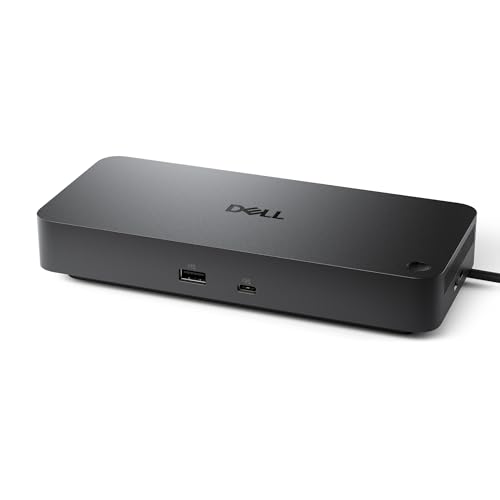
- Supports up to four high-resolution displays
- Delivers up to 100W and includes Ethernet
- Three-year warranty and broad OS compatibility
Best For: Professional multi-monitor office workstations
Best for Travel
Lenovo USB-C Dual Display Travel Dock

- Supports two 4K displays
- Compact 4.8-ounce travel design
- Includes Ethernet and an always-on USB port
Best For: Mobile professionals with dual-monitor needs
Best for Triple Displays

- Supports up to three displays
- Six USB ports offer up to 10Gbps speeds
- Includes 100W PD and Gigabit Ethernet
Best For: Three-monitor home-office productivity setups
Best Budget Connectivity
MOKiN Dual DisplayPort USB-C Dock

- Two 4K DisplayPort outputs plus HDMI and VGA
- Up to 100W USB-C power delivery
- Useful for compatible Dell, HP, and Lenovo laptops
Best For: Basic multi-monitor setups with mixed display inputs
Best Triple-Display Value

- Two DisplayPort and two HDMI outputs
- Triple 4K display support on Windows
- Vertical design with 10Gbps USB and 85W charging
Best For: Windows users building a compact three-monitor workstation
Best for Mixed Host Compatibility

- Dual 4K monitors at 60Hz
- USB-C and USB 3.0 host support
- Six USB 3.0 ports plus Ethernet and audio
Best For: Office users needing dual 4K displays across compatible computers
Best All-Around Expansion

- 11 ports with HDMI, DisplayPort, Ethernet, and card readers
- 10 Gbps USB-C and USB-A data connections
- Up to 85W pass-through charging
Best For: Compact dual-monitor workstations needing extensive connectivity
Best Heavy-Duty Pick
WAVLINK 12-in-1 Docking Station

- Dual DisplayPort and HDMI outputs
- Supports three 1080p displays at 60Hz on compatible Windows systems
- 85W charging plus Ethernet, card readers, USB, and audio
Best For: Windows multi-monitor workstations
Best for Dell Workstations

- Dual DisplayPort and HDMI connectivity
- Up to 130W power delivery listed
- Designed primarily for USB-C-enabled Dell systems
Best For: Permanent Dell laptop desk setups
Best Overall – Dell Pro WD25 Docking Station
The Dell Pro WD25 is a strong docking station with DisplayPort for office users who need broad laptop compatibility, reliable connectivity, and support for a multi-monitor workstation. It delivers up to 100W of power to compatible laptops and supports up to four high-resolution displays.
Best For: Professional offices, IT-managed workplaces, and users building a high-resolution multi-display setup.
Pros:
- Supports up to four high-resolution displays, with DisplayPort and HDMI connectivity.
- Provides up to 100W of power delivery and includes Ethernet, USB-A, and USB-C ports.
- Compatible with Windows, Ubuntu, Red Hat Enterprise Linux, and ChromeOS systems listed by Dell.
- Includes a three-year limited hardware warranty with advanced exchange.
Cons:
- Its 1.2-pound design is less travel-friendly than compact docks.
- Some advanced management features may be more useful to IT departments than individual users.
The WD25 stands out when expandability, manageability, and long-term office use matter more than portability. Its four-display support and 100W power delivery make it a particularly capable choice for a permanent desk setup.
Best for Travel – Lenovo USB-C Dual Display Travel Dock
The Lenovo USB-C Dual Display Travel Dock is a compact docking station with DisplayPort for remote professionals who want dual-monitor connectivity without carrying a bulky desktop dock. Its integrated cable, seven-port layout, and optional high-power charging support make it practical for mobile work setups.
Best For: Remote workers and frequent travelers who need dual 4K displays, Ethernet, and USB connectivity in a small dock.
Pros:
- Supports two 4K displays through DisplayPort 1.4 and HDMI 2.0.
- Compact 4.72-inch design weighs only 4.8 ounces.
- Offers USB-A, USB-C, Gigabit Ethernet, and an always-on charging port.
- Can provide up to 100W laptop power delivery when paired with the optional 135W adapter.
Cons:
- The included 100W charger provides 65W power delivery; 100W requires the optional 135W adapter.
- It has fewer ports than larger workstation-oriented docks.
For a travel-friendly docking station with DisplayPort, Lenovo’s dock balances portability and serious monitor support. Check the included power-adapter configuration if maximum laptop charging is important.
Best for Triple Displays – WAVLINK DisplayLink Dock
The WAVLINK DisplayLink dock is a versatile docking station with DisplayPort for users who want up to three external monitors from one USB-C connection. It combines 100W power delivery, six 10Gbps USB ports, Gigabit Ethernet, and support for mixed Mac and Windows setups.
Best For: Home offices, coding, trading dashboards, online learning, and other productivity setups that benefit from three screens.
Pros:
- Supports up to 4K + 2K + 2K displays, including two DisplayPort outputs.
- Provides 100W power delivery with the included 130W power adapter.
- All six USB ports support up to 10Gbps transfer speeds individually.
- Works with many USB-C, USB4, and Thunderbolt 3/4 laptops, including newer Mac models with DisplayLink drivers.
Cons:
- DisplayLink driver installation is required for the listed Mac configurations.
- It is not recommended for gaming or HDCP-protected 4K streaming.
- It does not support USB-A laptops or gaming consoles.
This WAVLINK model is a good fit when three-screen productivity and plentiful high-speed USB connectivity are priorities. Buyers should confirm driver and host-port requirements before choosing it for a Mac or mixed-device environment.
Best Budget Connectivity – MOKiN Dual DisplayPort USB-C Dock
The MOKiN 8-in-1 is a straightforward docking station with DisplayPort for laptops that need multiple video outputs, charging, and basic peripheral connectivity. It includes two DisplayPort outputs plus HDMI and VGA, making it useful for connecting older and newer monitors to a compatible full-featured USB-C laptop.
Best For: Budget-conscious laptop users who need dual DisplayPort connectivity and support for mixed monitor types.
Pros:
- Provides two DisplayPort outputs supporting up to 4K at 60Hz.
- Also includes HDMI and VGA for flexible monitor compatibility.
- Supports up to 100W power delivery through its USB-C charging port.
- Works with listed Dell, HP, and Lenovo laptops that have full-featured USB-C ports.
Cons:
- USB data ports are limited to USB 2.0 speeds up to 480Mbps.
- MacBooks support mirror mode only, not extended display mode.
- The laptop’s USB-C port must support display, charging, and data protocols.
The MOKiN dock is appealing for basic multi-monitor connectivity, especially when dual DisplayPort and VGA support are useful. It is less suitable for fast external-storage workflows or Mac users who require extended displays.
Best Triple-Display Value – Baseus Spacemate 11-in-1 Dock
If you need a docking station with DisplayPort for a Windows laptop, the Baseus Spacemate combines two DisplayPort outputs with two HDMI ports, fast USB connectivity, Ethernet, audio, and laptop charging in one upright unit. It supports up to two 4K displays at 60Hz, or three displays at 4K 30Hz, provided your USB-C port supports DisplayPort Alt Mode.
Best For: Windows users building a compact three-monitor workstation.
Pros:
- Supports triple extended displays on Windows through two HDMI and two DisplayPort outputs.
- Includes three 10Gbps USB ports, Gigabit Ethernet, audio, and up to 85W laptop charging.
- Space-saving vertical aluminum design includes a built-in host cable and port-status display.
Cons:
- macOS supports only one extended external display.
- Power adapter is not included.
- Three-display output is limited to 4K at 30Hz.
The Baseus is a strong fit when Windows display expansion and desk space matter most. Its port selection is unusually broad, but check your laptop’s USB-C video support and budget for a compatible 65W or 100W charger.
Best for Mixed Host Compatibility – Plugable Dual-Display Dock
The Plugable UD-6950Z is a docking station with DisplayPort designed for productivity setups that need two external 4K monitors. Its dual HDMI and DisplayPort outputs, six USB 3.0 ports, Ethernet, and audio jack work with USB-C or USB 3.0 host connections, making it flexible across Windows, macOS, and ChromeOS systems.
Best For: Office users who want dual 4K displays across compatible Windows, Mac, or ChromeOS computers.
Pros:
- Supports two 4K monitors at 60Hz through DisplayPort or HDMI using DisplayLink.
- Works with USB-C and USB 3.0 host connections.
- Provides six USB 3.0 ports, Gigabit Ethernet, audio, and a space-saving vertical design.
Cons:
- Does not charge the host computer.
- macOS requires driver installation, and Linux is not supported.
- Not intended for gaming or protected-content playback such as Netflix or Hulu.
This dock makes sense for a desk-based productivity setup where dual-monitor support and broad host compatibility are more important than charging or gaming. Remember to install the required Mac driver and use a separate laptop charger.
Best Feature-Rich Triple-Display Dock – Selore 17-in-1 Triple-Display Dock
For a Windows workstation that needs extensive connectivity, the Selore is a docking station with DisplayPort offering three HDMI outputs, two DisplayPort outputs, card readers, fast USB ports, Ethernet, and 85W pass-through charging. It can drive three extended displays on Windows, with the first two reaching 4K at 60Hz and the third running at 4K 30Hz.
Best For: Windows creative and multitasking setups that also need SD and microSD card access.
Pros:
- Offers three HDMI and two DisplayPort outputs with Windows triple-display support.
- Includes 10Gbps USB-C and USB-A ports plus SD and microSD 3.0 readers.
- Provides Gigabit Ethernet, a smart information display, and approximately 85W laptop charging.
Cons:
- macOS supports mirroring or a single extended display rather than three independent screens.
- Charger is not included and an 87W-or-higher charger is recommended for full operation.
- The third display is limited to 4K at 30Hz.
The Selore is the most expansive option here for a Windows user who transfers camera files and runs several monitors. Its 17-in-1 layout is useful for a full workstation, but verify your operating system and USB-C video support before buying.
Best All-Around Expansion – Anker 11-in-1 USB-C Dock
If you need a docking station with DisplayPort for a compact workstation, the Anker 11-in-1 hub combines dual-display connectivity with fast data ports, Ethernet, card readers, and power delivery. It supports HDMI and DisplayPort outputs, with dual displays up to 2K at 60Hz on a DP 1.4 laptop.
Best For: Laptop users who want broad connectivity and dual-monitor support in a compact aluminum hub.
Pros:
- Provides 11 ports, including 4K HDMI, 4K DisplayPort, Ethernet, AUX, SD, and microSD.
- Includes 10 Gbps USB-C and USB-A data ports for faster file transfers.
- Supports up to 85W pass-through charging.
- Works with USB-C, USB4, and Thunderbolt connections across supported operating systems.
Cons:
- Charger is not included.
- macOS mirrors the same image across both external monitors.
- Not compatible with Linux, and display output is limited to the HDMI and DisplayPort ports.
The Anker is a strong general-purpose choice when you want many useful ports without a full-size desktop dock. Confirm that your laptop supports DisplayPort Alt Mode and Power Delivery before buying.
Best Heavy-Duty Pick – WAVLINK 12-in-1 Docking Station
The WAVLINK 12-in-1 is a docking station with DisplayPort designed for multi-monitor setups. Its dual DisplayPort outputs and HDMI port can support a single 4K display at 60Hz or three 1080p displays at 60Hz on a compatible DP 1.4 Windows host.
Best For: Windows users building a three-screen workstation for office work, presentations, programming, or stock-chart analysis.
Pros:
- Offers dual DisplayPort outputs plus HDMI for flexible monitor setups.
- Supports up to three 1080p displays at 60Hz under DP 1.4.
- Includes 85W laptop charging, Gigabit Ethernet, SD/TF slots, USB ports, and audio/mic connectivity.
- Supports a broad range of Windows, macOS, ChromeOS, Linux, iPadOS, HarmonyOS, and Android OTG devices when requirements are met.
Cons:
- Charger and charging cable are not included.
- The host USB-C port must support video output and charging.
- macOS computers display the same image across the three external screens.
Choose the WAVLINK when display count matters more than maximum resolution. It is particularly practical for compatible Windows laptops, while Mac users should account for the mirrored-display limitation.
Best for Dell Workstations – Dell WD19S USB-C Dock
Dell WD19S 180W Docking Station (130W Power Delivery) USB-C, HDMI, Dual DisplayPort, Black
Check Price On AmazonThe Dell WD19S is a docking station with DisplayPort aimed primarily at USB-C-enabled Dell systems. It includes dual DisplayPort connectivity, HDMI, USB ports, and high-capacity power delivery for a more permanent desk setup.
Best For: Dell laptop owners who want a branded desktop dock with dual-monitor connectivity and substantial power delivery.
Pros:
- Provides dual DisplayPort outputs and HDMI for connecting external displays.
- Offers up to 130W power delivery according to the product title.
- Includes six USB ports for desktop peripherals.
- Its full-size design is suited to a dedicated workstation.
Cons:
- Compatibility is described primarily for USB-C-enabled devices, particularly Dell laptops.
- The supplied specifications do not detail display resolutions or refresh rates.
- It is larger and heavier than compact hub-style docking stations.
The WD19S makes the most sense for a Dell-centered office setup where power and established desk connectivity are priorities. Verify compatibility with your specific laptop and monitor arrangement before purchase.
How We Picked the Best Docking Station with Displayport
We compared these docks by examining their DisplayPort and HDMI output options, supported monitor configurations, USB port selection, power-delivery capacity, compatibility claims, and intended use. We also considered whether each model is better suited to travel, a home office, or a demanding multi-display workstation.
Because laptops vary widely, verify your computer’s USB-C capabilities before buying. A USB-C port may support data only, while DisplayPort video output and USB Power Delivery require compatible hardware. Mac and Windows support can also differ, particularly with DisplayLink-based docks.
Quick Comparison
| Best For | What to Prioritize |
|---|---|
| Travel | Compact design, integrated cable, and essential ports |
| One or two monitors | Native DisplayPort or HDMI output and adequate bandwidth |
| Three monitors | DisplayLink support or a laptop with suitable native display output |
| Performance laptops | High-wattage Power Delivery and reliable cooling |
| Older peripherals | A mix of USB-A and USB-C ports |
Key Buying Factors for a Docking Station with Displayport
Display Support and Resolution
Check the number of screens, maximum resolution, refresh rate, and whether those specifications apply simultaneously. A dock advertising 4K may support that resolution on only one output, while multiple displays may require lower refresh rates. DisplayPort is especially useful for high-resolution monitors, but the laptop’s graphics hardware and USB-C mode still determine the real-world result.
Power Delivery
Match the dock’s charging output to your laptop’s requirements. A 100W-capable dock may deliver less after reserving power for its own operation, and some high-performance laptops need more power than a USB-C dock can provide. Keep the original charger nearby if the dock cannot meet the computer’s full demand.
Ports and Network Connectivity
Count the ports you will use every day rather than choosing by total port number. USB-A is useful for keyboards, mice, and storage; USB-C can better suit newer accessories. Ethernet, an SD card reader, audio, and extra video outputs can eliminate additional adapters.
Native Video Versus DisplayLink
Native USB-C video generally offers a simpler, driver-free experience. DisplayLink can expand monitor support, especially on compatible Windows systems and some Macs, but it relies on software and may be less ideal for gaming or color-critical workloads. Review current operating-system requirements before purchase.
Who Should Buy Which Docking Station with Displayport?
Choose a compact travel dock if you mainly need one external display, charging, and a few USB accessories away from home. For a standard office setup, prioritize dependable DisplayPort output, Ethernet, and enough USB ports for your peripherals.
Users building a dual- or triple-monitor workstation should focus first on confirmed display compatibility rather than port count. High-power Dell or similar business docks are a strong fit for supported corporate laptops, while universal and DisplayLink models may suit mixed-device households. If you use a Mac, verify the exact chip generation and monitor limitations before ordering. Finally, select the dock with the appropriate power adapter and cable included, since replacing them can significantly increase the total cost.