
Digital optical connections can keep live-sound setups electrically isolated while carrying clean S/PDIF audio between compatible mixers, processors, interfaces, and playback equipment. The right cable should fit your routing plan, survive setup and teardown, and provide enough length without creating unnecessary slack.
We selected 10 optical audio cables for live sound across short, standard, long, braided, slim, and right-angle designs. Use the guide below to compare the features that matter most before choosing a cable for your stage, rehearsal, installation, or mobile rig.
Best 10 Optical Audio Cables for Live Sound Picks for 2026
Long-Reach Signal Choice
BlueRigger 25-Foot Toslink Cable

- 25-foot length for larger system layouts
- Supports PCM, ADAT, and multichannel formats
- Durable jacket with lifetime warranty
Best For: Longer runs between compatible Toslink or S/PDIF devices
Installation-Friendly Pick
Warrky 25-Foot Braided Optical Cable

- CL3-rated for in-wall installation
- Braided jacket withstands 10,000+ bends
- Includes protective caps and Velcro strap
Best For: Organized, longer indoor Toslink connections
Professional Compact Run
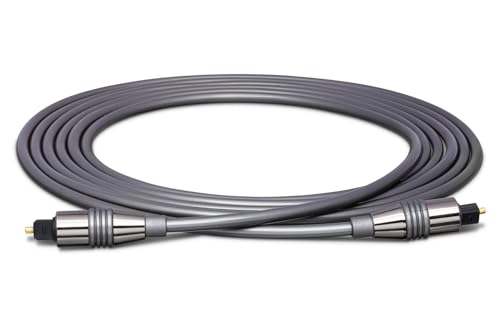
- 15-foot Toslink-to-Toslink connection
- Supports ADAT and S/PDIF formats
- Limited lifetime warranty
Best For: Moderate-length digital links in professional audio setups
Rugged Everyday Option
Cable Matters Premium 15-Foot Optical Cable

- Braided jacket resists nicks, cuts, and kinks
- Metal connectors with gold-plated tips
- Supports PCM and multichannel formats
Best For: Durable everyday connections between digital optical devices
Best Flexible-Placement Pick

- 50-foot reach for distant components
- Rotating 90° plug helps in tight spaces
- Braided jacket supports rugged routing
Best For: Long runs and crowded equipment layouts
Best Warranty Coverage
KabelDirekt Optical TOSLINK Cable

- Six-foot length for nearby components
- Metal-free fiber cable resists interference
- Includes a 36-month manufacturer warranty
Best For: Compact point-to-point digital audio connections
Best Mid-Length Braided Option

- 16.5-foot reach for flexible placement
- Cotton-braided jacket resists tangling
- Supports PCM and 5.1–7.1 surround audio
Best For: Moderately spaced audio and presentation setups
Flexible Long-Run Pick
iVANKY 10ft Optical Audio Cable

- 10-foot length for flexible equipment placement
- Supports PCM and 5.1 to 7.1 surround formats
- Braided, CL3-rated construction with gold-plated connectors
Best For: Longer Toslink connections and flexible installations
Simple Everyday Option
Amazon Basics 6ft Toslink Cable

- Six-foot length for common equipment layouts
- Fiber-optic multi-channel digital audio support
- Flexible PVC cable with gold-plated connectors
Best For: Straightforward short-to-medium Toslink connections
Maximum-Reach Choice
Kxable 50ft Optical Audio Cable

- 50-foot length for widely separated equipment
- Nylon braid rated for more than 15,000 bends
- Gold-plated connectors and one-year warranty
Best For: Long Toslink runs in larger audio or home theater setups
Long-Reach Signal Choice – BlueRigger 25-Foot Toslink Cable
For live sound setups that need extra reach, the BlueRigger 25-foot cable is a practical option among optical audio cables for live sound. Its fiber-optic design avoids electrical interference and supports PCM, ADAT, and multichannel formats, provided your equipment uses standard Toslink or S/PDIF ports.
Best For: Longer indoor or outdoor runs between compatible digital audio equipment, receivers, processors, and amplifiers.
Pros:
- 25-foot length helps span larger system layouts.
- Supports uncompressed PCM, ADAT, and compressed 5.1 to 7.1 surround formats.
- Flexible PVC jacket is rated for 25,000+ bend cycles.
- Lifetime warranty with US-based customer support.
Cons:
- Uses standard Toslink connections, so it is not suitable for equipment without optical ports.
- The long cable may be more than needed for compact rigs.
The combination of extended length, interference-free optical transmission, and durable construction makes this a strong choice when a live sound or AV installation needs routing flexibility.
Installation-Friendly Pick – Warrky 25-Foot Braided Optical Cable
The Warrky 25-foot cable suits organized installations and extended connections where flexibility matters. For optical audio cables for live sound, its braided jacket, slim aluminum housing, and CL3 rating offer useful handling and installation features, while the cable supports PCM and common surround formats.
Best For: Neat, longer indoor runs to soundbars, AV receivers, televisions, gaming devices, and other Toslink-compatible equipment.
Pros:
- CL3-rated design is intended for in-wall installation.
- Nylon-braided jacket withstands 10,000+ bends and resists tangling.
- Supports uncompressed PCM, Dolby Digital Plus, DTS-HD, and 5.1/7.1 surround sound.
- Includes protective caps and a Velcro strap for storage.
Cons:
- Designed for indoor use despite the listed indoor/outdoor specification.
- Requires Toslink or S/PDIF optical ports on both connected devices.
Its installation-oriented construction and included cable-management accessories make the Warrky especially convenient when a longer optical connection needs to remain flexible and tidy.
Professional Compact Run – Hosa OPM-315 15-Foot Cable
The Hosa OPM-315 is a straightforward 15-foot Toslink-to-Toslink cable for dependable digital connections. Among optical audio cables for live sound, it is a sensible fit for professional audio setups that need a moderate-length link supporting ADAT and S/PDIF formats, including Dolby Digital and DTS.
Best For: Connecting digital audio components, DACs, receivers, and other Toslink-equipped equipment in compact professional or home systems.
Pros:
- 15-foot length balances reach with easier cable management.
- Supports ADAT and all S/PDIF formats, including Dolby Digital and DTS surround.
- Designed for accurate, lossless digital audio transmission.
- Includes a limited lifetime warranty.
Cons:
- Shorter than the 25-foot alternatives in this roundup.
- Listed for indoor use only.
- Compatibility depends on Toslink jacks on both devices.
With professional-audio compatibility and a manageable 15-foot length, the Hosa is a focused choice for systems that do not require an especially long cable run.
Rugged Everyday Option – Cable Matters Premium 15-Foot Optical Cable
The Cable Matters Premium optical cable emphasizes physical durability and secure handling for everyday digital audio connections. If you need optical audio cables for live sound or AV work, its thick PVC and braided jacket, metal connectors, and interference-resistant fiber construction provide a sturdy 15-foot solution for compatible equipment.
Best For: Regular connections between televisions, soundbars, AV receivers, gaming consoles, and other digital optical devices.
Pros:
- Thick PVC and braided jacket resist nicks, cuts, and kinks.
- Metal Toslink connectors have polished, gold-plated tips.
- Fiber construction helps eliminate electromagnetic and radio-frequency interference.
- Supports PCM, Dolby Digital Plus, DTS-HD, and multichannel surround formats.
Cons:
- 15-foot length may not cover larger installations.
- Indoor/outdoor usage is listed, but the product is primarily described for home entertainment connections.
- Requires compatible digital optical interfaces.
This cable is a good fit when jacket protection and connector grip are priorities, especially for frequently handled home audio or small-system connections.
Best Flexible-Placement Pick – EMK 90° Toslink Cable
For optical audio cables for live sound setups that require a longer run or tight equipment placement, this 50-foot EMK cable adds useful routing flexibility. Its 90-degree, 360-degree rotating plug can help reduce sharp bends behind racks, TVs, soundbars, and audio equipment while the nylon-braided jacket protects the cable from kinks and nicks.
Best For: Long indoor or outdoor cable runs, crowded connection areas, and systems using TOSLINK or S/PDIF ports.
Pros:
- 50-foot length suits distant equipment placement.
- Rotating 90-degree connector helps with tight spaces and cable routing.
- Nylon-braided, 6 mm outer construction helps resist kinks and accidental bending.
- Supports PCM, Dolby Digital Plus, DTS-HD High Resolution, ADAT, and LPCM formats.
Cons:
- The long length may be excessive for compact setups.
- It is a male-to-male cable, so compatible optical ports or adapters are required.
- The angled connector may not suit every equipment layout.
This is the most routing-focused option in the group. Choose it when cable length and connector flexibility matter more than keeping the installation compact.
Best Warranty Coverage – KabelDirekt Optical TOSLINK Cable
For optical audio cables for live sound applications where a straightforward, tested connection is the priority, this 6-foot KabelDirekt cable is a practical choice. It connects TOSLINK or S/PDIF-equipped devices such as amplifiers, soundbars, consoles, and digital audio equipment, with a flexible PVC jacket and metal-free fiber-optic construction.
Best For: Short connections between nearby digital audio components, including amplifiers, converters, consoles, and soundbars.
Pros:
- Six-foot length fits most nearby component connections.
- Fiber-optic construction is immune to electrical interference.
- 24K gold-plated connectors are described as corrosion resistant.
- Backed by a 36-month manufacturer warranty.
Cons:
- The 6-foot length may not cover widely separated equipment.
- It uses standard male-to-male TOSLINK connectors rather than angled plugs.
- The notes focus on indoor-style component connections, so routing should be planned accordingly.
This is a sensible everyday option for compact digital audio rigs. Its shorter length, flexible jacket, and longer stated warranty make it well suited to tidy point-to-point connections.
Best Mid-Length Braided Option – EMK 16.5Ft Optical Cable
For optical audio cables for live sound systems that need more reach than a standard patch cable, this 16.5-foot EMK model offers a useful middle ground. Its cotton-braided OD4.0 jacket is designed for durability and tangle resistance, while the PMMA fiber core carries optical audio without electromagnetic or radio-frequency interference.
Best For: Home theaters, gaming or presentation setups, and musical-instrument or speaker connections where equipment is moderately spaced apart.
Pros:
- 16.5-foot length provides added placement flexibility.
- Cotton-braided jacket is described as tangle free and corrosion resistant.
- Supports uncompressed PCM and compressed 5.1 to 7.1 surround formats.
- Dustproof rubber caps help protect connectors when stored unplugged.
Cons:
- It has standard straight connectors rather than a right-angle design.
- The mid-length cable may still be short for widely separated live sound equipment.
- It is intended for devices with compatible TOSLINK, S/PDIF, or optical ports.
This model balances reach and manageable cable handling. It is a strong fit when a 6-foot cable is too short but a 50-foot run would create unnecessary slack.
Flexible Long-Run Pick – iVANKY 10ft Optical Audio Cable
For optical audio cables for live sound setups that need some extra reach, this 10-foot iVANKY Toslink cable offers flexible placement between compatible audio equipment. Its fiber core supports lossless digital transmission, while the braided jacket and CL3 rating add practical installation versatility.
Best For: Longer connections between TVs, soundbars, receivers, DACs, game consoles, and other standard Toslink devices.
Pros:
- 10-foot length provides more setup flexibility than shorter cables.
- Supports uncompressed PCM and compressed 5.1 to 7.1 surround formats, including Dolby Digital Plus and DTS-HD High Resolution.
- Nylon-braided construction, aluminum shells, and 24K gold-plated connectors are designed for durability.
- CL3-rated design supports in-wall installation, and removable caps help protect connectors.
Cons:
- Its longer length may be unnecessary for compact equipment arrangements.
- It uses Toslink connections, so it is not suitable for devices without standard optical ports.
The iVANKY is a strong choice when a live sound or home audio connection needs extra length and a more rugged exterior. Verify that your equipment uses standard Toslink ports before purchasing.
Simple Everyday Option – Amazon Basics 6ft Toslink Cable
If you need optical audio cables for live sound or general audio connections without extra length, this 6-foot Amazon Basics Toslink cable keeps the setup straightforward. It uses fiber-optic transmission, gold-plated connectors, and a flexible PVC exterior for common indoor connections.
Best For: Basic connections from a soundbar, TV, game console, Blu-ray player, CD player, or other compatible device to an audio system.
Pros:
- Six-foot length suits many standard equipment layouts.
- Supports multi-channel digital audio through Toslink fiber-optic connections.
- Gold-plated connectors and buffer tubing are intended to support signal transfer and corrosion resistance.
- Flexible PVC exterior and removable protective rubber tips make it easy to handle and store.
Cons:
- Protective caps must be removed before use.
- It does not offer the longer reach of the 10-foot or 50-foot alternatives.
- Its PVC exterior may be less suitable for demanding cable runs than a braided design.
This is a sensible no-frills pick for short-to-medium Toslink runs. It covers common audio connections well, but measure your route first if your equipment is spread across a larger space.
Maximum-Reach Choice – Kxable 50ft Optical Audio Cable
For optical audio cables for live sound applications or other setups requiring a long route, this 50-foot Kxable Toslink cable provides substantial reach. Its nylon braid, slim aluminum shells, and gold-plated connectors are built for a durable, neatly managed connection between compatible equipment.
Best For: Long-distance indoor or outdoor runs between TVs, soundbars, receivers, DACs, game consoles, and home theater equipment with Toslink ports.
Pros:
- 50-foot length can connect equipment positioned far apart.
- Nylon-braided sheath is rated to withstand more than 15,000 bends.
- Gold-plated connectors and slim aluminum shells support corrosion resistance and heat dissipation.
- Removable connector caps help limit dust accumulation, and a one-year warranty is included.
Cons:
- The 50-foot cable can be excessive for compact systems and may require careful routing.
- Compatibility is limited to equipment with optical Toslink ports.
- Its longer length and 0.67 kg listed weight may be less convenient for simple portable setups.
The Kxable stands out when distance is the main concern. It is best suited to planned long runs where the braided exterior and connector protection are useful, rather than basic desk-side connections.
How We Picked the Best Optical Audio Cables for Live Sound
We focused on practical requirements rather than claiming that one optical cable sounds better than another when the digital link is functioning correctly. Selection factors included Toslink compatibility, available lengths, connector design, bend and routing convenience, jacket construction, strain relief, and suitability for common S/PDIF applications.
The lineup includes familiar options from brands such as Hosa, Cable Matters, KabelDirekt, Amazon Basics, BlueRigger, and others, along with long-reach and right-angle designs. Because live environments vary, the best choice depends on equipment placement and how often the cable will be transported.
Quick Comparison
- Shorter cables: Best for compact racks, nearby processors, and fixed connections with minimal slack.
- 15- to 25-foot cables: A flexible middle ground for stage boxes, playback stations, and equipment positioned several feet apart.
- 50-foot cables: Useful when equipment must be separated across a venue, but routing and protection become more important.
- Braided or reinforced designs: Worth considering for frequent handling, provided they remain flexible enough for your setup.
- Right-angle connectors: Helpful when rear-panel clearance is tight or a straight plug would put stress on the port.
Key Buying Factors for Optical Audio Cables for Live Sound
Compatibility and Connector Fit
Confirm that both devices use standard Toslink optical ports and support the same digital format, typically S/PDIF. Optical cables do not convert incompatible signals, and a snug connector is essential for a stable link. Remove protective caps before use, but save them for storage.
Length and Routing
Choose enough length to route safely around stands, racks, and walkways without pulling on the connectors. Avoid buying dramatically more cable than needed: excess loops can be difficult to manage and may be exposed to foot traffic. For long runs, use gentle curves rather than tight bends or sharp kinks.
Durability and Handling
Look for flexible jackets, effective strain relief, and connectors that do not wobble in the equipment ports. Braided coverings may help with abrasion, while slim cables can be easier to route in crowded racks. Neither feature replaces careful handling and proper storage.
Stage Reliability
Optical fiber is immune to ground loops and electrical interference, which can be valuable in complex live systems. However, the ends must remain clean and the cable must not be crushed. Carry spares for critical performances, especially when a long run is difficult to replace quickly.
Who Should Buy Which Optical Audio Cables for Live Sound?
Choose a compact cable for a fixed rack connection or a short distance between adjacent devices. A 15- to 25-foot model suits most portable setups where equipment is spread across a table, rack, or small stage area. Select the 50-foot option only when its extra reach solves a real routing problem and you can protect the run.
Frequent touring crews should prioritize robust construction, dependable strain relief, and a storage method that prevents tight coils. Installers and users with limited rear-panel space may prefer a right-angle design. For occasional home, rehearsal, or backup use, a straightforward cable with the correct length is usually the most sensible value.