
The right microphone stand keeps your mic stable, correctly positioned, and out of the way while you record. Whether you need a floor boom, desktop arm, weighted base, or tablet-ready setup, the best choice depends on your microphone, workspace, and recording style.
We selected 10 versatile stands for studio recording, podcasting, streaming, vocals, and home setups. Use the comparison and buying advice below to narrow the options by stability, reach, adjustability, and available desk or floor space.
Best 10 Microphone Stands for Studio Picks for 2026
Best Adjustable Tripod

- 28.1–89.8-inch adjustable height
- Detachable, rotating boom arm
- Includes clips, adapter, and carry bag
Best For: Flexible studio, singing, and portable setups
Best Desktop Bundle

- Includes shock mount and double-layer pop filter
- Weighted 1.5-pound anti-slip base
- Adjusts up to 14 inches
Best For: Desk recording, streaming, and broadcasting
Best Space-Saving Floor Stand

- Heavy 5.5-pound flat steel base
- 30–70-inch adjustable height
- Includes tray and cable-management hardware
Best For: Compact studios, streaming areas, and podcast setups
Heavy-Mic Specialist
Low Profile Gear-Lock Boom Arm
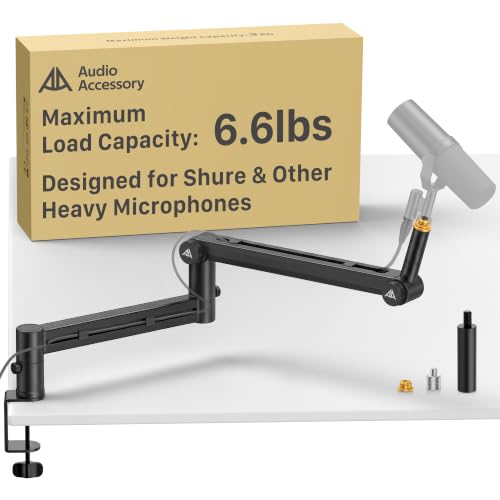
- Supports microphones up to 6.6 lb
- Gear-lock design helps prevent sagging
- 780 mm reach with cable channels
Best For: Heavy studio microphones and stable desk recording setups
Two-Stand Value Pick
Pyle Adjustable Floor Stand Pair

- Two stands included in one package
- Adjusts from 2.8 to 5 feet
- Compact metal bases with steel construction
Best For: Two-microphone studio setups and portable floor use
Flexible Desk Pick
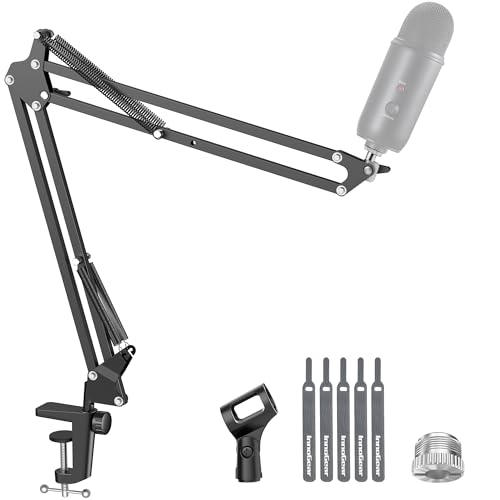
- 3.3 lb load capacity
- Multiple adjustment ranges for precise placement
- Folds away and includes microphone adapters
Best For: Compact recording, streaming, and podcasting desks
Best All-in-One Floor Stand

- Phone/tablet holder supports devices up to 10 inches
- Height adjusts up to 70 inches
- Includes 3/8-to-5/8-inch adapter
Best For: Creators needing microphone and device mounting in one stand
Best Versatile Tripod Stand
MS138 Mic Stand with Tablet Holder

- Adjusts from 30 to 72 inches
- Supports microphones, phones, and tablets
- Includes carrying bag and 3/8-to-5/8-inch adapter
Best For: Portable recording, streaming, and performance setups
Best Adjustable Tripod – InnoGear Boom Arm Floor Stand
For shoppers comparing microphone stands for studio use, the InnoGear TS186 is a versatile tripod option with a broad height range, detachable boom arm, and included carrying bag. Its steel construction and included adapters make it suitable for microphones used in recording, podcasting, and singing.
Best For: Studio users who need a height-adjustable floor stand that can also travel or convert to a straight stand.
Pros:
- Adjusts from 28.1 to 89.8 inches for seated or standing use.
- Detachable boom arm rotates horizontally and vertically for flexible positioning.
- Includes two mic clips, a 3/8-to-5/8-inch adapter, cable clips, and a carrying bag.
- Thickened steel tripod weighs about 4.2 pounds for improved stability.
Cons:
- A tripod base can occupy more floor space than a compact desktop or weighted-base stand.
- The included carrying bag adds portability but requires disassembly for packing.
The TS186 is a practical all-around choice when you want one stand for studio sessions, performances, and transport. Its adjustable boom and wide compatibility are particularly useful for changing microphone setups.
Best Desktop Bundle – BILIONE Studio Mic Stand Kit
This BILIONE desktop kit is a convenient choice for microphone stands for studio desks, streaming stations, and recording spaces. It combines a weighted base with a shock mount, double-layer pop filter, mic clip, and thread adapter, reducing the need to buy accessories separately.
Best For: Desk-based recording, broadcasting, and streaming setups that need pop-filter and shock-mount accessories included.
Pros:
- All-in-one package includes a stand, shock mount, double-layer pop filter, clip, and adapter.
- 1.5-pound metal base has anti-slip pads and a 0.74-inch metal rod.
- Height adjusts up to 14 inches for desktop positioning.
- Compatible with several microphones, including Yeti, AT2020, AT2035, QuadCast, and SM58.
Cons:
- The included shock mount is specifically noted as incompatible with Blue Yeti.
- Its maximum recommended load is 0.7 kg, limiting use with heavier microphones.
- The shock mount fits microphones over 1.77 inches and up to 2.05 inches in diameter.
This kit offers strong convenience for a compact recording desk, especially when you need basic plosive and vibration control included. Check your microphone’s dimensions and weight before relying on the shock mount.
Best Space-Saving Floor Stand – LD3501 Studio Boom Arm Stand
The LD3501 is designed for buyers who need microphone stands for studio spaces with limited room. Its flat 5.5-pound base fits close to equipment or furniture, while the boom design, accessory tray, and cable-management hardware support organized podcasting, streaming, and recording setups.
Best For: Tight studio or streaming spaces that need a stable floor stand with a compact footprint and storage tray.
Pros:
- Flat 5.5-pound steel base is suited to space-constrained setups.
- Two-section rods provide adjustable height from 30 to 70 inches.
- Includes a small tray for phones, lyrics, capos, or other accessories.
- Cable ties and clips help keep microphone and power cables organized.
Cons:
- The listed maximum height is 100 centimeters, while the product highlight specifies a 30–70-inch adjustment range; verify the desired setup height.
- The compact base may benefit from additional weight when extra stability is needed.
- The warranty is listed as a 60-day free return period.
With its flat base and integrated tray, the LD3501 prioritizes efficient use of floor space rather than a traditional tripod footprint. It is a useful fit for organized studio, streaming, and practice areas.
Best Weighted Base – InnoGear MS250 Floor Mic Stand
For stable microphone stands for studio recording and live use, the InnoGear MS250 combines a 4.5-pound weighted base with a thickened steel arm. Its 34-to-60-inch height range and 180-degree mic-clip adjustment make it easy to position for seated or standing applications.
Best For: Studio and performance users who prioritize a stable weighted floor base and straightforward microphone positioning.
Pros:
- Adjusts from 34 to 60 inches with a quick clutch.
- 4.5-pound, 9.8-inch weighted base includes non-slip pads and a metal gasket.
- Thickened 1.5 mm steel arm is designed to support heavier microphones.
- Disassembles into three parts for transport and storage.
Cons:
- The stand weighs 6.6 pounds, making it less convenient to carry than lighter options.
- The listed maximum height is 60 inches, so it offers less range than some taller tripod stands.
- A shock mount is not included for the listed Fifine K669B compatibility.
The MS250 is a solid choice when base stability matters more than maximum height or minimal weight. Its portable three-part design adds flexibility for moving between studio sessions, performances, and events.
Heavy-Mic Specialist – Low Profile Gear-Lock Boom Arm
For microphone stands for studio setups that need to support substantial microphones, this low-profile desk arm emphasizes capacity and stability. Its gear-lock mechanism, reinforced construction, and 780 mm reach make it a practical choice for recording desks where sagging and cable clutter are concerns.
Best For: Heavy microphones such as the Shure SM7B, RODE PodMic, Blue Yeti, and similar studio models.
Pros:
- Supports up to 6.6 lb (3 kg), suitable for many heavier microphones.
- Gear-lock design is intended to resist sagging over time.
- Offers 360-degree horizontal and 120-degree vertical adjustment.
- Includes cable channels, adapters, extension hardware, and a desk clamp.
Cons:
- Its desk-mounted design requires a suitable flat desk edge.
- At 1.63 kg, it is heavier than a basic microphone arm.
- It may be more capacity than needed for lightweight microphones.
This is the strongest fit in the group for users prioritizing load capacity and long-term positioning stability. The low-profile format also helps keep the recording area clear while routing multiple cables through the arm.
Two-Stand Value Pick – Pyle Adjustable Floor Stand Pair
This two-pack is a practical option for microphone stands for studio use when you need separate floor positions for multiple performers or microphones. Each stand has a compact metal base, adjustable height from 2.8 to 5 feet, and a lightweight steel construction suited to home studios and occasional performances.
Best For: Studio users, musicians, and performers who need two adjustable floor stands.
Pros:
- Includes two complete stands with adjustable arms, clips, and bases.
- Height adjusts from 2.8 to 5 feet for varied users and placements.
- Compact metal bases provide a stable floor-standing platform.
- Lightweight steel construction and glossy black finish suit transport and performance use.
Cons:
- Floor stands require more room than a desk-mounted arm.
- The notes do not specify a maximum microphone weight.
- Best suited to standard 5/8-inch threaded setups rather than specialized mounting needs.
The main advantage here is quantity: two adjustable floor stands in one package. Choose this pair when your studio workflow involves two microphones or when you want a spare without buying another complete stand.
Flexible Desk Pick – InnoGear Adjustable Boom Arm
For microphone stands for studio desks where flexible positioning and compact storage matter, the InnoGear boom arm provides several adjustment points. It supports up to 3.3 lb, folds away when idle, and includes a standard clip plus adapters for a broad range of microphones.
Best For: Streaming, gaming, podcasting, and recording with compatible microphones weighing up to 3.3 lb.
Pros:
- Provides 360-degree base rotation, 135-degree extension, and 180-degree arm movement.
- Supports up to 3.3 lb with steel construction and reinforced springs.
- Folds away for space-saving storage when not in use.
- Includes a standard mic clip and 5/8-to-3/8-inch adapter.
Cons:
- Clamp is designed for flat, squared desk edges up to 2 inches thick.
- Its 3.3 lb capacity is lower than the heavy-duty arm in this roundup.
- A shock mount is not included.
This arm balances adjustability and everyday desk convenience. It is a sensible choice for lighter microphones and compact workstations, provided your desk edge meets the clamp requirements.
Best All-in-One Floor Stand – GMS-04 with Device Holder
For creators comparing microphone stands for studio use, the GMS-04 combines a boom microphone stand with a built-in phone or tablet holder. Its adjustable height, heavy-duty tripod base, and included 3/8-to-5/8-inch adapter make it suitable for recording, streaming, podcasting, and live performance setups.
Best For: Podcasters, streamers, and musicians who want to mount a microphone and recording device on one stand.
Pros:
- Built-in holder supports phones and tablets up to 10 inches.
- Adjustable boom arm and height reach up to 70 inches.
- Heavy-duty tripod base helps limit wobbling and tipping.
- Portable design supports quick assembly and disassembly.
Cons:
- The device holder is limited to tablets up to 10 inches.
- A tripod base may occupy more floor space than a flat-base stand.
The GMS-04 is a practical choice when your studio workflow includes a phone or tablet for notes, monitoring, or content control. Its metal construction and flexible mounting options add versatility without requiring a separate device stand.
Best Versatile Tripod Stand – MS138 Mic Stand with Tablet Holder
The MS138 is a flexible option among microphone stands for studio and mobile recording setups. It can function as a standard mic stand, boom stand, or tablet holder, with height adjustment from 30 to 72 inches, a rotatable boom arm, and a wide triangular base.
Best For: Mobile creators and performers who need one portable stand for microphones, phones, or tablets.
Pros:
- Adjusts from 30 to 72 inches for varied setups.
- 360-degree rotatable boom arm and flexible gooseneck support positioning.
- Tablet holder accommodates devices from 4.7 to 13 inches.
- Includes a carrying bag and adapter for 3/8- and 5/8-inch connections.
Cons:
- Correct boom placement over a tripod leg is recommended for optimal stability.
- The wide 24.4-inch maximum leg span may require considerable floor space.
With its broad compatibility and carrying bag, the MS138 suits users who move between studios, gigs, and outdoor shoots. The tripod design is especially useful when you want adjustable positioning and tablet support in a single portable unit.
Best Weighted-Base Stand – HC-117 Boom Mic Stand
For buyers seeking microphone stands for studio recording, the HC-117 offers a weighted flat base designed for stable floor placement. Its boom arm adjusts the working height from 24.6 to 68.7 inches, while the rotating arm, mic holder, and cable clips support organized performance and recording setups.
Best For: Studio recording, karaoke, stage performance, and users who prefer a flat weighted base.
Pros:
- Weighted circular cast-iron base provides a stable footprint.
- Height adjusts from 24.6 to 68.7 inches with the boom arm.
- 360-degree rotating arm helps with microphone positioning.
- Includes a mic holder and three cable clips for cable management.
Cons:
- At 3.5 kg, it is heavier than the other listed stands.
- It does not include a phone or tablet holder.
- No warranty is listed in the supplied product details.
The HC-117 prioritizes a planted, floor-standing setup over maximum portability. Its flat base avoids tripod legs, while the adjustable boom and cable clips make it a straightforward fit for fixed studio, karaoke, and performance areas.
How We Picked the Best Microphone Stands for Studio Use
We focused on the features that matter most during recording: stability, useful height and reach adjustment, compatibility with common microphone clips, ease of setup, and efficient use of space. The selection includes tripod floor stands, weighted-base models, desktop stands, and articulated boom arms so different studio layouts and recording habits are represented.
We also considered practical extras such as cable management, phone or tablet holders, compact storage, and stated load capacity. A stand should support the microphone securely without excessive wobble, unwanted sag, or difficult adjustments.
Quick Comparison
| Stand Type | Best For | Main Advantage | Watch For |
|---|---|---|---|
| Tripod boom stand | Vocals and flexible floor setups | Portable reach and broad adjustment | Legs require floor space |
| Weighted-base floor stand | Recording rooms and singers | Stable footprint with fewer protruding legs | Can be heavier to move |
| Desktop stand | Podcasts and compact desks | Small, convenient setup | Limited height and positioning |
| Desk-mounted boom arm | Streaming and fixed workstations | Excellent reach and minimal floor clutter | Needs a suitable desk edge and secure clamp |
| Stand with device holder | Streaming and content creation | Keeps a phone or tablet within view | More parts and adjustment points |
Key Buying Factors for Microphone Stands for Studio Recording
Base Stability and Footprint
Large-diaphragm condenser microphones and boom arms can shift a lightweight stand’s center of gravity. Choose a weighted base or wide tripod when stability matters, especially for vocal recording or frequent repositioning. Check the footprint against your available floor space.
Height, Reach, and Boom Adjustment
Confirm that the stand reaches your seated or standing recording position. A longer boom provides more positioning freedom, but it also creates more leverage and may require a heavier base. Locking knobs should tighten firmly and remain easy to adjust.
Microphone Compatibility and Load Capacity
Check the included clip, thread adapter, and any stated weight rating. Heavy microphones often need a reinforced desk arm or a stand specifically designed for higher loads. Shock mounts may change the balance, so allow extra capacity rather than choosing a stand at its limit.
Workspace, Portability, and Cable Routing
Desktop arms suit permanent podcast or streaming stations, while tripod stands are easier to fold and transport. Look for cable clips or a clean routing path to prevent the cable from pulling on the microphone as you move the boom.
Who Should Buy Which Microphone Stands for Studio?
- For singers and floor recording: Choose a weighted-base or tripod boom stand with broad height adjustment and a secure locking mechanism.
- For podcasts and streaming: A desk-mounted boom arm keeps the microphone close while preserving desk space; prioritize load capacity and clamp stability.
- For small desks: Select a compact desktop stand if you do not need a long boom or extensive height range.
- For mobile or shared studios: A folding tripod stand is easier to pack, reposition, and store between sessions.
- For video creators: A model with a phone or tablet holder can keep notes, controls, or a live chat visible, but verify that the added accessories do not make the stand unstable.
Before buying, measure your desk or recording area, note the microphone and shock-mount weight, and identify whether you record seated, standing, or both. Those three checks usually matter more than extra accessories.