
Choosing the right HDMI converter can make an older receiver, soundbar, game console, or display work smoothly with newer home theater equipment. The key is matching the converter’s signal direction, audio format, ports, and resolution support to your setup.
We’ve gathered 10 options covering common needs, from extracting TV audio through ARC or eARC to converting legacy RCA video and routing HDMI signals through SDI equipment.
Best 10 Hdmi Converters for Home Theaters Picks for 2026
Flexible Audio Bridge
3-in-1 HDMI ARC to RCA Converter

- HDMI ARC, optical, and coaxial inputs
- RCA, optical, coaxial, and AUX outputs
- Up to 192 kHz sampling with PCM stereo analog output
Best For: Connecting ARC TVs to mixed-format home audio systems
Legacy Video Link
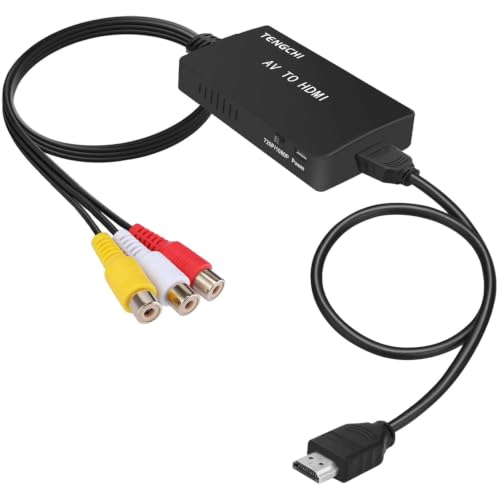
- Converts composite RCA to HDMI output
- Supports PAL, NTSC, and SECAM formats
- Includes HDMI and USB cables
Best For: Using VCRs, DVD players, and retro consoles with HD TVs
Surround Audio Upgrade
Tendak HDMI eARC/ARC Audio Extractor

- HDMI eARC/ARC and optical input support
- HDMI, optical, RCA, and 3.5mm outputs
- Supports audio formats up to 7.1-channel setups
Best For: Connecting ARC/eARC TVs with mixed-format speakers and amplifiers
Retro Display Adapter
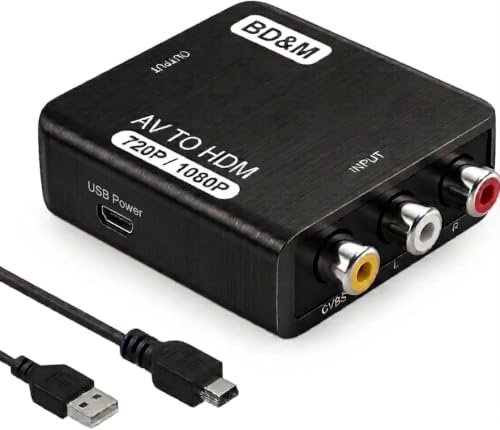
- Converts RCA/composite video to HDMI
- Supports 720p and 1080p output
- Works with consoles, VCRs, DVDs, and cameras
Best For: Connecting legacy AV devices to modern TVs and monitors
Best ARC-to-Analog Upgrade

- Optical, coaxial, RCA, and 3.5mm outputs
- Supports PCM/LPCM digital audio conversion
- Includes HDMI, optical, and analog cables
Best For: ARC/eARC TVs connected to mixed or older audio systems
Best HDMI-to-SDI Link

- Converts HDMI to SD-SDI, HD-SDI, or 3G-SDI
- Supports video up to 1080p
- Supports long SDI cable distances
Best For: Home theaters and video systems using SDI equipment
Best Bidirectional Pick

- Two-way HDMI-to-SDI and SDI-to-HDMI conversion
- Supports uncompressed 1080p video up to 60 fps
- Durable metal housing with long-distance SDI transmission
Best For: Mixed HDMI and SDI home theater or streaming systems
Best Audio Upgrade
ARC/eARC to RCA Audio Converter

- Extracts TV ARC/eARC audio to stereo RCA
- Supports PCM/LPCM up to 192kHz/24-bit
- Includes USB power and integrated HDMI/RCA cabling
Best For: ARC/eARC TVs connected to RCA amplifiers or speakers
Best HDMI-to-SDI Splitter

- Sends one HDMI source to two SDI displays
- Supports up to 1080p at 60Hz
- Long SDI transmission distances up to 100m for 3G-SDI
Best For: HDMI sources feeding two SDI displays over long runs
Flexible Audio Bridge – 3-in-1 HDMI ARC to RCA Converter
For shoppers comparing hdmi converters for home theaters, this model is an audio-focused choice for connecting HDMI ARC, optical, or coaxial sources to legacy and modern audio equipment. It provides RCA, optical, coaxial, and 3.5mm AUX outputs, though only one input mode can be selected at a time.
Best For: TVs with HDMI ARC that need flexible connections to soundbars, amplifiers, or older stereo equipment.
Pros:
- Supports HDMI ARC, Toslink optical, and coaxial inputs.
- Offers RCA, optical, coaxial, and 3.5mm AUX outputs.
- Supports sampling rates up to 192 kHz and 24-bit SPDIF input.
- Includes input-mode memory and overvoltage protection.
Cons:
- Requires a TV HDMI port that supports ARC.
- TV remote volume control is unavailable because it lacks CEC.
- TV audio should be set to PCM when used as the source.
This is a practical pick when your home theater includes both digital and analog audio gear. Its broad port selection is useful, but the ARC requirement and manual volume limitation should be confirmed before purchase.
Legacy Video Link – RCA to HDMI 1080p Adapter
This RCA-to-HDMI adapter is a straightforward option among hdmi converters for home theaters when you need to connect composite-video equipment to a newer HDTV or monitor. It converts yellow, white, and red RCA input to HDMI 1080p output and uses USB power.
Best For: Retro consoles, VCRs, DVD players, and other composite AV devices used with modern HD displays.
Pros:
- Converts composite RCA input to HDMI 1080p output.
- Supports PAL, NTSC, SECAM, PAL/M, and PAL/N formats.
- Plug-and-play setup requires no software or drivers.
- Includes an HDMI cable, USB cable, and one-year warranty.
Cons:
- Does not support 3D or 4K output.
- Requires a separate 5V/1A power source.
- Converts AV to HDMI only, not HDMI to AV.
Choose this adapter if your main goal is bringing older composite hardware into a modern display setup. It is compact and simple, but it is limited to 1080p and requires external USB power.
Surround Audio Upgrade – Tendak HDMI eARC/ARC Audio Extractor
The Tendak extractor is a versatile contender among hdmi converters for home theaters, especially for TVs and audio systems with eARC or ARC connections. It extracts audio through HDMI, optical, RCA, or 3.5mm outputs and supports setups ranging from stereo to 7.1-channel systems.
Best For: Upgrading amplifiers, soundbars, headphones, or speakers that lack eARC support while retaining multiple audio-output options.
Pros:
- Supports HDMI eARC/ARC and optical input.
- Provides HDMI, optical, RCA, and 3.5mm output options.
- Supports PCM, AC3, DTS, DD+, DTS-HD Master Audio, and Dolby TrueHD formats.
- Includes a USB power cable and 1-meter HDMI cable.
Cons:
- Multiple audio outputs cannot be used simultaneously.
- HDMI and optical outputs do not support CEC.
- Correct ARC-port selection and TV PCM/LPCM settings may be required for troubleshooting.
This model offers the broadest connection flexibility of the group for an eARC/ARC-based theater. It is particularly useful for mixed audio systems, provided you are comfortable selecting the appropriate output mode and configuring the TV correctly.
Retro Display Adapter – BD&M RCA to HDMI Converter
For older AV equipment, this BD&M adapter is a simple addition to a collection of hdmi converters for home theaters. It converts analog RCA/composite signals from consoles, VCRs, DVD players, and cameras to HDMI output at 720p or 1080p for use with modern TVs, monitors, and projectors.
Best For: Retro gaming, old video-media playback, and compact home entertainment setups needing composite-to-HDMI conversion.
Pros:
- Supports composite RCA-to-HDMI conversion at 720p or 1080p.
- Works with PS1, PS2, PS3, Xbox, N64, Wii, VCRs, DVD players, and more.
- Plug-and-play design requires no drivers or software.
- Compact, lightweight design suits travel and small entertainment setups.
Cons:
- Designed for RCA/composite input rather than HDMI-to-AV conversion.
- Requires the included USB power connection during use.
- Its output is limited to the listed 720p/1080p modes.
This is a practical, compact choice for preserving access to older consoles and media players on current displays. It makes sense when ease of setup and broad legacy-device compatibility matter more than advanced video features.
Best ARC-to-Analog Upgrade – HDMI ARC Audio Extractor DAC
For shoppers comparing hdmi converters for home theaters, this ARC audio extractor is a flexible choice when a TV needs to send sound to older or mixed audio equipment. It supports HDMI ARC/eARC TV connections and converts PCM/LPCM digital audio to stereo outputs through optical, coaxial, RCA, or 3.5mm connections.
Best For: TVs with an ARC/eARC port paired with amplifiers, soundbars, headphones, or speakers that need multiple audio connection options.
Pros:
- Provides optical, coaxial, RCA, and 3.5mm audio outputs simultaneously.
- Includes an HDMI cable, optical cable, RCA-to-3.5mm cable, and power adapter.
- Works with ARC/eARC TVs and digital sources such as Blu-ray players, consoles, and set-top boxes.
Cons:
- Requires a TV HDMI port specifically labeled ARC or eARC.
- Supports PCM/LPCM only and does not decode Dolby or DTS formats.
- TV audio settings may need to be changed to HDMI ARC.
This model stands out for connection flexibility, especially in systems combining modern TVs with older stereo equipment. Confirm ARC compatibility and set the TV output to PCM/LPCM before buying.
Best HDMI-to-SDI Link – 1080p HDMI to SDI Converter
HDMI to SDI Converter - HDMI to SDI Adapter Supports 1080P for Camera, Home Theater
Check Price On AmazonAmong hdmi converters for home theaters, this model is aimed at setups that use professional SDI displays, cameras, or long cable runs. It converts an HDMI source to SDI and supports resolutions from 480i/576i through 720p, 1080i, and 1080p.
Best For: Home theaters or video setups that need to connect an HDMI source to an SDI-compatible display or camera-related equipment.
Pros:
- Converts HDMI sources to SD-SDI, HD-SDI, or 3G-SDI output.
- Supports up to 1080p input and multiple SDI bitrate standards.
- Can support SDI cable distances up to 100 meters for 3G-SDI, 200 meters for HD-SDI, or 300 meters for SD-SDI.
Cons:
- Designed for SDI equipment rather than standard HDMI-to-TV connections.
- Provides one HDMI input and requires a 12V power supply.
- Its maximum listed video support is 1080p, not 4K.
This is a specialized converter rather than a general living-room HDMI adapter. Choose it when your system specifically includes SDI hardware or requires long SDI cable runs.
Best eARC Digital Audio Extractor – HDMI eARC to Optical and Coaxial
This HDMI audio adapter is one of the more focused hdmi converters for home theaters, extracting TV audio from an ARC/eARC port and sending it through optical and coaxial outputs. Its 24-bit/192kHz support and dual digital outputs suit soundbars, amplifiers, DACs, and headphone amplifiers with compatible inputs.
Best For: HDTVs with ARC/eARC ports that need digital audio routed to an optical- or coaxial-equipped sound system.
Pros:
- Supports ARC and eARC audio extraction with up to 24-bit/192kHz sampling.
- Offers simultaneous Toslink optical and coaxial outputs.
- Includes a 19+1 HDMI ARC cable, optical cable, and USB-C power cable.
Cons:
- Works only with the TV’s ARC/eARC port, not a standard HDMI port or other HDMI devices.
- Some TVs require eARC activation and TV-speaker deactivation in settings.
- ARC volume control may not work on some TVs.
This extractor is a good fit for digital-audio home theaters built around a compatible TV. Verify the port type and confirm that your audio equipment accepts optical or coaxial input before purchasing.
Best Bidirectional Pick – 3G SDI/HDMI Converter
For shoppers comparing HDMI converters for home theaters, this bidirectional model is a flexible choice when a setup includes both HDMI and SDI equipment. It supports HDMI-to-SDI and SDI-to-HDMI conversion up to 1080p, with plug-and-play operation and low-latency, uncompressed video.
Best For: Home theaters, cameras, displays, and streaming setups that need two-way HDMI/SDI compatibility.
Pros:
- Converts in either direction between HDMI and SDI.
- Supports 1080p at up to 60 fps with uncompressed video.
- Metal housing, heat dissipation, ESD protection, and clock recovery support stable operation.
- SDI transmission distances reach up to 80m for 3G-SDI, 100m for HD-SDI, and 120m for SD-SDI.
Cons:
- Maximum supported video resolution is 1080p rather than 4K.
- Designed around SDI and HDMI connections, so it may be more capability than a basic HDMI-only theater needs.
This is the most versatile option of the three for mixed professional and home theater systems. Its two-way conversion and durable construction make it practical for flexible signal routing, though users seeking 4K conversion will need a different solution.
Best Audio Upgrade – ARC/eARC to RCA Audio Converter
Among HDMI converters for home theaters, this cable is aimed specifically at extracting TV audio rather than converting video. It connects an ARC/eARC-enabled TV to RCA-equipped amplifiers, active speakers, soundbars, or stereo systems and supports two-channel PCM/LPCM audio up to 192kHz/24-bit.
Best For: TVs with ARC/eARC ports that need connection to legacy RCA audio equipment.
Pros:
- Combines the HDMI ARC/eARC connection, USB power lead, and RCA cables in one design.
- Supports PCM/LPCM two-channel stereo audio up to 192kHz/24-bit.
- Works with many ARC/eARC-equipped TVs and RCA-input audio devices.
- Plug-and-play design with aluminum housing, gold-plated connectors, and a braided jacket.
Cons:
- Only works with a TV’s ARC/eARC HDMI port, not a standard HDMI port.
- Requires USB power and TV audio output set to PCM or LPCM.
- Does not decode Dolby Digital 5.1, DTS, 7.1, or other multichannel compressed audio.
This is a targeted audio solution for modern TVs paired with older stereo equipment. Check the TV’s ARC/eARC support and audio settings before buying, especially if multichannel surround formats are important.
Best HDMI-to-SDI Splitter – Dual-Output 3G-SDI Converter
This HDMI-to-SDI unit suits home theater or camera installations that need to distribute one HDMI source to two SDI displays. It supports common video formats through 1080p at 60Hz and uses a 2.970 Gbit/s signal rate for high-resolution transmission.
Best For: HDMI sources that need two SDI outputs over longer cable runs.
Pros:
- Converts one HDMI input to two SDI outputs.
- Supports resolutions from 480i through 1080p at 24/25/30/50/60Hz.
- SDI transmission reaches up to 100m for 3G-SDI, 200m for HD-SDI, or 300m for SD-SDI.
- Plug-and-play design with a durable metal shell and heat dissipation.
Cons:
- Conversion is one-way from HDMI to SDI; SDI-to-HDMI is not supported.
- Does not support 4K video based on the supplied specifications.
Choose this model when the installation specifically requires dual SDI outputs and extended cable distance. It is less suitable for users who need reverse conversion or a simple HDMI-to-HDMI distribution setup.
How We Picked the Best Hdmi Converters for Home Theaters
We organized this roundup around the connection problems home theater owners most often need to solve: extracting audio from a TV, connecting RCA or composite equipment to HDMI displays, and converting HDMI video to SDI for cameras or professional AV systems. We also considered supported resolutions, audio outputs, ARC/eARC compatibility, signal direction, power requirements, and the types of devices each converter is designed to connect.
Because these products are not interchangeable, compatibility matters more than a long feature list. A converter that works well for a soundbar may be unsuitable for a VCR, and an HDMI-to-SDI unit will not replace an ARC audio extractor.
Quick Comparison
- For TV audio extraction: Choose an HDMI ARC/eARC converter with optical, coaxial, RCA, or 3.5mm output.
- For older consoles and DVD players: Use an RCA-to-HDMI converter that supports composite video and the correct PAL or NTSC standard.
- For cameras and professional video: Select an HDMI-to-SDI or bidirectional SDI/HDMI converter with the required SDI speed and output count.
- For stereo amplifiers: Look for a DAC with left/right RCA or 3.5mm output and support for your television’s audio format.
Key Buying Factors for Hdmi Converters for Home Theaters
Signal Direction
Check whether the device converts HDMI to another format, another format to HDMI, or both. “Bidirectional” does not always mean it handles every audio and video combination, so confirm the listed input and output modes before buying.
ARC and EARC Compatibility
ARC and eARC carry audio from a compatible TV to a receiver, soundbar, or extractor. eARC generally supports higher-bandwidth formats, but the converter, television, and audio equipment must all support the needed standard. Some extractors are intended only for ARC/eARC ports and will not work from a regular HDMI input.
Audio Outputs and Formats
Choose optical or coaxial output for digital equipment, or RCA and 3.5mm output for older stereo receivers and powered speakers. A claimed 192 kHz capability describes supported digital sampling, not necessarily the quality of every connected source. Verify whether the converter supports PCM, Dolby, or other formats your system uses.
Resolution, Refresh Rate, and Video Standard
For legacy RCA sources, confirm PAL and NTSC support. For modern video, check whether the converter supports 1080p, 4K, the desired refresh rate, and any required HDCP version. HDMI-to-SDI buyers should also verify 3G-SDI or HD-SDI compatibility with their cameras, switchers, and monitors.
Power and Installation
Many converters require USB power even when HDMI or ARC cables are connected. Confirm that a suitable power source is available and leave room for adapters, ventilation, and cable strain relief behind the equipment.
Who Should Buy Which Hdmi Converters for Home Theaters?
TV owners adding an older soundbar or amplifier should prioritize an ARC/eARC audio extractor with the exact output their audio system accepts. Retro gaming and VCR users should choose an RCA-to-HDMI adapter with PAL/NTSC support and a compatible composite cable. Home theater builders using professional cameras or SDI gear need an HDMI-to-SDI or bidirectional converter matched to their SDI standard and resolution. If you only need simple stereo from a TV, avoid paying for SDI features and select a straightforward ARC-to-RCA, optical, or coaxial converter instead.