
Finding the right laptop for school means balancing price, portability, battery life, and enough performance for everyday coursework. This roundup compares 10 laptops for students across ChromeOS, Windows, and macOS.
Whether you need a simple device for web-based assignments or a faster computer for multitasking, office work, and creative projects, the guide below highlights the features that matter most before you buy.
Best 10 Laptops for Students Picks for 2026
Best Budget Windows Pick
15.6-inch Student Laptop with Office 365

- 12GB RAM and 256GB SSD
- Full HD IPS display
- Office 365 included
Best For: Students needing practical Windows productivity features
Best Compact Chromebook Value

- Light 2.9-pound design
- Up to 14 hours listed battery life
- Chrome OS with Bluetooth
Best For: Students focused on portable, browser-based schoolwork
Best Premium College Laptop

- M5 chip with 16GB memory
- 512GB SSD and Liquid Retina display
- Up to 18 hours listed battery life
Best For: College students needing premium portable performance
Best Everyday Windows Value

- 15.6-inch anti-glare display
- 8GB LPDDR5 memory
- Windows 11 and Microsoft 365
Best For: Students wanting a lightweight Windows laptop for daily tasks
Best for Easy Setup

- 15.6-inch Full HD anti-glare display
- Windows 11 with 4GB RAM and 128GB eMMC
- Quiet, portable design with expandable storage
Best For: Basic coursework, browsing, and online classes
Best Premium Portable Pick

- A18 Pro chip with 8GB unified memory
- Up to 16 hours of battery life
- Lightweight aluminum design with 256GB SSD
Best For: Mobile students who prefer macOS and Apple devices
Best Chromebook Value

- Quad-core Intel Celeron N4120 processor
- Advertised 14-hour battery life
- HDMI, USB-A, USB-C, webcam, and Chrome OS
Best For: Web-based schoolwork, Zoom, and cloud apps
Best Budget Study Pick

- Intel N150 processor for everyday schoolwork
- Lightweight design with Wi-Fi 6 and useful ports
- Includes one-year Microsoft 365 Personal
Best For: Basic classes, web research, documents, and video calls
Best Performance Upgrade
Dell Inspiron 15 Touchscreen Laptop
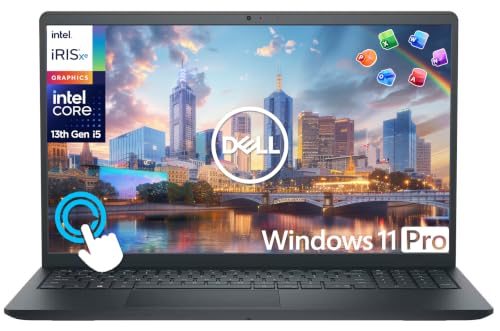
- 10-core Intel Core i5 with 16GB RAM
- 15.6-inch Full HD IPS touchscreen
- Includes hub, portable drive, mouse, and Office Suite
Best For: Multitasking, business coursework, and home-office productivity
Best Accessory Bundle

- Windows 11 Pro with Microsoft Office included
- Compact 14-inch design with Wi-Fi 6
- Includes 500GB drive and useful peripherals
Best For: Students wanting a ready-to-use schoolwork bundle
Best Budget Windows Pick – 15.6-inch Student Laptop with Office 365
For students seeking practical laptops for students, this Windows 11 model combines a large Full HD IPS display, 12GB of RAM, a 256GB SSD, and included Office 365. It is suited to everyday schoolwork, online classes, browsing, streaming, and document creation.
Best For: Students who want a large screen, Microsoft Office, and useful everyday connectivity at a budget-oriented price.
Pros:
- Includes one year of Office 365 and an AI assistant.
- 12GB RAM and a 256GB SSD support everyday multitasking and quick file access.
- 15.6-inch 1920×1080 IPS display with wide viewing angles.
- USB-C, USB 3.2, Mini HDMI, microSD, and headphone connectivity.
Cons:
- Battery life is rated for up to six hours.
- Intel Celeron J4105 is intended for everyday tasks rather than demanding workloads.
- At 3.7 pounds, it is less portable than smaller student laptops.
This is a straightforward school-and-home laptop with useful software included. Its screen and memory configuration are appealing for general student work, while the modest processor makes it best for basic productivity rather than intensive creative applications.
Best Compact Chromebook Value – Dell Chromebook 11 3100
This renewed Dell Chromebook is one of the more compact laptops for students, with an 11.6-inch display, Chrome OS, and a light 2.9-pound design. Its simple configuration is geared toward browser-based schoolwork, email, and other lightweight tasks.
Best For: Students who prioritize portability, long stated battery life, and Chrome OS basics.
Pros:
- Compact 11.6-inch design weighs 2.9 pounds.
- Battery life is listed at up to 14 hours.
- Chrome OS is well suited to web-based work and compatible accessories.
- Includes Bluetooth, Wi-Fi, USB connectivity, and a 90-day limited warranty.
Cons:
- 4GB of RAM and 16GB of flash storage are limited.
- 1366×768 resolution provides less workspace than Full HD displays.
- As a renewed product, it may have more variable condition than a new laptop.
The Dell 3100 makes sense when easy portability matters more than storage or high performance. Its small storage capacity means students will likely rely on cloud-based files and web apps, but the lightweight design and stated battery rating suit mobile classroom use.
Best Premium College Laptop – 13-inch MacBook Air with M5
The 2026 MacBook Air is a premium choice among laptops for students, pairing Apple’s M5 chip with 16GB of unified memory, a 512GB SSD, and a 13.6-inch Liquid Retina display. Its lightweight 2.71-pound design and up to 18 hours of stated battery life are especially useful for full days on campus.
Best For: College students who want strong multitasking, creative-work capability, premium portability, and Apple device integration.
Pros:
- M5 chip, 16GB unified memory, and 512GB SSD support demanding multitasking.
- Up to 18 hours of stated battery life.
- Sharp 13.6-inch Liquid Retina display supporting 1 billion colors.
- 12MP Center Stage camera, Wi-Fi 7, Touch ID, and support for up to two external displays.
Cons:
- Premium specifications may cost more than basic student laptops.
- It uses macOS rather than Windows, which may affect software compatibility.
- Only two Thunderbolt 4 ports are listed, so additional accessories may be needed.
This MacBook Air is the strongest all-around option here for students who can use macOS and want a long-lasting, highly portable computer. Its memory, storage, camera, and display also make it better suited to creative and communication-heavy coursework than entry-level models.
Best Everyday Windows Value – Lenovo IdeaPad Slim 3 15
This Lenovo IdeaPad Slim 3 is a practical option for students comparing laptops for students, offering an anti-glare 15.6-inch display, 8GB of LPDDR5 memory, Windows 11 Home, and Microsoft 365 Personal. Its 3.42-pound chassis and tested durability are useful for regular travel between home, school, and work.
Best For: Students who want a large anti-glare screen, familiar Windows tools, and a lightweight everyday laptop.
Pros:
- 15.6-inch anti-glare display with up to 1920×1200 resolution.
- 8GB LPDDR5 memory and Intel N150 processor suit browsing, documents, streaming, and meetings.
- Wi-Fi 6, USB-C with Power Delivery and DisplayPort, HDMI, USB-A, and SD card reader.
- Physical camera privacy shutter and MIL-STD-810H testing add practical appeal.
Cons:
- 128GB UFS storage is limited for large local files and applications.
- Memory is listed as non-expandable beyond 8GB.
- Integrated graphics are intended for everyday use rather than demanding graphics work.
The Lenovo offers a balanced setup for school assignments, video calls, and everyday entertainment. Its storage is the main limitation, but Microsoft 365, the anti-glare display, privacy shutter, and broad port selection make it a sensible general-purpose student computer.
Best for Easy Setup – PADIX NB15 15.6-inch Laptop
For shoppers comparing laptops for students, the PADIX NB15 focuses on essential schoolwork at a budget-friendly level. Its Windows 11 system, 15.6-inch Full HD anti-glare display, and portable design suit documents, email, online classes, and web browsing.
Best For: Students who need a basic Windows laptop with a large, clear screen for everyday coursework.
Pros:
- 15.6-inch 1920×1080 anti-glare display is useful for reading, spreadsheets, and video playback.
- Windows 11 supports common school and productivity tasks.
- Two full-featured USB-C ports, two USB 3.2 ports, and expandable TF-card storage add flexibility.
- Fanless operation, a 3.2-pound weight, and a 38Wh battery support quiet portable use.
Cons:
- 4GB of RAM and the Intel Celeron N4020 are intended for basic tasks rather than demanding workloads.
- 128GB of eMMC storage is limited, although storage can be expanded by up to 1TB with a TF card.
- The listed 1MP webcam is suitable for basic calls but not especially high resolution.
The PADIX NB15 is a practical choice when a full-size display and Windows compatibility matter more than high-end performance. It is best suited to lightweight academic work and everyday home-office use.
Best Premium Portable Pick – Apple MacBook Neo 13-inch
The Apple MacBook Neo is a polished option among laptops for students who want a lightweight computer for classes, assignments, and video calls. Its A18 Pro chip, 8GB unified memory, 256GB SSD, and macOS provide a stronger feature set in a 2.71-pound aluminum design.
Best For: Students who value portability, long battery life, Apple Intelligence features, and integration with an iPhone.
Pros:
- A18 Pro chip and 8GB unified memory support everyday assignments, presentations, and compatible AI tools.
- Up to 16 hours of battery life can cover extended school and study days.
- 13-inch Liquid Retina display supports 1 billion colors for crisp text and vivid media.
- 1080p camera, dual microphones, and side-firing speakers suit meetings and presentations.
Cons:
- The 13-inch screen is smaller than the 15.6-inch display on the PADIX option.
- macOS may require adjustment or compatibility checks for school-specific software.
- The supplied specifications do not list ports or display resolution details beyond the Liquid Retina display description.
With its low weight, durable recycled aluminum enclosure, and advertised battery endurance, the MacBook Neo is particularly appealing for students who carry a laptop between classes. Its Apple ecosystem features add value for iPhone users.
Best Chromebook Value – HP 14-inch Chromebook
The HP 14-inch Chromebook is a straightforward choice for students whose work is centered on web-based apps, browsing, video calls, and cloud workflows. Its Chrome OS platform, quad-core Intel Celeron N4120 processor, anti-glare display, and advertised 14-hour battery life emphasize accessible everyday use.
Best For: Students who primarily use browser-based coursework, Zoom, email, and lightweight productivity tools.
Pros:
- Four-core Intel Celeron N4120 processor is designed to handle basic multitasking.
- Advertised 14-hour battery life supports long school days away from an outlet.
- HDMI, USB-A, USB-C, Wi-Fi, and Bluetooth provide useful connectivity.
- Includes a webcam with privacy features and Microsoft Office 2024 according to the supplied details.
Cons:
- 4GB RAM and 64GB eMMC storage limit local capacity and demanding multitasking.
- The 14-inch 1366×768 display is less sharp than a Full HD screen.
- Chrome OS may not support every traditional Windows or macOS desktop application.
The HP Chromebook makes sense when affordability, battery life, and browser-based schoolwork are the priorities. Students needing extensive local storage or specialized desktop software should verify compatibility first.
Best Budget Study Pick – HP 14-Inch Everyday Laptop
For students seeking practical laptops for students, this HP model covers the essentials for web research, online classes, documents, streaming, and video calls. Its Intel N150 processor, Windows 11 Home, Copilot integration, and included Microsoft 365 subscription make it a straightforward productivity choice.
Best For: Students who need an affordable, lightweight laptop for everyday schoolwork and online learning.
Pros:
- Lightweight 3.24-pound design with a slim 14-inch anti-glare display.
- Includes a one-year Microsoft 365 Personal subscription with Word, Excel, PowerPoint, and OneDrive.
- Wi-Fi 6, Bluetooth 5.4, USB-C, two USB-A ports, HDMI, and an SD card reader provide flexible connectivity.
- 720p webcam, dual-array microphones, and AI noise reduction support clearer video calls.
Cons:
- 4GB of RAM is best suited to basic multitasking rather than demanding workloads.
- The 1366-by-768 display is less detailed than a Full HD panel.
- 128GB of UFS storage may require external or cloud storage for larger files.
This HP is a sensible fit for core student tasks, particularly when portability and included software matter more than high-end performance. Buyers planning to run demanding creative applications should consider a more powerful configuration.
Best Performance Upgrade – Dell Inspiron 15 Touchscreen Laptop
Among laptops for students, this Dell Inspiron stands out for its stronger multitasking setup and larger Full HD touchscreen. The 10-core Intel Core i5, 16GB of RAM, 512GB NVMe SSD, Windows 11 Pro, and bundled accessories make it well suited to busy academic and home-office routines.
Best For: Business students and users who frequently multitask, manage large files, or prefer a touchscreen workspace.
Pros:
- 10-core, 12-thread Intel Core i5-1334U processor with boost speeds up to 4.6GHz.
- 16GB RAM and a 512GB PCIe NVMe SSD support smoother multitasking and faster file access.
- 15.6-inch Full HD IPS touchscreen offers 1920-by-1080 resolution and wide viewing angles.
- Includes a 500GB portable drive, USB-C hub, wireless mouse, HDMI cable, and Office Suite.
Cons:
- At 3.7 pounds, it is less portable than smaller student laptops.
- Integrated graphics are intended for everyday use rather than demanding gaming or graphics work.
- The included storage setup combines the internal SSD with a separate external drive rather than providing 1TB of internal storage.
This Dell offers the most capable hardware in the group for productivity-heavy student use. Its touchscreen, numeric keypad, Windows 11 Pro, and bundled accessories add convenience, though its larger chassis may be less appealing for students who commute frequently.
Best Accessory Bundle – HP 14-Inch Student Laptop
This HP is one of the more feature-packed laptops for students who want a compact computer plus useful accessories. It combines an Intel N150 processor, Windows 11 Pro, Microsoft Office, a 14-inch anti-glare display, and a bundled 500GB portable drive for everyday school tasks.
Best For: Students who value a compact design, Windows 11 Pro, included Office software, and bundled peripherals.
Pros:
- Compact 3.2-pound chassis with a 14-inch anti-glare display and 720p webcam.
- Windows 11 Pro includes security and productivity features beyond the standard Home edition.
- Includes Microsoft Office, a 500GB portable drive, wireless mouse, earbuds, HDMI cable, and USB extension cable.
- Wi-Fi 6 support and HDMI connectivity make it convenient for classes and external displays.
Cons:
- 4GB of RAM may limit heavier multitasking.
- The 1366-by-768 display is less sharp than a Full HD screen.
- The listed 628GB capacity includes a separate 500GB external drive; internal storage is 128GB.
This bundle is appealing when included software and accessories are part of the buying decision. It handles everyday coursework well, but students working with demanding applications should look for more memory and a higher-resolution display.
How We Picked These Laptops for Students
We selected these models to represent a broad range of student needs and budgets. Our comparison considers processor class, memory, storage, display size, operating system, portability, battery expectations, included software, and suitability for common school tasks such as research, video calls, document editing, presentations, and online learning.
Specifications can vary by configuration, so verify the exact memory, storage, operating system, warranty, and included accessories on the product listing before ordering. Claims such as “AI” or “Copilot” do not automatically mean a computer is faster; practical performance still depends on the processor, RAM, and software.
Quick Comparison
- Best premium option: The 2026 MacBook Air offers a high-quality display, substantial storage, and strong performance in a portable design.
- Best for simple schoolwork: Chromebook models are affordable and well suited to browser-based assignments, Google Workspace, and video calls.
- Best Windows flexibility: Full Windows laptops support Microsoft Office, a wider range of desktop applications, and more traditional file management.
- Best for multitasking: Look for at least 8GB of RAM, with 16GB preferable for demanding workloads and longer useful life.
- Best for storage: A 512GB or 1TB SSD provides more room for projects, downloads, photos, and installed applications than a small eMMC drive.
Key Buying Factors for Laptops for Students
Operating System and Software
ChromeOS is straightforward and often inexpensive, but it relies heavily on web apps and may not run specialized Windows or macOS programs. Windows is the safest choice for broad software compatibility. macOS is appealing for students already invested in Apple devices and those who value a polished, portable computer.
Performance and Memory
For browsing, writing, presentations, and streaming, an entry-level processor can be sufficient. Students who regularly keep many browser tabs open, attend video meetings, edit media, code, or use demanding academic software should prioritize a stronger processor and 16GB of memory when possible.
Storage, Display, and Portability
Choose an SSD for faster startup and application loading. A 128GB drive may work for cloud-focused users but can fill quickly; 256GB is a more comfortable baseline, while 512GB or more suits students who store files locally. A 13- or 14-inch laptop is easier to carry, while a 15.6-inch screen offers more workspace. Check resolution, brightness, keyboard comfort, webcam quality, and weight—not just screen size.
Battery Life and Durability
Long battery life reduces dependence on outlets between classes. Also consider the charger size, warranty, return policy, hinge quality, keyboard layout, and availability of USB, HDMI, or headphone ports. A protective sleeve is a worthwhile addition for daily campus travel.
Who Should Buy Which Laptops for Students?
Choose a Chromebook if your coursework is primarily browser-based and keeping costs low is the priority. Choose an entry-level Windows laptop for Microsoft Office, general productivity, and broader application support. A model with 8GB or 16GB of RAM is better for multitasking and should remain useful longer.
Students in engineering, design, computer science, business analytics, or creative programs should confirm their school’s required software before buying. A MacBook may be ideal for macOS-compatible workflows, while a higher-spec Windows laptop is often safer for specialized applications. For the best balance of portability and longevity, prioritize a reliable SSD, at least 8GB of RAM, a comfortable keyboard, and a display you can use for several hours at a time.