
A USB hub with display output can turn a laptop’s limited ports into a practical workstation, adding monitor connectivity alongside USB devices, charging, and storage.
These 10 picks cover compact travel hubs, dual-monitor adapters, and full docking stations. The right choice depends on your laptop’s video protocol, desired resolution, operating system, and number of screens.
Best 10 USB Hub with Display Output Picks for 2026
Best Compact Pick
Anker 5-in-1 USB-C Hub with 4K HDMI

- 4K HDMI output at 30Hz
- Two USB-A and one USB-C data port
- Up to 85W pass-through charging
Best For: Simple single-monitor laptop setups
Best for Triple Displays
Acer 11-in-1 USB-C Docking Station
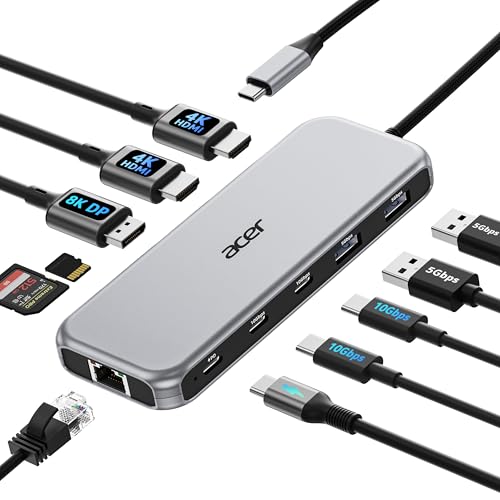
- Supports up to three monitors
- 8K DisplayPort and 4K HDMI outputs
- Ethernet, card readers, and 85W charging
Best For: Multi-monitor office and workstation setups
Best Port Variety
LIONWEI 13-in-1 Dual-Monitor USB-C Dock

- Dual HDMI plus DisplayPort output
- 13 total ports with Ethernet and audio
- Up to 87W laptop charging
Best For: Windows desk setups with many peripherals
Best Dual-Screen Productivity Pick
Anker 7-in-1 USB-C Hub for Dual 1080p Displays
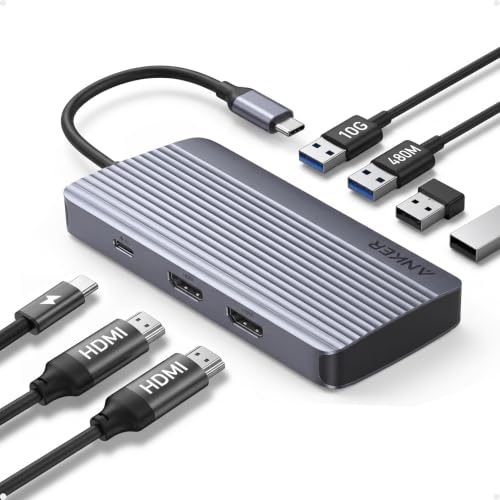
- Dual 1080p@60Hz display support
- 10Gbps data transfer
- Up to 85W charging output
Best For: Compatible laptop users building a dual-monitor office setup
Best Connectivity on a Budget

- HDMI output up to 4K@30Hz
- Gigabit Ethernet and three USB 3.0 ports
- SD and microSD card readers included
Best For: Home offices needing display, networking, USB, and card-reader ports
Best Compact Pick – Anker 5-in-1 USB-C Hub with 4K HDMI
If you need a straightforward usb hub with display output, the Anker 5-in-1 hub combines 4K HDMI with essential USB data ports and pass-through charging in a compact design. It supports up to 4K at 30Hz through HDMI, while its USB-C and USB-A data ports reach 5Gbps.
Best For: Laptop users who want one external display connection and a few fast peripheral ports without a full docking station.
Pros:
- HDMI supports up to 4K@30Hz for mirroring or extending content.
- Includes two USB-A ports and one USB-C data port with 5Gbps transfer speeds.
- Supports up to 85W pass-through charging with a compatible charger.
Cons:
- It has only one display output.
- The display output is limited to 4K@30Hz.
- Not compatible with Linux, and the USB-C ports do not support video output.
This is a practical, space-saving choice for everyday display expansion, file transfers, and charging. Choose it when you need HDMI rather than multi-monitor capability.
Best for Triple Displays – Acer 11-in-1 USB-C Docking Station
For demanding workstations, this Acer is a powerful usb hub with display output that supports HDMI, DisplayPort, fast USB connections, networking, storage cards, and charging. It can drive up to three displays at specified resolutions, making it better suited to a desk-based setup than a basic travel hub.
Best For: Professionals who need multiple monitors, wired Ethernet, high-speed storage access, and laptop charging from one USB-C connection.
Pros:
- Supports triple-display output up to 4K@60Hz + 4K@60Hz + 1080p@60Hz.
- Offers a DisplayPort output up to 8K@30Hz and two HDMI outputs up to 4K@60Hz individually.
- Combines 10Gbps USB-C, 5Gbps USB-A, SD/MicroSD, Gigabit Ethernet, and up to 85W laptop charging.
Cons:
- Requires a full-featured USB-C port with DisplayPort Alt Mode and charging support.
- A 100W power adapter is recommended for stable operation, but it is not listed as included.
- Triple-display performance depends on the laptop and connection configuration.
With its broad port selection and multi-monitor support, this is the most capable option here for a permanent productivity setup. Verify your laptop’s USB-C capabilities and display requirements before buying.
Best High-Speed Travel Hub – UGREEN Revodok 4K USB-C Adapter
The UGREEN Revodok is a portable usb hub with display output for users who want a single 4K@60Hz monitor connection alongside fast USB expansion. Its aluminum shell and integrated braided cable make it well suited to travel, while four 10Gbps USB ports support demanding peripherals.
Best For: Mobile professionals, creators, and device users connecting laptops, tablets, handhelds, or phones to a 4K display.
Pros:
- Provides 4K@60Hz video output to a monitor, projector, or compatible AR glasses.
- Includes two USB-A and two USB-C ports with 10Gbps transfer speeds.
- Supports up to 85W pass-through charging and has a compact aluminum build with a 30 cm braided cable.
Cons:
- It provides one display output rather than a multi-monitor setup.
- Pass-through charging requires a compatible charger.
- Video support depends on a compatible USB-C host device.
This hub balances display performance, high-speed connectivity, and portability better than a basic dongle. It is a strong fit when 4K at 60Hz matters but Ethernet, audio, and card readers are not priorities.
Best Port Variety – LIONWEI 13-in-1 Dual-Monitor USB-C Dock
This LIONWEI dock is a versatile usb hub with display output for users who need multiple video ports plus networking, audio, storage, and numerous USB connections. It supports dual HDMI and DisplayPort output, with Windows systems able to use triple-display modes under the stated conditions.
Best For: Windows laptop users building a feature-rich desk setup with multiple monitors, Ethernet, audio, and a wide mix of USB accessories.
Pros:
- Provides two HDMI outputs and one DisplayPort output, with up to 4K@60Hz on supported connections.
- Includes 10Gbps USB-C and USB-A connectivity, three USB 3.0 ports, and two USB 2.0 ports.
- Adds Gigabit Ethernet, a 3.5mm audio/mic jack, and up to 87W of laptop charging from 100W input.
Cons:
- macOS can extend only one monitor according to the supplied notes.
- Triple-display MST/SST support is specified for Windows systems.
- The dock uses 13W of the 100W input, leaving up to 87W for the laptop.
Its extensive port selection makes it a useful desktop replacement for Windows users, especially those who need audio and wired networking alongside display expansion. Mac users should account for the stated single-monitor extension limitation.
Best All-USB-C Pick – Acer 10Gbps USB-C Hub with 4K@60Hz Display
If you need a USB hub with display output and primarily use USB-C accessories, the Acer 4-in-1 hub is a focused option. It combines USB-C video, two 10Gbps USB-C data ports, and up to 90W host charging in a compact aluminum design.
Best For: USB-C laptops and tablets with a full-featured USB-C, USB4, or Thunderbolt port, especially users who want fast USB-C data connections.
Pros:
- USB-C display output supports up to 4K at 60Hz.
- Two USB-C data ports offer up to 10Gbps transfer speeds.
- Supports up to 100W input and 90W output charging.
- Portable aluminum enclosure with plug-and-play operation.
Cons:
- Video output requires DP Alt Mode, USB4, or Thunderbolt support on the host device.
- The PD port supports charging only, with no data or video.
- It provides only four total ports and no USB-A connectivity.
This is a strong choice when your setup is built around USB-C and you value fast data transfers over a larger mix of legacy ports. Remember to use a compatible charger, cable, host port, and display for the advertised performance.
Best for Everyday Use – Lemorele 7-in-1 USB-C Hub with Dual 4K Output
The Lemorele 7-in-1 is a versatile USB hub with display output for users who need both HDMI and USB-C video connections. It supports up to 4K at 60Hz through each video output and adds one USB-A 5Gbps port, three USB-A 2.0 ports, and PD pass-through charging.
Best For: Laptop users who need dual display connectors and several USB-A ports for peripherals, flash drives, portable monitors, or AR glasses.
Pros:
- Includes HDMI 2.0 and USB-C DP Alt Mode outputs, each supporting up to 4K at 60Hz.
- Offers one USB-A 3.0 port and three USB-A 2.0 ports.
- Supports up to 85W pass-through charging from a 100W charger.
- Supports mirror and extended display modes on compatible systems.
Cons:
- macOS supports mirrored output for both external monitors rather than MST extended displays.
- The three USB-A 2.0 ports are limited to 480Mbps.
- Requires a full-function USB-C connection for its display capabilities.
Choose this model if display flexibility and USB-A expansion matter more than maximum data speed on every port. It is particularly practical for mixed-device workspaces, though Mac users should account for the mirrored-display limitation.
Best Dual-Screen Productivity Pick – Anker 7-in-1 USB-C Hub for Dual 1080p Displays
The Anker 7-in-1 is a practical USB hub with display output for multitasking across two external screens. It supports dual 1080p displays at 60Hz, includes a 10Gbps data connection, and provides up to 85W output from a compatible 100W charger.
Best For: Windows, ChromeOS, and compatible Mac laptop users who want a dual-monitor productivity setup with fast file transfers and laptop charging.
Pros:
- Supports two external displays at 1080p and 60Hz.
- Includes 10Gbps data transfer for moving large files quickly.
- Provides up to 85W output from 100W input power.
- Works with USB-C, USB4, and Thunderbolt connections on supported systems.
Cons:
- It does not include an Ethernet port.
- macOS displays on both external monitors are identical.
- It is not compatible with Linux, and the wall charger is not included.
This hub makes the most sense for office productivity where two 1080p screens are sufficient. Its 10Gbps transfer support and 85W charging add useful convenience, but confirm operating-system compatibility and display behavior before buying.
Best Dual-Display Value – Acer 4-in-1 USB-C Hub
The Acer 4-in-1 is a practical USB hub with display output for laptops with a full-function USB-C port. It combines two HDMI outputs, a USB-A data port, and USB-C power delivery in a compact design, with support for dual 4K displays at up to 60Hz.
Best For: Windows or macOS laptop users who need two HDMI displays, fast USB-A transfers, and pass-through charging from one hub.
Pros:
- Supports dual HDMI displays at up to 4K@60Hz.
- Includes a 5Gbps USB-A port for file transfers.
- Offers up to 100W PD input and up to 90W charging to the host device.
- Compact form factor with broad support for full-function USB-C ports.
Cons:
- Requires a compatible USB-C port with DP Alt Mode and charging support.
- Power adapter and cable are not included.
- Mac users should verify display compatibility before buying.
This Acer hub is a focused choice when dual HDMI output matters more than card readers or Ethernet. Its 4K60 capability and pass-through charging make it well suited to a streamlined desk setup, provided your laptop supports the required USB-C features.
Best Full-Featured Windows Dock – Anker Nano 8-in-1 USB-C Hub
The Anker Nano is a versatile USB hub with display output for Windows laptops that need more than basic ports. It provides two HDMI outputs, 10Gbps USB-A and USB-C data connections, SD and TF card readers, and up to 85W laptop charging through a 100W PD input.
Best For: Windows users who want dual 4K monitors plus fast data ports, memory-card readers, and laptop charging in one aluminum hub.
Pros:
- Supports up to two 4K@60Hz displays on compatible Windows systems.
- Provides 10Gbps speeds across its USB-A and USB-C data ports.
- Includes both SD and TF card slots with transfer speeds up to 104MB/s.
- Supports up to 85W laptop charging with a suitable 100W charger.
Cons:
- On macOS, both external displays mirror the same content.
- Not compatible with Linux.
- Charger and cable are not included.
For a Windows workstation, the Anker Nano offers the broadest port selection of these options. Its dual-display performance depends on a compatible DP 1.4 connection with DSC, so check your laptop specifications before expecting dual 4K output.
Best Connectivity on a Budget – GIQ USB 3.0 DisplayLink Dock
The GIQ docking station is a flexible USB hub with display output for older and newer laptops that need extra connectivity. Along with HDMI display support, it includes three USB 3.0 ports, Gigabit Ethernet, SD and microSD readers, and compatibility with Windows, macOS, Chrome OS, Ubuntu, and Android systems.
Best For: Home offices and travel setups that need HDMI output, wired networking, USB accessories, and card-reader access in a compact dock.
Pros:
- Combines HDMI output with three USB 3.0 ports.
- Includes 10/100/1000Mbps Gigabit Ethernet.
- Provides SD and microSD card slots.
- Supports screen mirroring or extending at up to 4K 30Hz, or Full HD 1080p.
Cons:
- HDMI output is limited to 4K at 30Hz rather than 60Hz.
- SD and microSD slots cannot be used simultaneously.
- The USB-C port is for charging the dock’s connected devices and does not charge the laptop.
Choose the GIQ when port variety and Ethernet are more important than high-refresh-rate 4K video. It is a compact, broadly compatible option for everyday displays and peripherals, but users seeking smoother 4K output should consider a 4K60 model instead.
How We Picked the Best USB Hub with Display Output
We focused on hubs and docking stations that combine dependable display connectivity with useful expansion ports. Our comparison considers supported resolutions and refresh rates, the number and type of video outputs, USB data speeds, power delivery, compatibility, and the practical trade-offs between compact hubs and larger desktop docks.
We also separated native USB-C video solutions from DisplayLink-based docks. Native video generally requires a compatible USB-C port with DisplayPort Alt Mode, while DisplayLink models may support more flexible multi-monitor setups but typically require software and driver installation.
Quick Comparison
| What to compare | Best fit |
|---|---|
| Single 4K display | Compact USB-C hub with HDMI or USB-C video |
| Two monitors | Dual-output hub or docking station; verify operating-system support |
| Three monitors | Dedicated multi-monitor dock, often DisplayLink-based |
| High-speed peripherals | Hub with 10Gbps USB ports |
| Desk-based setup | Dock with power delivery, Ethernet, audio, and several display outputs |
| Travel | Small 5-in-1 or 7-in-1 hub with an attached or short cable |
Key Buying Factors for a USB Hub with Display Output
Display Compatibility
Check whether your laptop supports video over USB-C. A USB-C connector alone does not guarantee display output. Confirm the hub’s maximum resolution and refresh rate, such as 4K at 60Hz, and compare those limits with your monitor. HDMI, DisplayPort, and USB-C video outputs may have different capabilities.
Number of Screens
For one external monitor, a simple HDMI hub is often enough. Dual- and triple-monitor setups require closer attention: some computers mirror displays rather than extending them, and certain Macs limit the number of native external screens. DisplayLink docks can expand monitor support on compatible systems, but they depend on software.
Ports and Bandwidth
Count the ports you will actually use. USB 3.x ports are preferable for external SSDs, while USB 2.0 ports can handle keyboards and mice. Ethernet, SD or microSD readers, audio, and extra USB-C ports may justify a larger dock. Remember that connected devices share available bandwidth.
Power Delivery and Reliability
Pass-through charging is useful when one laptop port handles both the hub and charger. Compare the advertised wattage with your laptop’s requirements, and allow for power used by the hub itself. For a permanent desk setup, a powered dock is usually more convenient than a bus-powered travel adapter.
Who Should Buy Which USB Hub with Display Output?
Choose a compact hub if you mainly need one monitor, a few USB accessories, and easy portability. Select a dual-monitor model if you are building a productivity workspace, but confirm native video support and operating-system restrictions before ordering. A multi-monitor DisplayLink dock is better for users who need three screens or broader compatibility and do not mind installing drivers.
For fast storage and frequent file transfers, prioritize 10Gbps USB connectivity. For a laptop used as a desktop replacement, look for power delivery, Ethernet, audio, card readers, and enough display outputs in one dock. Finally, check the included cable, warranty, dimensions, and heat-management design—small details that affect daily convenience as much as headline specifications.