
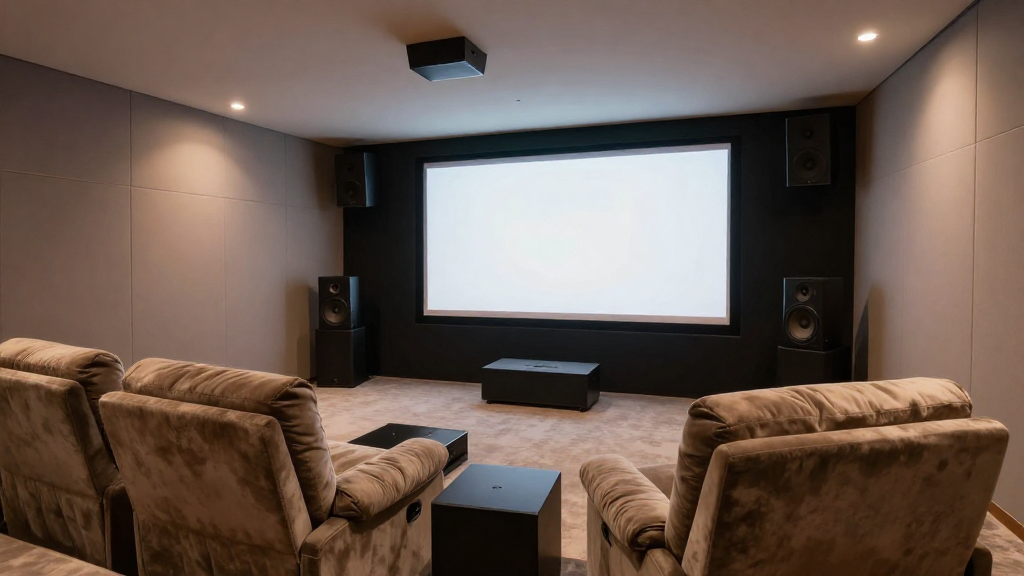
In this article, we will explore the different home theater speaker layouts explained, focusing on how each layout can enhance your audio experience.
What are the Common Speaker Layouts?
Understanding the common speaker layouts is essential for achieving the best sound quality in your home theater setup. Each layout has unique characteristics that can significantly impact your listening experience.
1. 5.1 Surround Sound Layout
The 5.1 surround sound layout is one of the most popular configurations for home theaters. This setup includes five speakers and one subwoofer. The five speakers consist of a center channel speaker, two front speakers, and two rear surround speakers.
- Center Channel Speaker: This speaker handles dialogue, making it crucial for clear sound.
- Front Speakers: These are positioned to the left and right of the screen, providing directional sound.
- Surround Speakers: Placed behind the audience, these speakers create an immersive sound experience.
2. 7.1 Surround Sound Layout
For those looking for an enhanced audio experience, the 7.1 surround sound layout adds two additional speakers to the standard 5.1 configuration. These added speakers provide an even more immersive sound experience.
- Additional Rear Speakers: The two extra speakers are placed behind the seating area, creating depth in sound.
- Improved Soundstage: This layout enhances the overall soundstage, making movies and music more engaging.
- Ideal for Large Rooms: Best suited for larger spaces where sound can disperse effectively.
How Do You Choose the Right Layout for Your Space?
Choosing the right speaker layout for your home theater is crucial for optimizing sound quality. Consider the size of your room, the layout of your furniture, and your personal audio preferences.
1. Room Size Considerations
The size of your room plays a significant role in determining the best speaker layout. Larger rooms may benefit from a 7.1 setup, while smaller rooms might be better suited for a 5.1 configuration.
- Small Rooms: A 5.1 layout can provide adequate sound without overwhelming the space.
- Medium to Large Rooms: Consider a 7.1 layout for a more immersive experience.
2. Seating Arrangement
Your seating arrangement can also influence your choice of speaker layout. The placement of speakers in relation to your seating area is vital for achieving optimal sound quality.
- Direct Listening: Ensure that speakers are positioned for optimal direct sound to the listener.
- Distance from Wall: Speakers should be placed at a suitable distance from walls to prevent sound distortion.
3. Personal Audio Preferences
Your personal preferences play an important role in selecting a speaker layout. Whether you prefer a more cinematic experience or a balanced sound for music, different layouts can cater to your needs.
- Cinematic Experience: 7.1 layouts are ideal for those who enjoy movies.
- Music Lovers: A good 5.1 setup can also suffice for balanced music playback.
What Are the Benefits of Different Layouts?
Different home theater speaker layouts explained come with various benefits. Understanding these benefits can help you make an informed decision for your home theater setup.
1. Enhanced Immersion
Layouts like 7.1 surround sound offer enhanced immersion, making you feel like you’re part of the action. With more speakers, sound can come from multiple directions.
- Surround Sound Effects: Sounds from behind and to the sides create a more realistic experience.
- Dynamic Soundscapes: Rich soundscapes can enhance the emotional impact of films.
2. Improved Clarity
A well-designed speaker layout can improve clarity, especially in dialogue-heavy content. A dedicated center channel speaker can significantly enhance vocal clarity.
- Dialogue Clarity: Ensures that dialogue is crisp and easy to understand.
- Reduced Audio Overlap: Separate speakers for different sounds prevent audio overlap.
3. Flexibility in Usage
Different layouts provide flexibility for various types of media. Whether you’re watching movies, playing video games, or listening to music, the right layout can enhance your experience.
- Multi-Purpose Use: A versatile layout can cater to different media types.
- Personalization: Customize your layout based on how you use your home theater.
What Equipment Do You Need for Each Layout?
Each speaker layout requires specific equipment to ensure optimal performance. Understanding what you need for your chosen layout can help you plan your home theater effectively.
1. Essential Components for 5.1 Layout
If you choose the 5.1 layout, you’ll need specific components to set it up effectively.
- Five Speakers: One center, two front, and two surround speakers.
- One Subwoofer: Essential for low-frequency sounds and bass.
- AV Receiver: To connect and control all speakers and audio sources.
2. Essential Components for 7.1 Layout
For a 7.1 layout, you will need additional components compared to the 5.1 layout.
- Seven Speakers: Adds two rear speakers to the standard 5.1 setup.
- One Subwoofer: Still essential for deep bass sounds.
- Advanced AV Receiver: Ensure it supports 7.1 configurations.
3. Additional Accessories
To enhance your home theater experience further, consider investing in additional accessories that complement your speaker layout.
- Cables and Wires: High-quality cables ensure better signal transmission.
- Speaker Stands: Properly position your speakers for optimal sound.
- Acoustic Panels: Improve sound quality by reducing echo and reverberation.
Conclusion: Which Layout is Right for You?
Choosing the right speaker layout for your home theater is a crucial decision that can significantly impact your viewing experience. Whether you opt for a 5.1 or 7.1 layout, understanding the various home theater speaker layouts explained will help you make an informed choice.
Consider the size of your room, your seating arrangement, and your personal audio preferences when making your decision. With the right layout and equipment, you can enjoy a cinematic experience right in your home.