
Dead zones, dropped video calls, and overloaded routers can make even a fast internet plan feel unreliable. The best mesh Wi-Fi systems use multiple nodes to spread a stronger, more consistent connection throughout your home.
We compared 10 Wi-Fi 6, Wi-Fi 6E, and Wi-Fi 7 options across coverage, speed, capacity, features, and value to help you choose the right setup for your space and broadband plan.
Best 10 Mesh Wifi Systems Picks for 2026
Best Overall Coverage
TP-Link Deco X55 AX3000 3-Pack

- Wi-Fi 6 coverage up to 6,500 sq. ft.
- Supports up to 150 connected devices
- Three Gigabit ports per unit with wired backhaul
Best For: Larger homes with many connected devices
Best Budget Wi-Fi 7 Upgrade

- Wi-Fi 7 with Multi-Link Operation
- Covers up to 6,000 sq. ft.
- Supports plans up to 2.5 Gbps
Best For: Future-focused homes seeking simple multi-gigabit Wi-Fi
Best Value Wi-Fi 5 System
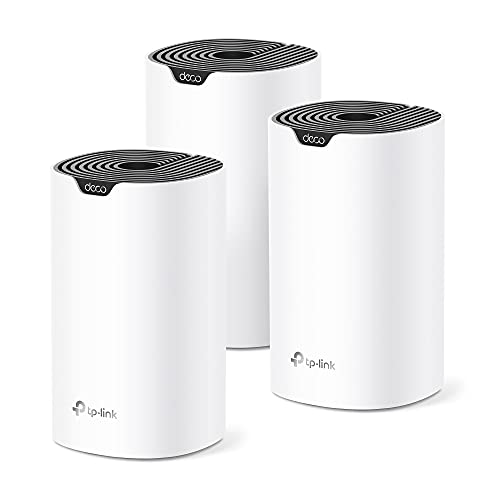
- Covers up to 5,500 sq. ft.
- Supports up to 100 devices
- Includes Gigabit ports and wired backhaul
Best For: Budget-friendly whole-home coverage
Best for Small Homes
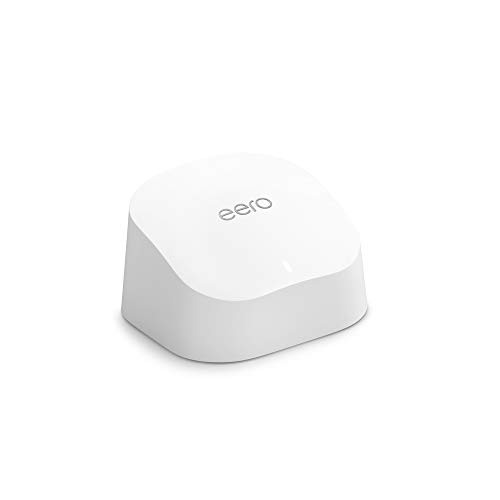
- Covers up to 1,500 sq. ft.
- Supports plans up to 900 Mbps
- Expandable and supports 75-plus devices
Best For: Apartments and smaller homes needing simple Wi-Fi 6
Best Overall 6E Coverage

- WiFi 6E tri-band design with 5,400 Mbps speeds
- Coverage up to 7,200 square feet
- Supports up to 200 connected devices
Best For: Large homes and device-heavy networks
Best Value Gigabit Mesh

- Supports gigabit internet plans
- Covers up to 4,500 square feet
- Built-in Thread and Zigbee smart home hub
Best For: Families wanting easy setup and reliable coverage
Best Compact 6E Setup
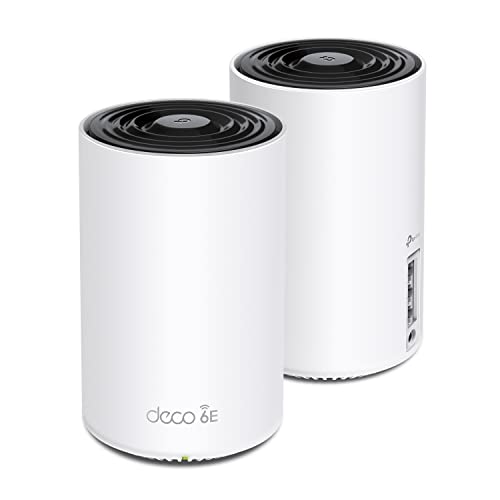
- WiFi 6E tri-band speeds up to 5,400 Mbps
- Coverage up to 5,500 square feet
- Supports up to 200 devices
Best For: Homes needing strong 6E coverage from two nodes
Best WiFi 7 Value

- Wi-Fi 7 dual-band speeds up to 5,000 Mbps
- Coverage up to 4,600 sq. ft. for 150+ devices
- 2.5 Gbps Ethernet and app-based management
Best For: Homes wanting affordable Wi-Fi 7 coverage
Best Large-Home Budget Pick
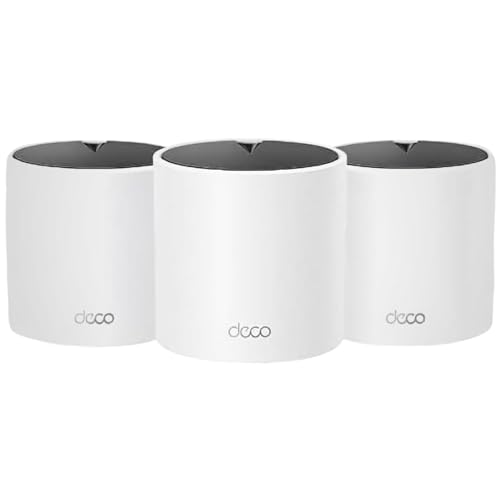
- Covers up to 5,600 sq. ft.
- Supports up to 120 connected devices
- Six Gigabit Ethernet ports for wired backhaul
Best For: Large homes seeking affordable Wi-Fi 6 coverage
Best High-Performance System

- Tri-band Wi-Fi 7 with speeds up to 10,000 Mbps
- Covers up to 7,600 sq. ft. for 200+ devices
- Four 2.5G ports plus USB 3.0 connectivity
Best For: Large, high-demand homes needing maximum capacity
Best Overall Coverage – TP-Link Deco X55 AX3000 3-Pack
For shoppers comparing mesh wifi systems for a larger home, the TP-Link Deco X55 3-pack combines Wi-Fi 6 performance, broad coverage, and useful wired-backhaul support. It covers up to 6,500 square feet and is designed to handle many connected devices without relying on traditional range extenders.
Best For: Larger homes that need Wi-Fi 6 coverage for many devices, with the option to use Ethernet backhaul.
Pros:
- Coverage for up to 6,500 square feet
- Supports up to 150 connected devices
- Three Gigabit Ethernet ports per unit and wired backhaul support
- Deco app setup, network management, and basic HomeShield features
Cons:
- Requires a modem for most internet service providers
- Advanced HomeShield security features may require a subscription
The Deco X55 is a strong all-around choice when coverage, device capacity, and flexible networking matter more than having the newest Wi-Fi generation.
Best Budget Wi-Fi 7 Upgrade – Amazon eero 7 3-Pack
The Amazon eero 7 is a forward-looking option among mesh wifi systems, adding Wi-Fi 7 features and support for internet plans up to 2.5 Gbps. This three-pack covers up to 6,000 square feet and uses eero software to help maintain reliable connections throughout the home.
Best For: Households that want an affordable Wi-Fi 7 system with multi-gigabit support and simple app-based management.
Pros:
- Wi-Fi 7 support with Multi-Link Operation
- Coverage up to 6,000 square feet
- Supports 120-plus devices and internet plans up to 2.5 Gbps
- Two auto-sensing 2.5 GbE ports per unit
Cons:
- Advanced security, parental controls, and related tools require the optional eero Plus subscription
- Dual-band design may offer fewer wireless bands than some higher-end systems
With a three-year warranty and backward compatibility with earlier eero hardware, the eero 7 is a practical way to move into Wi-Fi 7 without choosing a premium-tier system.
Best Value Wi-Fi 5 System – TP-Link Deco S4 AC1900 3-Pack
If you want affordable mesh wifi systems for a medium-to-large home, the TP-Link Deco S4 3-pack provides straightforward Wi-Fi 5 coverage without the cost of newer standards. Its three units cover up to 5,500 square feet and use one network name for seamless roaming.
Best For: Budget-conscious households that need broad coverage, basic parental controls, and Gigabit Ethernet.
Pros:
- Coverage up to 5,500 square feet
- Supports up to 100 connected devices
- Gigabit Ethernet ports and wired-backhaul support
- Parental controls, guest Wi-Fi, and Alexa compatibility
Cons:
- Uses Wi-Fi 5 rather than Wi-Fi 6 or Wi-Fi 7
- Performance can vary with distance, walls, and other obstacles
- Requires a modem for most internet providers
The Deco S4 makes sense for everyday streaming, browsing, and smart-home use when dependable whole-home coverage is more important than the latest wireless technology.
Best for Small Homes – Amazon eero 6 Wi-Fi 6 Router
For a smaller space, the single-unit Amazon eero 6 is a compact choice among mesh wifi systems. It covers up to 1,500 square feet, supports internet plans up to 900 Mbps, and can be expanded later with compatible eero hardware.
Best For: Apartments, smaller homes, and households wanting easy Wi-Fi 6 setup for up to 75 devices.
Pros:
- Wi-Fi 6 coverage up to 1,500 square feet
- Supports speeds up to 900 Mbps and 75-plus devices
- TrueMesh routing helps reduce drop-offs
- Built-in Zigbee smart-home hub and automatic updates
Cons:
- One unit provides less coverage than the multi-pack systems listed here
- Coverage and performance depend on the home layout and obstacles
The eero 6 is a sensible starting point for smaller homes, especially if you value guided setup and the ability to expand the network later.
Best Overall 6E Coverage – TP-Link Deco XE75 3-Pack
For larger homes or households with many connected devices, this three-pack is a strong mesh wifi systems option. Its WiFi 6E tri-band design includes a dedicated 6 GHz band, while the three units can cover up to 7,200 square feet.
Best For: Large homes, busy networks, and users who want WiFi 6E capacity with room to expand coverage.
Pros:
- Tri-band WiFi 6E with a new 6 GHz band and speeds up to 5,400 Mbps.
- Rated to cover up to 7,200 square feet and support up to 200 devices.
- App-based setup, AI-driven mesh management, Alexa compatibility, and basic HomeShield features.
Cons:
- WiFi 6E benefits require compatible devices for direct 6 GHz connections.
- A modem is required for most internet service providers.
The three-unit configuration makes this Deco XE75 a practical choice when coverage is the priority. Its 6 GHz band can also serve as a backhaul by default to help maintain connections between nodes.
Best Value Gigabit Mesh – Amazon eero 6+ 3-Pack
The eero 6+ is a straightforward mesh wifi systems choice for households seeking gigabit support without moving to WiFi 6E. This three-pack covers up to 4,500 square feet, supports 75-plus devices, and uses TrueMesh routing to help reduce dead spots and drop-offs.
Best For: Families that want simple setup, reliable whole-home connectivity, and support for gigabit internet plans.
Pros:
- Supports internet plans up to a gigabit and uses a 160 MHz WiFi channel for added bandwidth.
- Three-pack coverage reaches up to 4,500 square feet and supports 75-plus devices.
- Easy app-guided setup, automatic updates, and a built-in Thread and Zigbee smart home hub.
Cons:
- Online security and additional network management features require a separate subscription.
- It does not include the newer 6 GHz band found on WiFi 6E systems.
With simple management and built-in smart home connectivity, the eero 6+ is well suited to buyers who value convenience. It is especially appealing when gigabit support and broad device compatibility matter more than the latest wireless band.
Best Compact 6E Setup – TP-Link Deco XE75 2-Pack
This two-pack delivers the same core WiFi 6E platform as the larger Deco XE75 system in a more compact configuration. For mesh wifi systems shoppers with a moderately sized home, it offers tri-band connectivity, a 6 GHz band, and coverage rated up to 5,500 square feet.
Best For: Medium-to-large homes that need WiFi 6E performance without a three-unit kit.
Pros:
- Tri-band WiFi 6E supports total speeds up to 5,400 Mbps.
- Coverage reaches up to 5,500 square feet, with support for up to 200 devices.
- Includes app-based setup, AI-driven mesh management, Alexa compatibility, and basic parental controls.
Cons:
- Compatible WiFi 6E devices are needed to connect directly to the 6 GHz network.
- Two units provide less included coverage than the three-pack version.
The two-pack is a sensible middle ground for buyers who want the Deco XE75 feature set but do not need the maximum coverage of three nodes. Its 6 GHz band can operate as a backhaul by default for stable node-to-node connections.
Best WiFi 7 Value – Deco 7 BE25
The Deco 7 BE25 is a practical choice for shoppers comparing mesh wifi systems and wanting Wi-Fi 7 performance without moving to a tri-band setup. Its dual-band BE5000 design supports fast home networking, broad coverage, and simple app-based management.
Best For: Homes needing Wi-Fi 7 coverage for streaming, gaming, and many connected devices.
Pros:
- Rated for coverage up to 4,600 square feet and more than 150 devices.
- Offers up to 5,000 Mbps combined wireless data rate, with a 2.5 Gbps Ethernet port.
- Supports AI roaming, wired and wireless backhaul, parental controls, and basic network security features.
Cons:
- Dual-band design has less dedicated wireless capacity than a tri-band system.
- A separate modem is required, and backhaul features require at least two Deco units.
This system balances modern Wi-Fi 7 capabilities with straightforward setup through the Deco app. It is a strong middle-ground option for households that want broad coverage and future-ready connectivity without the larger specifications of the Deco 7 Pro.
Best Large-Home Budget Pick – Deco X15 3-Pack
The TP-Link Deco X15 3-Pack is one of the more accessible mesh wifi systems for expanding coverage across a larger home. Its Wi-Fi 6 hardware is designed to reduce dead zones, support numerous devices, and provide a single network name throughout the house.
Best For: Larger homes that prioritize broad coverage, wired backhaul, and dependable Wi-Fi 6 performance.
Pros:
- Three units cover up to 5,600 square feet and support up to 120 devices.
- Wi-Fi 6 speeds are rated up to 1,201 Mbps on 5 GHz and 300 Mbps on 2.4 GHz.
- Six total Gigabit Ethernet ports support wired backhaul, while the Deco app simplifies setup and remote management.
Cons:
- Its AX1500 Wi-Fi 6 speeds are lower than the Wi-Fi 7 systems in this roundup.
- Gigabit Ethernet limits wired throughput compared with multi-gigabit alternatives.
The X15 makes sense when coverage matters more than cutting-edge wireless speeds. The three-pack configuration, wired-backhaul support, and compatibility with other Deco products give it useful flexibility for everyday streaming, smart-home devices, and general household use.
Best High-Performance System – Deco 7 Pro BE10000
The Deco 7 Pro is a premium option among mesh wifi systems, combining tri-band Wi-Fi 7 with high-capacity wired connectivity. With coverage rated up to 7,600 square feet, support for more than 200 devices, and multi-gigabit ports, it is built for demanding connected homes.
Best For: Performance-focused households with many devices, fast internet service, and high-bandwidth streaming or gaming needs.
Pros:
- Three-pack coverage reaches up to 7,600 square feet and supports more than 200 devices.
- Tri-band Wi-Fi 7 provides rated speeds up to 5,188 Mbps on 6 GHz and 4,324 Mbps on 5 GHz.
- Includes four 2.5G WAN/LAN ports, a USB 3.0 port, and Wi-Fi 7/10G backhaul support.
Cons:
- Its advanced features may be more than smaller or lightly connected homes need.
- A separate modem is required, and wireless backhaul requires at least two Deco units.
The Deco 7 Pro stands out when both coverage and capacity are priorities. Its extra band and multi-gigabit connectivity make it the strongest fit here for future-focused networks, although buyers should have compatible devices and internet service to take full advantage of its specifications.
How We Picked the Best Mesh Wifi Systems
We evaluated these mesh Wi-Fi systems based on wireless standard, advertised coverage, maximum supported internet speed, device capacity, band configuration, setup features, and overall fit for different household needs. We also considered whether each system makes sense for typical apartments, mid-size homes, large properties, or demanding multi-device networks.
Advertised coverage and speeds are estimates. Walls, interference, node placement, client-device compatibility, and internet service can significantly affect real-world performance. A faster system is not automatically the better buy if your broadband plan or home layout cannot take advantage of it.
Quick Comparison
Wi-Fi 6 systems such as the Deco X55, Deco X15, Deco S4, and eero 6 models generally offer the best balance of price and everyday performance. Wi-Fi 6E systems, including the Deco XE75, add access to the less-congested 6 GHz band when compatible devices are nearby. Wi-Fi 7 options such as the eero 7 and Deco 7 models are better suited to newer devices, faster internet plans, and buyers who want more headroom for several years.
Three-packs can cover larger homes, but a two-pack may be preferable when you want fewer wireless hops or have a compact layout. Check each product’s advertised coverage against your floor plan rather than assuming more nodes always means better performance.
Key Buying Factors for Mesh Wi-Fi Systems
Speed and Wi-Fi Generation
Match the system to your internet plan and devices. Wi-Fi 6 is sufficient for many households, while Wi-Fi 6E can reduce congestion and Wi-Fi 7 is most valuable with multi-gigabit service and newer compatible hardware.
Coverage and Placement
Place the primary unit near the modem and position satellite nodes in open areas between it and weak-signal zones. Avoid hiding nodes in cabinets or placing them at the far edge of coverage, where the backhaul connection may be weak.
Ethernet Ports and Backhaul
Wired Ethernet backhaul can improve stability and preserve wireless capacity. Count the ports you need for televisions, desktops, switches, or access points, and verify whether the system supports the wired configuration you want.
App Features and Compatibility
Look for straightforward setup, guest networking, parental controls, automatic updates, and useful security tools. If you already own compatible units from the same brand, confirm that the new system can join the existing mesh.
Who Should Buy Which Mesh Wifi Systems?
Choose the Deco S4 or Deco X15 for budget-conscious coverage in a smaller or mid-size home. The Deco X55 and eero 6+ are strong all-around choices for busy households that want dependable Wi-Fi 6 performance. The standard eero 6 is a sensible single-node option for an apartment or smaller space.
Consider the Deco XE75 two- or three-pack if you have compatible 6 GHz devices or significant wireless congestion. The eero 7 and Deco 7 BE25 fit buyers upgrading to Wi-Fi 7 and multi-gigabit service, while the Deco 7 Pro is aimed at large, highly connected homes that need maximum capacity and performance headroom.