
A mesh Wi-Fi system with PoE nodes can simplify whole-home networking by combining wireless coverage with Ethernet-powered access points. It is especially useful in larger homes, offices, garages, outdoor areas, and new builds where running cable is practical.
Our roundup includes consumer-friendly mesh kits, business-oriented Omada access points, Wi-Fi 6E and Wi-Fi 7 options, and outdoor hardware. Use the guide below to compare performance, installation requirements, coverage, and long-term value before you buy.
Best 10 Mesh Wi Fi System with Poe Nodes Picks for 2026
Best PoE Mesh Pick

- Wi-Fi 6 AX3000 performance
- PoE+ or plug-in power options
- Up to 6,500 sq. ft. coverage
Best For: Flexible home mesh installations with PoE support
Best Affordable Wi-Fi 7 Mesh

- Wi-Fi 7 with MLO support
- Up to 6,000 sq. ft. coverage
- Two 2.5 GbE ports per unit
Best For: Easy whole-home Wi-Fi 7 upgrades
Best Business PoE Access Point

- 802.3af and passive PoE support
- Omada cloud and app management
- Mesh and seamless roaming capability
Best For: Small-business networks needing managed PoE access points
Best High-Performance Mesh

- Tri-band Wi-Fi 7 performance
- 10G port plus four 2.5G ports
- Up to 5,800 sq. ft. coverage
Best For: Large, high-device homes with multi-gigabit networking
Best Outdoor Node
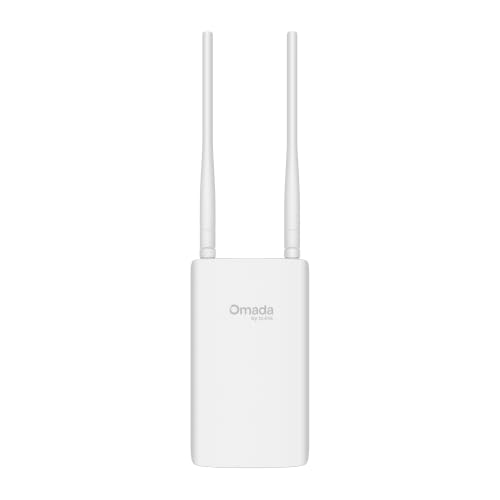
- Wi-Fi 6 speeds up to 1.8 Gbps
- IP65 weatherproof with 6 kV lightning protection
- Supports 802.3at and passive PoE
Best For: Outdoor mesh extensions, patios, yards, and workshops
Best Whole-Home Mesh Kit

- Tri-band Wi-Fi 6E up to 5,400 Mbps
- Three-pack covers up to 7,200 square feet
- 6 GHz band supports wireless backhaul
Best For: Large homes and high-device-count Wi-Fi 6E networks
Best Managed Indoor PoE Node

- Wi-Fi 6 speeds up to 2,976 Mbps
- Supports Omada Mesh and seamless roaming
- 802.3at PoE+ with five-year warranty
Best For: Managed indoor networks in homes, offices, and commercial spaces
Best PoE Wi-Fi 7 Node

- Wi-Fi 7 tri-band speeds up to 11,000 Mbps
- PoE supports clean one-cable installation
- Two 5 Gbps WAN/LAN ports
Best For: High-speed homes with Ethernet cabling and a need for flexible node placement
Best Outdoor PoE Mesh Node

- IP66 weatherproof design for year-round outdoor use
- Up to 15,000 square feet of outdoor coverage
- Supports AC or PoE+ power
Best For: Patios, yards, and outdoor areas needing weather-resistant mesh coverage
Best Complete Wi-Fi 7 Mesh Kit

- Three-unit kit covers up to 6,000 square feet
- Wi-Fi 7 speeds up to 5 Gbps
- Includes 2.5 Gbps Ethernet support
Best For: Larger homes wanting a ready-to-use indoor Wi-Fi 7 mesh system
Best PoE Mesh Pick – TP-Link Deco X50-PoE
The TP-Link Deco X50-PoE is a practical mesh wi fi system with poe nodes for homes or small spaces where flexible node placement matters. Its Wi-Fi 6 performance, PoE+ support, 2.5G ports, and claimed coverage up to 6,500 square feet make it well suited to demanding connected households. A PoE+ switch is required for PoE deployment and is not included.
Best For: Homes that want ceiling-mountable mesh nodes, multi-gigabit wired connectivity, and coverage for up to 150 devices.
Pros:
- Supports PoE+ or standard power, allowing more flexible installation.
- Two 2.5 Gigabit Ethernet ports per unit support fast wired connections.
- Wi-Fi 6 speeds, AI-driven roaming, and coverage rated up to 6,500 square feet.
- Includes app management, HomeShield features, and WPA3 support.
Cons:
- The PoE+ switch needed for PoE installation is sold separately.
- It is a dual-band Wi-Fi 6 system rather than a newer Wi-Fi 7 platform.
Choose the Deco X50-PoE when installation flexibility is as important as wireless performance. It is especially compelling for homes already using Ethernet or planning a structured PoE network.
Best Affordable Wi-Fi 7 Mesh – Amazon eero 7
The Amazon eero 7 is a straightforward Wi-Fi 7 mesh option for shoppers who want broad coverage without configuring a business-style network. This three-pack supports internet plans up to 2.5 Gbps, covers up to 6,000 square feet, and uses two auto-sensing 2.5 GbE ports on each unit. It is not a PoE-powered system, so each node needs its supported power connection.
Best For: Households seeking an easy-to-manage Wi-Fi 7 mesh system for fast plans and more than 120 connected devices.
Pros:
- Wi-Fi 7 features include multi-link operation for improved performance.
- Supports plans up to 2.5 Gbps with two 2.5 GbE ports per router.
- Three units cover up to 6,000 square feet and support 120-plus devices.
- TrueMesh software, a three-year warranty, and backward compatibility add convenience.
Cons:
- There is no supplied PoE power option for ceiling or Ethernet-powered nodes.
- Advanced security and parental-control features require an optional eero Plus subscription.
The eero 7 is a good fit when simple setup and current wireless technology matter more than PoE deployment. Its 2.5 GbE ports also give wired devices and mesh links useful room to grow.
Best Business PoE Access Point – TP-Link Omada EAP225
The TP-Link Omada EAP225 is a business-oriented alternative for shoppers searching for a mesh wi fi system with poe nodes. It is a single AC1350 access point rather than a complete multi-node kit, but it supports 802.3af PoE, passive PoE, Omada management, and mesh expansion. The included PoE adapter helps simplify deployment.
Best For: Small businesses and offices building a centrally managed Wi-Fi 5 network with PoE-powered access points.
Pros:
- Supports 802.3af and passive PoE, with a PoE adapter included.
- Omada SDN provides centralized cloud and app management.
- Built-in mesh and roaming support help expand coverage without wiring every location.
- Dual-band AC1350 wireless and MU-MIMO target busy business environments.
Cons:
- It is a single access point, not a ready-to-use multi-node mesh pack.
- Wi-Fi 5 performance is older than the Wi-Fi 6 and Wi-Fi 7 options here.
- Its notes emphasize business management and deployment rather than whole-home coverage.
Pick the EAP225 when PoE and centralized access-point management are priorities. It makes the most sense as part of an Omada installation, especially where additional nodes can be added over time.
Best High-Performance Mesh – TP-Link Deco BE63
The TP-Link Deco BE63 is a high-performance tri-band Wi-Fi 7 mesh system for homes with many devices and fast wired infrastructure. Its two-pack is rated for up to 5,800 square feet and more than 200 devices, while four 2.5G ports per unit and a 10G WAN/LAN port support future network upgrades. It is not described as a PoE-powered system, so it is less suitable when PoE nodes are a requirement.
Best For: Performance-focused homes needing Wi-Fi 7, multi-gigabit Ethernet, and capacity for more than 200 devices.
Pros:
- Tri-band Wi-Fi 7 offers separate 2.4GHz, 5GHz, and 6GHz capacity.
- Includes a 10G WAN/LAN port and four 2.5G WAN/LAN ports per unit.
- Two units cover up to 5,800 square feet and support more than 200 devices.
- Provides AI roaming, network security, parental controls, and VPN client/server support.
Cons:
- The supplied notes do not identify PoE power support.
- Its advanced performance may be more than needed for modest internet plans or smaller homes.
- A separate modem is required for most internet service providers.
The Deco BE63 is the strongest choice here for wireless capacity and wired expansion, but it is not the right pick if powering mesh nodes over Ethernet is non-negotiable. Choose it for speed, ports, and high-device-count households instead.
Best Outdoor Node – Omada EAP603-Outdoor
The Omada EAP603-Outdoor is a practical choice for extending a mesh Wi-Fi system with PoE nodes into yards, patios, workshops, or other exposed areas. It combines Wi-Fi 6 speeds with weather protection, flexible PoE options, and Omada management features.
Best For: Outdoor coverage where weather resistance, long-range connectivity, and PoE installation are priorities.
Pros:
- Wi-Fi 6 dual-band speeds up to 1.8 Gbps.
- IP65 weatherproofing, 6 kV lightning protection, and a -40°F to 158°F operating range.
- Supports 802.3at PoE+ or passive PoE, with a passive PoE adapter included.
- Omada cloud management, extender functionality, and wall or pole mounting support.
Cons:
- Designed as an access point rather than a complete standalone mesh router system.
- Its single 1Gbps LAN port may limit wired throughput compared with faster network equipment.
For a mesh Wi-Fi system with PoE nodes, this model is especially useful as a rugged outdoor endpoint. Its included adapter simplifies deployment, while Omada support gives you room to manage it alongside compatible network equipment.
Best Whole-Home Mesh Kit – TP-Link Deco XE75
The TP-Link Deco XE75 is a three-pack mesh system for buyers who want broad indoor coverage and a dedicated 6 GHz band. While it is not a PoE node kit, its tri-band design can serve as the wireless foundation of a larger network that uses wired or PoE-connected access points elsewhere.
Best For: Large homes needing high-capacity Wi-Fi 6E coverage across up to 7,200 square feet.
Pros:
- Tri-band Wi-Fi 6E with total speeds up to 5,400 Mbps.
- Three-pack coverage rated for up to 7,200 square feet and up to 200 devices.
- The 6 GHz band can provide a dedicated wireless backhaul or connect compatible Wi-Fi 6E devices.
- Deco app setup, remote management, Alexa support, and basic HomeShield features.
Cons:
- Does not provide PoE power for nodes.
- A modem is required for most internet service providers.
- Some HomeShield security and control features require the premium service.
The XE75 is best viewed as the whole-home mesh portion of a broader setup rather than a mesh Wi-Fi system with PoE nodes built in. Its dedicated 6 GHz capability is a strong fit for modern, high-device-count homes, while PoE access points would need to be added separately.
Best Managed Indoor PoE Node – Omada EAP653
The Omada EAP653 is a strong indoor building block for a mesh Wi-Fi system with PoE nodes. It supports Wi-Fi 6, Omada mesh and seamless roaming when used with an Omada SDN controller, and standard 802.3at PoE+ for cleaner ceiling or wall installations.
Best For: Homes, offices, classrooms, hotels, and cafés building a centrally managed indoor wireless network.
Pros:
- Dual-band Wi-Fi 6 speeds up to 2,976 Mbps.
- Supports Omada Mesh, seamless roaming, band steering, load balancing, and beamforming.
- Accepts 802.3at PoE+, 48V passive PoE, or 12V DC power.
- Works with Omada hardware, software, or cloud-based controllers and includes a five-year warranty.
Cons:
- DC power adapter is not included.
- Mesh and seamless-roaming features require an Omada SDN controller.
- It is an access point, so a separate gateway or router may be needed.
Among these options, the EAP653 is the most direct fit for an indoor mesh Wi-Fi system with PoE nodes. Its controller-based design favors planned multi-AP deployments, especially where consistent roaming and centralized administration matter more than plug-and-play simplicity.
Best PoE Wi-Fi 7 Node – TP-Link Deco BE65-PoE
The TP-Link Deco BE65-PoE is a strong choice for a mesh Wi-Fi system with PoE nodes when you want Wi-Fi 7 performance without placing a power outlet beside the node. It can receive power and network connectivity through an 802.3at PoE switch or adapter, making wall or ceiling installation cleaner.
Best For: Homes or small spaces that need a high-speed, mountable PoE mesh node with multi-gig wired connectivity.
Pros:
- Wi-Fi 7 tri-band performance with a combined advertised rate of up to 11,000 Mbps.
- PoE support enables one-cable power and data installation away from nearby outlets.
- Two 5 Gbps WAN/LAN ports support multi-gig internet and wired devices.
- Supports up to 3,000 square feet and 200 devices as a standalone unit or part of a Deco system.
Cons:
- This is a 1-pack, so a complete mesh network requires additional compatible Deco units.
- PoE power requires a compatible 802.3at switch or adapter providing at least 24W.
- Backhaul requires at least two Deco units, and a separate modem is required.
Choose this model if wired PoE placement and Wi-Fi 7 speed matter more than getting multiple nodes in the box. Its 5 Gbps ports and flexible mounting make it especially practical for homes with existing Ethernet runs.
Best Outdoor PoE Mesh Node – Amazon eero Outdoor 7
The Amazon eero Outdoor 7 stands out for shoppers seeking a mesh Wi-Fi system with PoE nodes that can extend coverage beyond the house. Its IP66 weatherproof design, PoE+ support, and outdoor coverage make it suited to patios, yards, and other exposed areas.
Best For: Outdoor Wi-Fi coverage across patios, yards, gardens, and similar areas where weather resistance is essential.
Pros:
- IP66-rated construction is designed to handle dust, rain, and snow.
- Provides up to 15,000 square feet of outdoor mesh coverage and connects more than 100 devices.
- Supports AC or PoE+ power for flexible installation.
- Two units can form a wireless point-to-point bridge up to 1,000 feet apart with clear line of sight.
Cons:
- The AC power adapter is not included.
- Its mesh features require an eero network, and the point-to-point bridge requires two Outdoor 7 units.
- Advertised wireless speeds reach up to 2.1 Gbps, below the maximum rates of some indoor Wi-Fi 7 systems.
This is the most specialized option in the group. It makes sense when the priority is dependable outdoor coverage and weather protection, particularly for properties with PoE+ cabling or a need to bridge separate outdoor locations.
Best Complete Wi-Fi 7 Mesh Kit – NETGEAR Orbi 370 Series
The NETGEAR Orbi 370 Series is a practical three-piece mesh kit for broad indoor coverage, though it is not presented as a PoE-powered system. If your priority is a ready-to-deploy Wi-Fi 7 mesh setup rather than PoE node installation, its router-and-satellite design covers up to 6,000 square feet.
Best For: Larger homes that want a complete three-unit Wi-Fi 7 system with app-based setup and multi-gig Ethernet.
Pros:
- Three-piece system covers up to 6,000 square feet and supports up to 70 devices.
- Wi-Fi 7 speeds reach up to 5 Gbps, with enhanced backhaul for simultaneous connections.
- Includes 2.5 Gbps LAN capability and supports internet plans up to 2.5 Gbps.
- Works with cable or fiber provider equipment and includes automatic firmware updates.
Cons:
- It uses power adapters rather than offering a supplied PoE node design.
- NETGEAR Armor security requires a separate subscription after the 30-day trial.
- Coverage varies with home layout, construction materials, and satellite placement.
Consider the Orbi 370 when whole-home coverage and a complete three-pack matter more than PoE deployment. For a true mesh Wi-Fi system with PoE nodes, the TP-Link or eero options are better aligned with that installation requirement.
How We Picked the Best Mesh Wi Fi System with Poe Nodes
We selected products based on wireless standard, wired and PoE capabilities, coverage potential, installation flexibility, management features, and suitability for different network sizes. The list includes complete mesh systems as well as PoE access points that can serve as nodes in a managed wired-backhaul network.
We also considered practical compatibility issues. A product described as “mesh” may not include a PoE injector, while some access points require a compatible PoE switch or controller. Confirm the power method, Ethernet speed, and management platform before ordering.
Quick Comparison
- Best for simple home setup: A consumer mesh kit such as eero or Deco is generally easier to configure.
- Best for wired backhaul: PoE-equipped Deco models and Omada access points are well suited to Ethernet-connected nodes.
- Best for newer devices: Wi-Fi 7 systems offer higher capacity and newer wireless features, but compatible clients are needed to realize the benefits.
- Best for outdoor coverage: Weather-resistant outdoor access points or outdoor mesh units are preferable to placing indoor hardware outside.
Key Buying Factors for a Mesh Wi-Fi System with PoE Nodes
PoE Standard and Included Equipment
Check whether each node supports 802.3af, 802.3at, or another power standard, and determine whether an injector is included. If not, you may need a PoE switch or separate injectors. Verify the switch budget can power every node at once.
Wired Backhaul and Ethernet Speed
Ethernet backhaul usually delivers more consistent performance than wireless links between nodes. Look for gigabit or multi-gig ports if your internet plan, local file transfers, or wired devices require additional capacity.
Wi-Fi Generation and Band Design
Wi-Fi 6 remains a strong value for most households. Wi-Fi 6E adds a 6GHz band, while Wi-Fi 7 can improve capacity and latency with compatible devices. Tri-band systems may provide better wireless backhaul than dual-band models.
Coverage, Placement, and Management
Published coverage figures are estimates and vary with walls, floors, interference, and placement. Plan node locations around Ethernet access, not just maximum square footage. Also consider whether you prefer a simple mobile app or advanced VLAN, roaming, and monitoring controls.
Who Should Buy Which Mesh Wi Fi System with Poe Nodes?
Choose a consumer mesh kit if you want fast setup, automatic updates, and straightforward parental or guest-network controls. These systems are a good fit for apartments and typical homes.
Choose PoE-enabled Deco hardware if you want a simple home mesh experience while placing nodes on ceilings, walls, or remote floors with a single Ethernet cable.
Choose Omada access points if you need business-style control, multiple SSIDs, VLAN support, centralized administration, or a mix of indoor and outdoor deployments. Allow time for network planning and configuration.
Choose Wi-Fi 7 when you have a fast internet connection, newer client devices, or a need for additional capacity. Otherwise, a well-placed Wi-Fi 6 or Wi-Fi 6E system may provide better value.