
The best high-speed Wi-Fi routers make a noticeable difference when your home has many connected devices, fast internet service, or demanding activities such as 4K streaming, gaming, and large downloads.
This roundup compares 10 strong options across Wi-Fi 6, Wi-Fi 6E, and Wi-Fi 7, including affordable upgrades, gaming-focused models, and multi-gig routers for more advanced networks.
Best 10 High Speed Wifi Routers Picks for 2026
Best Overall WiFi 6 Value
NETGEAR Nighthawk AX5400 RAX50

- AX5400 WiFi 6 performance
- Up to 2,500 sq. ft. coverage
- Four Gigabit ports plus USB 3.0
Best For: Streaming, gaming, and everyday home networking
Best for Advanced Networking

- Tri-band WiFi 7 up to 9Gbps
- Five 2.5G Ethernet ports
- VPN and AdGuard Home support
Best For: Power users and large device networks
Best Easy WiFi 7 Upgrade
NETGEAR Nighthawk RS140 WiFi 7

- WiFi 7 speeds up to 5Gbps
- Coverage for up to 80 devices
- App-guided setup and management
Best For: Busy homes wanting simple WiFi 7
Best for Gaming and VPNs

- Eight-stream WiFi 6 up to 6Gbps
- WireGuard VPN up to 900Mbps
- Dual 2.5G ports and QoS
Best For: Gamers and VPN-focused power users
Best WiFi 7 Upgrade

- WiFi 7 tri-band design with up to 15 Gbps rated total speed
- 10 Gbps WAN and 2.5 Gbps LAN for multi-gig connections
- EasyMesh support and app-based network management
Best For: WiFi 7 devices and gig-plus home networks
Best for Large Homes
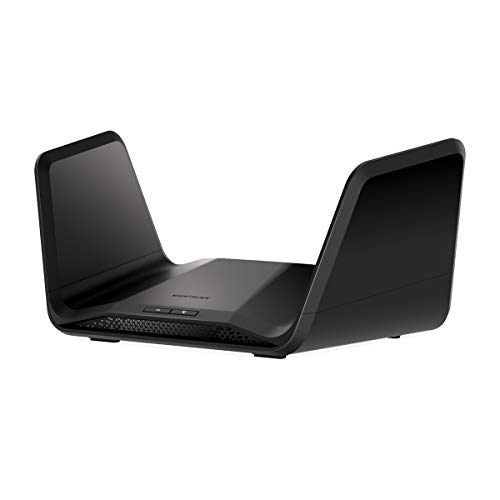
- Tri-band WiFi 6 rated up to 6.6 Gbps
- Coverage up to 2,500 square feet and 40 devices
- Four Gigabit ports plus USB 3.0 connectivity
Best For: Busy homes with broad coverage needs
Best Budget WiFi 6 Pick
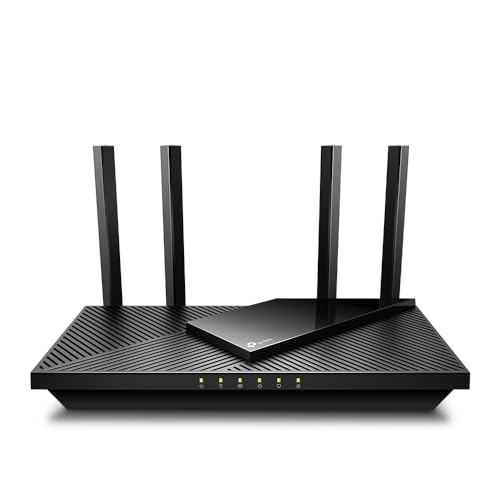
- Dual-band WiFi 6 rated up to 1.8 Gbps
- OFDMA, beamforming, and four high-gain antennas
- VPN server support, WPA3, EasyMesh, and Alexa compatibility
Best For: Everyday streaming, gaming, and home networking
Best Wi-Fi 6E Pick

- Tri-band Wi-Fi 6E with a dedicated 6 GHz band
- Up to 5,400 Mbps combined wireless throughput
- 2.5Gbps WAN and EasyMesh expansion support
Best For: Homes seeking fast 6 GHz connectivity and flexible coverage expansion
Best Budget Wi-Fi 7 Router

- Wi-Fi 7 with up to 3.6 Gbps total bandwidth
- Coverage up to 1,800 square feet and 60 devices
- Five 1Gbps Ethernet ports plus EasyMesh support
Best For: Smaller homes upgrading to Wi-Fi 7 on a gigabit plan
Best Multi-Gig Wi-Fi 7 Router

- Wi-Fi 7 with MLO, Multi-RUs, and 4K-QAM
- Up to 5,764 Mbps on the 5 GHz band
- 2.5Gbps WAN/LAN ports and coverage up to 2,400 square feet
Best For: Busy homes with multi-gig internet and many connected devices
Best Overall WiFi 6 Value – NETGEAR Nighthawk AX5400 RAX50
For households seeking high speed wifi routers without moving to a more advanced WiFi 7 setup, the NETGEAR Nighthawk RAX50 offers AX5400 dual-band performance, coverage for up to 2,500 square feet, and support for as many as 25 devices. It connects to an existing modem and works with internet plans up to 1Gbps.
Best For: Homes that need dependable WiFi 6 for streaming, gaming, video calls, and everyday devices.
Pros:
- AX5400 WiFi 6 speeds support streaming, gaming, and conferencing.
- Coverage reaches up to 2,500 square feet for up to 25 devices.
- Includes four 1G Ethernet ports and a USB 3.0 port for storage sharing.
- NETGEAR Armor includes a 30-day free trial for connected-device security.
Cons:
- Coverage and device capacity are more limited than some newer WiFi 7 options.
- Its wired ports are Gigabit rather than multi-gigabit.
The RAX50 is a practical choice when you want strong WiFi 6 performance, broad coverage, and useful wired connectivity from a familiar, easy-to-integrate router.
Best for Advanced Networking – GL.iNet Flint 3 WiFi 7 Router
The GL.iNet Flint 3 is one of the more feature-rich high speed wifi routers in this group, combining tri-band WiFi 7 with five 2.5G ports, VPN support, and flexible network controls. Its WiFi 7 system is rated up to 9Gbps and is designed for low-latency use in busy homes.
Best For: Power users, DIY network builders, and homes with many connected devices that want built-in VPN and filtering tools.
Pros:
- Tri-band WiFi 7 supports MLO, enhanced OFDMA, 4K QAM, and preamble puncturing.
- Five 2.5G ports provide substantial multi-gigabit wired flexibility.
- WireGuard and OpenVPN speeds reach up to 680Mbps under stated conditions.
- Supports more than 100 devices and includes AdGuard Home support.
Cons:
- Coverage is listed at up to 2,000 square feet, less than some competing models.
- Advanced features and firmware updates may require more hands-on setup.
Choose the Flint 3 if network customization matters as much as raw wireless speed. It is particularly appealing for users who want multi-gigabit ports, VPN control, parental tools, and room for additional plugins.
Best Easy WiFi 7 Upgrade – NETGEAR Nighthawk RS140 WiFi 7
The NETGEAR Nighthawk RS140 is a straightforward WiFi 7 upgrade for households that want high speed wifi routers without a complicated installation. It works with an existing modem or gateway, reaches up to 2,250 square feet, and supports up to 80 devices across its dual-band network.
Best For: Busy homes that want simple WiFi 7 management for streaming, gaming, video calls, and smart-home devices.
Pros:
- WiFi 7 performance reaches up to 5Gbps across the 2.4GHz and 5GHz bands.
- Coverage supports up to 2,250 square feet and 80 devices.
- The Nighthawk app guides setup and supports speed tests, device pausing, and guest networks.
- Includes one 2.5G port plus three Gigabit ports.
Cons:
- It is dual-band rather than tri-band.
- Larger or multi-story homes may need a mesh system for consistent coverage.
- Actual speeds depend on the internet plan, devices, walls, and interference.
The RS140 makes sense for buyers who prioritize easy setup and broad device support. Its 2.5G port helps accommodate faster wired networking, while the app keeps routine management accessible.
Best for Gaming and VPNs – GL.iNet Flint 2 WiFi 6 Router
The GL.iNet Flint 2 combines high-speed WiFi 6 with gaming-focused performance, dual 2.5G ports, and unusually strong VPN throughput. Among high speed wifi routers, it stands out for users who want fast wireless connections alongside OpenWrt-based customization and multi-gigabit wired networking.
Best For: Gamers, VPN users, and technically inclined households with many devices or multi-gigabit connections.
Pros:
- Eight-stream WiFi 6 is rated up to 6Gbps for gaming, streaming, and calls.
- WireGuard speeds reach up to 900Mbps, with OpenVPN up to 880Mbps under stated conditions.
- Two 2.5G ports and four 1G ports support flexible wired connections.
- Supports more than 100 devices and includes AdGuard Home and QoS features.
Cons:
- It uses WiFi 6 rather than the newer WiFi 7 standard.
- Setup and customization may be less familiar for casual users.
- Firmware should be updated during initial setup for the best experience.
Flint 2 is a strong fit when gaming stability, VPN speed, and network control matter more than having the newest wireless generation. Its two 2.5G ports also make it well suited to multi-gigabit home networks.
Best WiFi 7 Upgrade – TP-Link Archer BE700
For shoppers comparing high speed wifi routers, the TP-Link Archer BE700 is a forward-looking tri-band WiFi 7 option built for demanding connections. Its rated 15 Gbps total data rate, 6 GHz band, and multi-gig wired ports make it especially suitable for compatible devices and gig-plus internet plans.
Best For: WiFi 7 households, 4K/8K streaming, AR/VR gaming, and multi-gig wired networking.
Pros:
- WiFi 7 features include Multi-Link Operation, Multi-RUs, 4K-QAM, and channels up to 320 MHz.
- Tri-band speeds are rated up to 11,528 Mbps on 6 GHz, 2,882 Mbps on 5 GHz, and 688 Mbps on 2.4 GHz.
- Includes a 10 Gbps WAN port, 2.5 Gbps LAN port, and three 1 Gbps LAN ports.
- Supports EasyMesh expansion, beamforming, app management, and basic security features.
Cons:
- Its newest features require compatible WiFi 7 devices to realize their full potential.
- A separate modem is required for most internet providers.
- Actual wireless performance varies with distance, walls, obstacles, and network conditions.
The Archer BE700 is the strongest fit here for buyers planning ahead and already using, or preparing to add, WiFi 7 hardware. Its multi-gig ports also help prevent the router from becoming a bottleneck on faster internet service.
Best for Large Homes – NETGEAR Nighthawk RAX70
The NETGEAR Nighthawk RAX70 is a practical choice among high speed wifi routers for homes that need broad coverage and capacity for multiple devices. Its tri-band WiFi 6 design is rated up to 6.6 Gbps and covers up to 2,500 square feet with support for up to 40 devices.
Best For: Medium-to-large homes, streaming, HD gaming, video conferencing, and households with many connected devices.
Pros:
- Provides coverage up to 2,500 square feet for as many as 40 devices.
- Tri-band AX6600 WiFi 6 supports rated speeds up to 6.6 Gbps.
- Offers four Gigabit Ethernet ports and one USB 3.0 port for wired equipment or storage.
- Nighthawk app setup, Alexa compatibility, parental controls, and a 30-day NETGEAR Armor trial add convenience.
Cons:
- Requires a separate modem or modem-router and is designed for U.S. use.
- Its wired Ethernet ports are Gigabit, rather than multi-gig LAN ports.
- NETGEAR Armor is provided with a 30-day trial, so continued use may require a separate subscription.
The RAX70 balances strong WiFi 6 throughput with useful coverage and device capacity. It is a sensible middle ground for households that want more headroom than a basic dual-band router without moving to WiFi 7.
Best Budget WiFi 6 Pick – TP-Link Archer AX21
The TP-Link Archer AX21 is a straightforward dual-band option for shoppers seeking high speed wifi routers at a more accessible performance tier. Its WiFi 6 connection is rated up to 1.8 Gbps and uses OFDMA, beamforming, four high-gain antennas, and an advanced front-end module to support stable everyday coverage.
Best For: Everyday streaming, gaming, downloads, and homes that want an affordable WiFi 6 upgrade.
Pros:
- WiFi 6 dual-band performance is rated up to 1,200 Mbps on 5 GHz and 574 Mbps on 2.4 GHz.
- OFDMA helps the router communicate with more devices simultaneously.
- Beamforming, four high-gain antennas, and an FEM chipset support reliable coverage.
- Includes OpenVPN and PPTP VPN server support, WPA3 security, EasyMesh, and Alexa compatibility.
Cons:
- It does not support the 6 GHz band because it is a dual-band router.
- A separate modem is required, and actual speeds vary with conditions and obstacles.
- Its Gigabit Ethernet ports are not intended for multi-gig wired networking.
The Archer AX21 is an easy recommendation for standard broadband plans and typical connected homes. It delivers the core WiFi 6 benefits without the added cost or complexity of tri-band and WiFi 7 hardware.
Best Wi-Fi 6E Pick – TP-Link AXE5400 Archer AXE75
For shoppers comparing high speed wifi routers, the TP-Link Archer AXE75 stands out with tri-band Wi-Fi 6E, a dedicated 6 GHz band, and up to 5,400 Mbps of combined wireless throughput. Its 2.5Gbps WAN port, 160MHz support, and capacity-focused features make it a strong option for busy homes with gaming, streaming, and many connected devices.
Best For: Homes wanting Wi-Fi 6E performance, lower-latency 6 GHz connections, and flexible whole-home expansion.
Pros:
- Tri-band Wi-Fi 6E provides access to the 6 GHz band alongside 5 GHz and 2.4 GHz.
- Up to 5,400 Mbps combined speed and a 2.5Gbps WAN port suit demanding streaming and gaming setups.
- OFDMA and true tri-band operation help connect more devices simultaneously.
- Supports EasyMesh expansion, VPN server and client features, WPA3, and basic HomeShield protections.
Cons:
- Wi-Fi 6E benefits require compatible 6 GHz devices.
- A separate modem is required for most internet providers.
- Its LAN ports are limited to 1Gbps, so wired multi-gig performance is primarily on the WAN side.
The Archer AXE75 is a well-rounded high speed wifi router for users who want the extra bandwidth and reduced congestion of 6 GHz without moving to a newer Wi-Fi 7 model. EasyMesh compatibility also gives it room to grow as coverage needs change.
Best Budget Wi-Fi 7 Router – TP-Link Archer BE220
The TP-Link Archer BE220 is a practical entry point for shoppers seeking high speed wifi routers with Wi-Fi 7 features. It delivers up to 3.6 Gbps across its dual bands, supports multi-link operation, and includes five 1Gbps Ethernet ports for everyday gigabit internet, wired devices, and home entertainment.
Best For: Smaller homes and households with newer Wi-Fi 7 devices that want straightforward setup and broad device compatibility.
Pros:
- Wi-Fi 7 provides up to 3.6 Gbps of combined wireless bandwidth.
- Offers up to 2,882 Mbps on 5 GHz and 688 Mbps on 2.4 GHz.
- Four external antennas and beamforming support coverage up to 1,800 square feet for up to 60 devices.
- Includes app-guided setup, EasyMesh extender compatibility, WPA3, and HomeShield security features.
Cons:
- Dual-band operation does not include the 6 GHz band.
- All Ethernet ports are rated at 1Gbps, limiting wired multi-gig upgrades.
- A separate modem is required.
The Archer BE220 makes the most sense when you want Wi-Fi 7 improvements without paying for a tri-band router. Its coverage and port selection fit typical apartments, smaller homes, and gigabit internet plans, though users specifically seeking 6 GHz should consider a different model.
Best Multi-Gig Wi-Fi 7 Router – TP-Link Archer BE400
For households with faster-than-gigabit service, the TP-Link Archer BE400 is one of the more capable high speed wifi routers in this group. Its Wi-Fi 7 platform combines multi-link operation, 4K-QAM, and six streams with 2.5Gbps WAN and LAN connectivity for demanding downloads, streaming, gaming, and home-network transfers.
Best For: Larger or busier homes with multi-gig internet, numerous devices, and newer Wi-Fi 7 laptops and phones.
Pros:
- Wi-Fi 7 supports MLO, Multi-RUs, and 4K-QAM for improved throughput and responsiveness.
- Delivers up to 5,764 Mbps on 5 GHz and 688 Mbps on 2.4 GHz.
- Provides coverage up to 2,400 square feet for as many as 90 devices.
- Includes one 2.5Gbps WAN/LAN port, one 2.5Gbps LAN port, and three 1Gbps LAN ports.
Cons:
- Dual-band design does not provide a 6 GHz band.
- Its multi-gig capabilities require compatible equipment and a suitable internet plan.
- A separate modem is required.
The Archer BE400 is the strongest fit here for users who can take advantage of multi-gig wired networking and Wi-Fi 7 devices. Its higher capacity and larger stated coverage area make it a better choice than the BE220 for busier homes, while EasyMesh support offers a path to expanded coverage.
How We Picked the Best High Speed Wifi Routers
We selected these models based on wireless generation, advertised throughput, band configuration, wired port speeds, coverage claims, networking features, and suitability for different household needs. The list includes dependable Wi-Fi 6 routers for everyday upgrades, Wi-Fi 6E models with access to the less-congested 6GHz band, and Wi-Fi 7 options designed for newer devices and multi-gig internet plans.
Advertised speeds are theoretical maximums rather than guaranteed real-world performance. Actual results depend on device compatibility, walls, interference, router placement, internet service, and the number of active clients.
Quick Comparison
- Best for established Wi-Fi 6 setups: NETGEAR Nighthawk RAX50, RAX70, or TP-Link Archer AX21.
- Best for newer Wi-Fi 7 devices: GL.iNet Flint 3, TP-Link Archer BE700, Archer BE220, or BE400.
- Best for gaming and advanced control: GL.iNet Flint 2 or Flint 3.
- Best for 6GHz access: TP-Link’s AXE5400 Wi-Fi 6E router.
- Best for multi-gig networking: Models with 2.5Gbps or faster Ethernet ports, including the Flint 2, Flint 3, and Archer BE700.
Key Buying Factors for High-Speed Wi-Fi Routers
Wi-Fi Generation and Device Support
Wi-Fi 7 is the newest standard in this group and can offer improved efficiency, wider channels, and lower latency with compatible devices. Wi-Fi 6 and Wi-Fi 6E remain practical choices when most of your phones, laptops, consoles, and smart-home products use older standards.
Coverage and Household Layout
Check the router’s stated coverage, but treat it as an estimate. A central, elevated location usually matters more than small differences in advertised square footage. Large or difficult layouts may benefit more from a compatible mesh system than from a single powerful router.
Wired Ports and Internet Speed
A fast wireless rating cannot improve an internet plan beyond its available bandwidth. For gigabit-plus service, look for 2.5Gbps or faster WAN and LAN ports. Extra multi-gig ports are also useful for network-attached storage, gaming PCs, and wired access points.
Features and Security
Consider parental controls, automatic firmware updates, guest networking, VPN support, traffic prioritization, and subscription requirements. Gaming households should also check latency-management tools and whether the router offers enough wired connections for consoles and PCs.
Who Should Buy Which High Speed Wifi Routers?
Choose a Wi-Fi 6 model if you want a reliable, cost-conscious upgrade for streaming, work, browsing, and smart-home devices. Select Wi-Fi 6E if you own compatible 6GHz devices and live in a crowded wireless environment. Wi-Fi 7 is the better long-term choice for new hardware, very fast broadband, or a home that regularly transfers large files.
For gaming and customization, prioritize the GL.iNet Flint models. For straightforward mainstream networking, TP-Link and NETGEAR offer familiar options across several price and performance tiers. Before buying, confirm your modem, internet plan, device compatibility, and available Ethernet speeds match the router’s capabilities.