
Older receivers can still deliver great sound, but most modern TVs and streaming devices no longer play nicely with them. That’s where HDMI audio extractors come in.
If you need to pull audio from HDMI and feed an old receiver through optical, coax, RCA, or 3.5mm, the right model can make setup simple and keep your system working for years longer.
Best 10 Hdmi Audio Extractors for Old Receivers Picks for 2026
Legacy AV Upgrade Pick
HDMI to HDMI + Audio Extractor
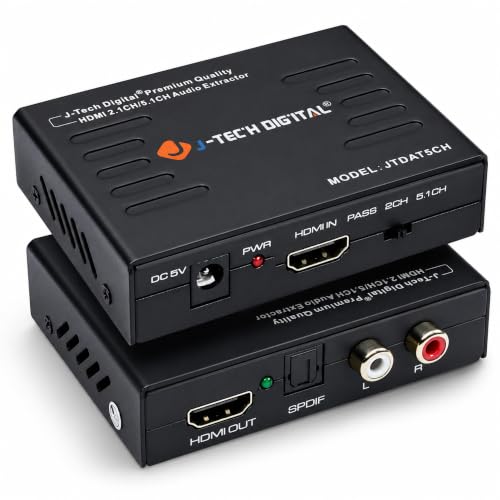
- Optical SPDIF and RCA stereo outputs
- Audio EDID options for 2CH or 5.1CH
- Video passthrough up to 4K@30Hz
Best For: Older receivers needing flexible optical or analog HDMI audio extraction
TV-to-Receiver Bridge

- ARC/eARC in to optical out
- Supports PCM 2.0 and Dolby/DTS 5.1
- USB powered, plug-and-play setup
Best For: Old optical-only receivers or soundbars connected to a modern ARC/eARC TV
Classic Legacy Audio Pick

- Optical and RCA audio outputs
- Supports Dolby Digital and DTS 5.1
- Works with 1080p and 3D HDMI
Best For: Legacy receivers that need simple HDMI audio extraction with analog or optical output
ARC Stereo Converter

- ARC audio to RCA and 3.5mm stereo
- Supports up to 192kHz sampling rate
- Metal build with plug-and-play setup
Best For: Older amplifiers or receivers that need analog stereo from an ARC-enabled TV
Legacy-Friendly 4K Pick
J-Tech Digital 4K 60Hz HDMI Audio Extractor
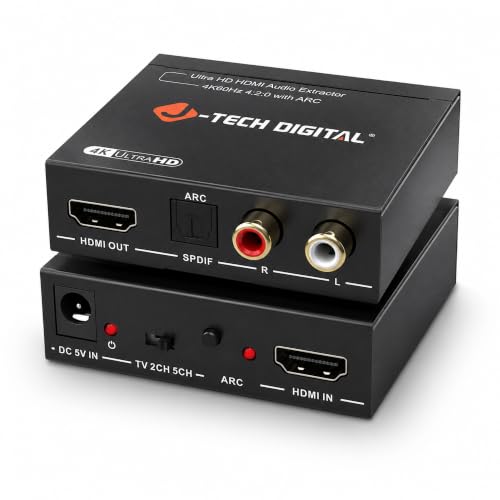
- 4K @ 60Hz video passthrough
- SPDIF optical and RCA outputs
- 3 EDID modes for audio matching
Best For: Users connecting modern HDMI sources to older receivers with optical or stereo inputs
Premium HDMI 2.1 Extractor

- 8K@60Hz and 4K@120Hz passthrough
- Optical, 3.5mm, and HDMI ARC outputs
- Supports Dolby Atmos and DTS:X
Best For: High-end setups that need modern HDMI 2.1 video plus flexible audio extraction
Budget Optical Splitter

- Optical and 3.5mm audio outputs
- 2.0CH, 5.1CH, and PASS modes
- USB or 5V adapter powered
Best For: Basic legacy audio hookups on a tight budget
TV & Legacy Receiver Friendly
J-Tech Digital 4K@60Hz HDMI Audio Extractor with ARC

- 4K@60Hz passthrough with 1080p/4K@30 fallback
- RCA stereo and optical outputs for older receivers
- 3 EDID modes plus ARC optical extraction
Best For: Connecting HDMI sources or ARC TVs to older stereo systems
High-Refresh HDMI to Audio Adapter
J-Tech Digital 4K HDMI Audio Extractor with Optical + 3.5mm

- Optical SPDIF and 3.5mm analog audio outputs
- 4K@60Hz with 1080p@120Hz and 144Hz support
- 2CH, 5.1CH, and pass-through EDID modes
Best For: HDMI setups needing optical audio plus occasional stereo analog output
All-in-One AVR Bridge
avedio links 4K HDMI Audio Extractor with ARC
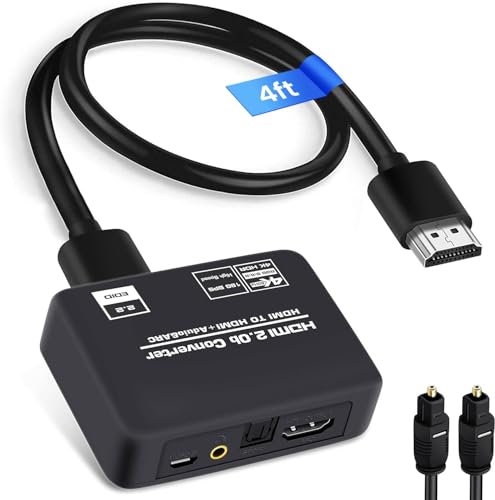
- Optical Toslink, 3.5mm stereo, and HDMI passthrough
- Supports TV, 2.0CH, and 5.1CH audio modes
- Includes HDMI and optical cables plus power adapter
Best For: Mixed HDMI-to-old-receiver setups that also need ARC support
Legacy AV Upgrade Pick – HDMI to HDMI + Audio Extractor
If you’re comparing HDMI audio extractors for old receivers, this J-Tech Digital model is a strong fit when you need both optical and RCA options from one HDMI source. It can pull audio from HDMI and send it to 2-channel analog stereo or 5.1-channel SPDIF, while still passing video through up to 4K@30Hz.
Best For: Older receivers or stereo systems that need either RCA analog or optical digital audio from HDMI sources.
Pros:
- Outputs both SPDIF optical and RCA stereo audio.
- Supports 2CH and 5.1CH audio EDID settings for flexible setup.
- Pass-through video support up to 4K@30Hz.
- Plug-and-play design with HDCP and EDID pass-through.
Cons:
- ARC is not supported.
- Limited to 4K at 30Hz rather than 60Hz.
- Best suited to HDMI sources, not modern TV ARC extraction.
This is a practical all-around choice if your old receiver needs an easy HDMI-to-audio bridge. The mix of analog and optical outputs makes it useful for different legacy setups, especially when you want simple compatibility without extra converters.
TV-to-Receiver Bridge – eARC to Optical Extractor
This eARC-to-optical unit is a targeted option for HDMI audio extractors for old receivers when the receiver or soundbar only accepts Toslink. It takes audio from a TV’s ARC or eARC port and converts it to optical, which is a straightforward way to keep legacy audio gear in the system.
Best For: Newer TVs with ARC/eARC that need to feed an old optical-only soundbar, receiver, or headphone base.
Pros:
- Converts ARC/eARC audio to a single optical output.
- Supports PCM 2.0, Dolby 5.1, and DTS 5.1 audio formats.
- USB powered and plug-and-play with no drivers.
- Includes optical cable, HDMI cable, and USB power cable.
Cons:
- Requires a TV with a labeled ARC or eARC HDMI port.
- No CEC volume control through the TV remote.
- Only outputs optical, so it won’t help if you need RCA analog.
For a legacy audio system that still sounds good but lacks HDMI, this is a clean and simple bridge. It keeps the setup focused on one digital output, which helps reduce clutter and avoids unnecessary adapters.
Classic Legacy Audio Pick – HDMI Audio Extractor with RCA
Among HDMI audio extractors for old receivers, this ViewHD model is a straightforward fit for gear that still relies on optical or RCA inputs. It passes HDMI video through at up to 1080p and 3D while splitting audio to Toslink optical or analog stereo, which covers many older home theater setups.
Best For: Older receivers and stereo systems that need either optical digital or RCA analog audio from HDMI sources.
Pros:
- Provides both Toslink optical and RCA L/R outputs.
- Supports Dolby Digital and DTS 5.1 over optical.
- RCA output handles 2-channel PCM stereo.
- Plug-and-play with EDID pass-through and a power adapter included.
Cons:
- Does not support ARC.
- Limited to HDMI v1.3 and 1080p video output.
- Not the best choice for newer 4K systems.
This is a sensible pick if your receiver is older but still useful and you just need dependable audio extraction. It’s especially practical when you want the flexibility to choose between analog stereo and optical surround output.
ARC Stereo Converter – HDMI ARC to Analog Output
If your goal is to connect a modern TV to an older amplifier or stereo, this HDMI ARC adapter is a compact option in the HDMI audio extractors for old receivers category. It converts ARC audio to both 3.5mm and RCA L/R analog output, which is useful when the destination gear doesn’t have optical input.
Best For: TVs with ARC ports that need analog stereo output for older speakers, amps, or receivers.
Pros:
- Outputs audio through both RCA L/R and 3.5mm ports at the same time.
- Supports up to 192kHz sampling rate.
- Plug-and-play design with no driver installation.
- Metal housing adds durability and heat dissipation.
Cons:
- Requires a TV HDMI port with ARC support.
- Does not support 5.1 or 7.1 raw digital formats.
- No built-in CEC, so volume cannot be controlled by the TV remote.
This model makes the most sense when you need a direct analog feed from a TV’s ARC port instead of a digital optical output. It keeps things simple for older audio gear that only needs stereo input and doesn’t require surround decoding.
Legacy-Friendly 4K Pick – J-Tech Digital 4K 60Hz HDMI Audio Extractor
If you’re shopping for hdmi audio extractors for old receivers, this J-Tech Digital model is a practical way to keep a modern HDMI source compatible with older audio gear. It passes 4K at 60Hz to the display while splitting audio to either SPDIF optical or analog RCA stereo, which makes it useful when your receiver lacks HDMI input but still handles digital or stereo audio.
Best For: Home theater setups that need 4K video passthrough plus optical or analog audio for older receivers and amplifiers.
Pros:
- Supports 4K @ 60Hz video passthrough without degrading the picture.
- Offers SPDIF optical and RCA L/R stereo outputs for older audio systems.
- Three EDID modes help match 2-channel or 5.1 audio setups.
- Includes lifetime technical support and a 1-year replacement warranty.
Cons:
- Uses a 5V power input, so it needs external power.
- Analog output is limited to standard stereo.
- Best suited for straightforward extraction rather than advanced HDMI 2.1 features.
This is a solid middle-ground choice if you want modern 4K passthrough and flexible audio outputs for an older receiver. The EDID switch adds useful compatibility control, especially when you’re trying to keep a mixed vintage-and-modern system working cleanly.
Premium HDMI 2.1 Extractor – OREI 8K@60Hz Audio Extractor
For buyers comparing hdmi audio extractors for old receivers, this OREI unit stands out as the most future-proof option here. It extracts audio to optical or 3.5mm stereo while passing very high-bandwidth video through to a display, so it can bridge a modern HDMI 2.1 source to an older sound system without giving up advanced video support.
Best For: Users who want an HDMI 2.1 audio extractor with optical output and ARC support for mixed modern and legacy setups.
Pros:
- Supports video passthrough up to 8K @ 60Hz and 4K @ 120Hz.
- Provides optical S/PDIF, 3.5mm stereo, and HDMI ARC output options.
- Supports LPCM, Dolby Digital, DTS, Dolby Atmos, and DTS:X formats.
- Metal enclosure and included power supply support durable, plug-and-play use.
Cons:
- Does not support eARC.
- TV remote volume control is not supported.
- Requires an HDMI 2.1 cable to get the full bandwidth benefits.
This is the strongest choice if your priority is keeping current with modern consoles and 8K/4K120 displays while still feeding an older receiver. The audio-format support is broad, but the lack of eARC means it’s best for setups that can work with optical, ARC, or stereo output.
Budget Optical Splitter – VPFET 4K HDMI Audio Extractor
If you need a simple option among hdmi audio extractors for old receivers, this VPFET model covers the basics without extra complexity. It splits HDMI audio out to optical or 3.5mm AUX, making it a straightforward fit for older receivers and stereo gear that can’t take HDMI directly.
Best For: Budget setups that need basic HDMI audio extraction to optical or analog outputs for legacy equipment.
Pros:
- Outputs audio through optical or 3.5mm stereo connections.
- Three selectable modes: 2.0CH, 5.1CH, and PASS.
- Compact, low-power design powered by USB or a 5V adapter.
- Wide compatibility with common HDMI sources like players, consoles, and PCs.
Cons:
- Limited to HDMI 1.4-era specs and 4K @ 30Hz.
- Does not support ARC or eARC.
- 3.5mm output is PCM 2.0 only, and 7.1 channels are not supported.
This is the most basic pick in the group, but it can be enough for an older receiver that only needs optical audio or simple stereo output. Its lower bandwidth limits make it better for standard setups than for modern high-refresh displays.
TV & Legacy Receiver Friendly – J-Tech Digital 4K@60Hz HDMI Audio Extractor with ARC
If you need hdmi audio extractors for old receivers, this J-Tech Digital model is built around the basics that matter: HDMI passthrough, RCA stereo output, optical audio, and ARC support for smart TV audio extraction. It’s a practical fit when you want to feed an older stereo receiver or sound system from a modern HDMI source without adding unnecessary complexity.
Best For: Connecting HDMI sources or ARC-enabled TVs to older receivers that use RCA or optical inputs.
Pros:
- Supports 4K@60Hz passthrough, plus 4K@30Hz and 1080p fallback options.
- Offers RCA stereo and optical audio outputs for different receiver setups.
- Includes 3 EDID modes: TV, 2CH, and 5CH for audio matching.
- ARC extraction lets a smart TV send audio out through the optical port.
Cons:
- RCA output is stereo only and does not downmix 5.1 audio.
- Requires the source device to be set to the correct audio format.
- ARC audio extraction is limited to optical output, not RCA.
This is a straightforward choice if your priority is compatibility with older audio gear and you want both analog and digital output options. It’s especially useful when the receiver side is the limiting factor, not the video source.
High-Refresh HDMI to Audio Adapter – J-Tech Digital 4K HDMI Audio Extractor with Optical + 3.5mm
For buyers comparing hdmi audio extractors for old receivers, this J-Tech Digital unit stands out for its 3.5mm analog and optical outputs, plus support for 4K@60Hz and high-refresh 1080p video. It’s a solid option when you need a compact HDMI-to-audio bridge for a receiver, soundbar, or powered speakers, as long as your source matches the audio requirements.
Best For: HDMI setups that need optical audio for a receiver and occasional 3.5mm stereo output.
Pros:
- Outputs to optical SPDIF or 3.5mm analog from HDMI sources.
- Supports 4K@60Hz, 1080p@120Hz, and 1080p@144Hz.
- Includes 2CH, 5.1CH, and pass-through EDID audio options.
- Handles Dolby Digital and DTS through optical SPDIF.
Cons:
- 3.5mm output requires the source to be set to PCM.
- Does not downmix 5.1 digital audio to 3.5mm analog.
- Not compatible with HDMI-ARC and has noted issues with some older devices.
This model makes the most sense if you want a flexible HDMI audio extractor but are mainly relying on optical for better receiver compatibility. The 3.5mm port is there for convenience, but the feature set is clearly centered on digital audio extraction.
All-in-One AVR Bridge – avedio links 4K HDMI Audio Extractor with ARC
If your search for hdmi audio extractors for old receivers is really about getting modern HDMI sources into an older amplifier or sound system, this avedio links extractor offers a well-rounded set of outputs. It combines HDMI passthrough with optical Toslink, 3.5mm stereo, and ARC support, making it useful for mixed setups where receiver inputs and TV audio return both matter.
Best For: Users who want HDMI passthrough plus optical, stereo, and ARC audio options in one box.
Pros:
- Provides optical Toslink SPDIF and 3.5mm stereo audio outputs.
- Supports HDMI ARC/eARC-style TV input use on compatible ARC interfaces.
- Offers TV, 2.0CH, and 5.1CH audio mode options.
- Includes HDMI cable, optical cable, USB power adapter, and user manual.
Cons:
- 3.5mm output is limited to 2CH PCM/LPCM stereo.
- ARC function works only with HDTV input and ARC/eARC interfaces.
- Analog and surround output capabilities depend on the chosen audio mode.
This is a versatile pick if you want a single extractor that can handle an older receiver today and a TV audio-return setup later. The included cables are a nice bonus, but the real strength is the combination of optical, stereo, and ARC support.
How We Picked the Best Hdmi Audio Extractors for Old Receivers
We focused on Hdmi Audio Extractors for Old Receivers that offer practical output options, dependable format support, and broad compatibility with TVs, game consoles, streaming boxes, and legacy amps. We also favored models with clear signal extraction paths, pass-through video support, and features that reduce setup headaches such as ARC/eARC handling, EDID control, and multiple audio output choices.
Quick Comparison
The main difference between these extractors is the output type they support. Optical is the most common choice for digital receivers, while RCA and 3.5mm matter most for truly older gear. Some units are built mainly for HDMI-to-audio breakout, while others also handle ARC or eARC from a TV. If your receiver only accepts stereo analog, choose a model with RCA or 3.5mm. If it accepts surround via digital input, optical/SPDIF is usually the better match.
Key Buying Factors for Hdmi Audio Extractors for Old Receivers
Audio Outputs
Match the extractor to your receiver first. Optical works well for many AV receivers, while RCA stereo is essential for older integrated amps and stereo receivers. If you want the simplest connection to powered speakers or an older amp, analog outputs can be the most convenient.
Resolution and Video Pass-Through
Make sure the extractor supports the video format your display needs, especially if you use 4K sources. Good models should pass video through without forcing you to downscale unnecessarily.
ARC and EARC Support
If you plan to extract sound from a TV rather than directly from an HDMI source, ARC/eARC support can be very useful. It simplifies the path from smart TV apps to an older receiver or sound system.
Audio Format Compatibility
Check support for PCM, Dolby Digital, and DTS if you want to avoid silence or downmixing. Not every receiver handles every format, so the extractor should be able to output a format your gear understands.
EDID, CEC, and Power
EDID controls can help force the right audio handshake, which is especially helpful in mixed-vintage setups. CEC is convenient for some users, but disabling it can solve compatibility issues. USB power is common and usually fine as long as the cable run is stable.
Who Should Buy Which Hdmi Audio Extractors for Old Receivers?
If you have a receiver with optical input, choose a digital extractor with reliable SPDIF support. If your receiver is older and only accepts red-and-white RCA, prioritize analog output over extra bells and whistles. If you’re connecting a TV to an older home theater system, look for ARC or eARC extraction. For gamers and 4K streaming users, a model with strong pass-through and modern HDMI support is the safest pick.
In short, the best Hdmi Audio Extractors for Old Receivers are the ones that match your receiver’s input type first and your video setup second. That simple rule avoids most compatibility problems and makes setup much easier.