
The best audio mixers make it easier to balance microphones, instruments, playback devices, and effects without wrestling with a complicated setup. The right model depends on how many inputs you need, where you’ll use it, and whether you want analog simplicity or digital control.
Our roundup covers compact mixers for basic setups, versatile USB models for recording and streaming, and larger boards suited to live sound and stage performance.
Best 10 Audio Mixers Picks for 2026
Best Connected Digital Mixer
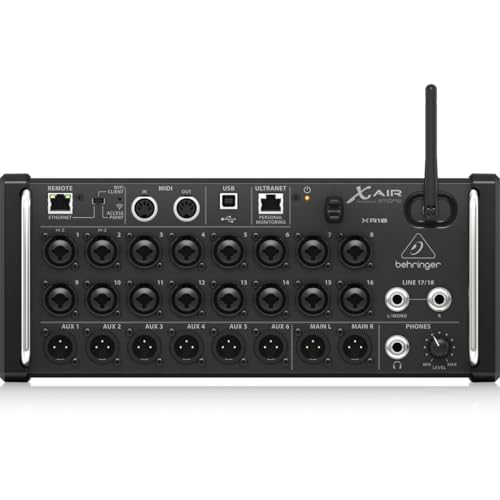
- 18 channels and 12 buses
- 16 programmable MIDAS preamps
- Tablet control, Wi-Fi, and USB recording
Best For: Live and studio setups needing remote digital control
Best Compact Analog Mixer

- Six-input analog design
- Two microphone preamps
- EQ and digital effects included
Best For: Small rigs and straightforward mixing
Best Feature-Packed 12-Channel Mixer
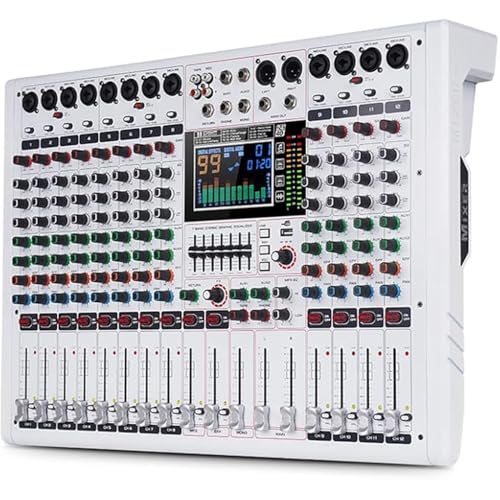
- 99 DSP effects and seven-stage EQ
- Bluetooth and USB playback
- Color LCD and individual channel controls
Best For: Performances and entertainment-focused audio setups
Best Professional 12-Channel Mixer
Yamaha MG12XU 12-Channel Mixer

- 12 channels with four-bus architecture
- D-PRE preamps and SPX effects
- USB, compressors, and balanced XLR outputs
Best For: Hands-on live and small production mixing
Feature-Rich Pick
FULUODE CT-80S 8-Channel Mixer

- Eight channels with 48V phantom power
- Bluetooth, MP3/USB playback, and USB recording
- Slim design with reverb and LED display
Best For: Karaoke, small performances, conferences, and flexible home setups
Streaming Pick
Behringer XENYX 802S USB Mixer

- Eight-input analog mixing and equalization
- Stereo USB interface for computer or mobile audio
- Designed for streaming, podcasting, and recording
Best For: Streaming, podcasts, and computer-based audio setups
Compact Pick

- Small five-channel design weighs 1.4 pounds
- Mic/line, stereo 1/4-inch, and RCA connections
- Two-band EQ and phantom power included
Best For: Small setups, basic recording, playback, and one-mic mixing
Streamer Sound Hub

- XLR input with 48V phantom power and preamp
- Voice effects, sound pads, loopback, and noise reduction
- RGB lighting and broad streaming-platform compatibility
Best For: Gamers and new streamers using compatible XLR microphones
Small-Gig Workhorse
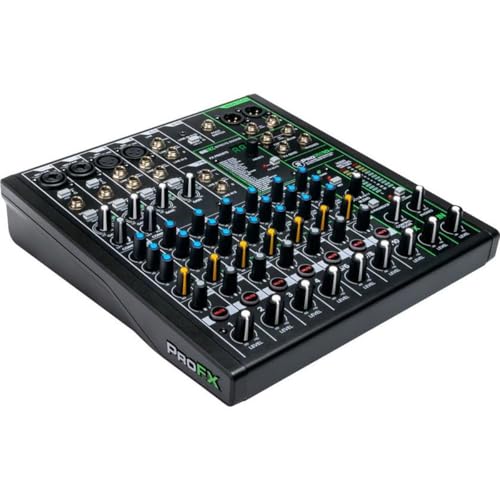
- 10 channels for mics, instruments, and playback
- Onyx preamps and 24 built-in GigFX effects
- USB interface for recording or streaming
Best For: Small gigs, rehearsals, bands, and general-purpose streaming
Flexible Karaoke Console
6-Channel Bluetooth Audio Mixer

- Four XLR inputs with selectable 48V phantom power
- Bluetooth and USB playback for phones and USB drives
- Three-band EQ plus 16 built-in DSP effects
Best For: Karaoke, small performances, and multi-source playback
Best Connected Digital Mixer – Behringer X AIR XR18
The Behringer X AIR XR18 is a flexible choice among audio mixers for users who want tablet-based control in studio or live settings. Its 18-channel layout, programmable MIDAS preamps, integrated Wi-Fi, and USB interface provide extensive routing and recording capability.
Best For: Live performers, studios, and users who prefer controlling a mixer from an iPad or Android tablet.
Pros:
- 18-channel, 12-bus design supports complex setups.
- Includes 16 programmable MIDAS-designed microphone preamps.
- Built-in tri-mode Wi-Fi avoids the need for an external router.
- 18 x 18 bidirectional USB interface supports direct recording.
Cons:
- Requires a compatible tablet for its primary control method.
- More functionality than needed for simple, small-input setups.
Choose the XR18 when remote control, multichannel recording, and expandable digital routing matter more than traditional hands-on controls.
Best Compact Analog Mixer – Yamaha MG06X
The Yamaha MG06X is a straightforward option among audio mixers for compact applications. This six-input analog mixer combines two microphone preamps, four dedicated stereo line channels, EQ, and onboard digital effects in a small format.
Best For: Small performances, basic rehearsal rigs, and users who need a compact mixer with microphone inputs and effects.
Pros:
- Compact six-channel design is suited to space-limited setups.
- Provides two microphone preamps and four stereo line channels.
- Includes EQ and digital effects for basic sound shaping.
Cons:
- Six inputs limit expansion for larger productions.
- Its analog design offers fewer routing features than a digital mixer.
The MG06X makes sense when portability and simple operation are priorities, especially for users who do not need extensive channel counts or advanced digital routing.
Best Feature-Packed 12-Channel Mixer – GF12 PRO 12-Channel Mixer
The GF12 PRO adds a broad set of controls to the audio mixers category, including a color LCD screen, Bluetooth, USB playback, channel-level adjustment, and 99 DSP effects. Its 12-channel format is aimed at performances and other small to medium audio applications.
Best For: Stage performances, karaoke venues, studios, radio broadcasting, and users who want built-in playback and effects.
Pros:
- 12 channels provide more inputs than a compact six-channel mixer.
- Offers 99 DSP effects and a seven-stage equalizer.
- Bluetooth and USB support wireless streaming and storage-device playback.
- Individual channels include gain, balance, EQ, effects send, and volume controls.
Cons:
- The listed 30-day return and exchange policy is relatively limited.
- Its large 23.8-inch depth may require substantial setup space.
- Advanced controls may be excessive for basic mixing needs.
The GF12 PRO is a practical fit for users who value built-in effects, wireless playback, and detailed per-channel control in a 12-channel console.
Best Professional 12-Channel Mixer – Yamaha MG12XU 12-Channel Mixer
The Yamaha MG12XU is a versatile choice among audio mixers, pairing a 12-channel, four-bus layout with D-PRE microphone preamps, SPX digital effects, USB connectivity, and one-knob compressors. Its metal chassis and balanced XLR outputs suit demanding general-purpose setups.
Best For: Performers, small production teams, and users who need a durable 12-channel mixer with effects, compression, and USB connectivity.
Pros:
- D-PRE microphone preamps use an inverted Darlington circuit.
- Four-bus architecture supports flexible signal organization.
- Includes SPX digital effects and one-knob compressors.
- Metal chassis and XLR balanced outputs support practical live use.
Cons:
- Its 12-channel capacity may not suit larger productions.
- The full-size chassis is less portable than compact mixers.
- USB connectivity does not provide the tablet-based control of the XR18.
The MG12XU is a strong middle-ground option for users who want hands-on mixing, useful onboard processing, and USB connectivity without moving to a tablet-controlled system.
Feature-Rich Pick – FULUODE CT-80S 8-Channel Mixer
The FULUODE CT-80S is a versatile choice among audio mixers for karaoke, small performances, conferences, and home recording setups. It combines eight channels with Bluetooth, MP3/USB playback, USB recording, reverb, and 48V phantom power in a slim console.
Best For: Family KTV, bands, campus activities, conferences, and users who want wireless playback and multiple input options.
Pros:
- Eight-channel design supports cable, wireless, condenser microphone, and instrument connections.
- Includes Bluetooth 5.0, MP3/USB input, USB recording, and a large LED display.
- Provides reverb and 48V phantom power for compatible microphones.
- Ultra-thin 1.57-inch design with a 365-day warranty description.
Cons:
- Uses a 110V American plug, which may limit compatibility outside the intended market.
- At 3.3 kg, it is less portable than smaller compact mixers.
Choose this model if connectivity and built-in playback features matter more than keeping the setup minimal. Its eight inputs and integrated effects make it particularly practical for mixed-use entertainment and live sound applications.
Streaming Pick – Behringer XENYX 802S USB Mixer
Behringer XENYX 802S Premium Analog 8-Input Mixer with USB Streaming Interface
Check Price On AmazonThe Behringer XENYX 802S is one of the more focused audio mixers for streaming, podcasting, and recording. Its eight-input analog layout adds USB connectivity so computer or mobile-device audio can be mixed directly into the streaming output.
Best For: Streamers, podcasters, and home recordists who need analog mixing alongside computer or mobile audio.
Pros:
- Eight-input analog mixer with equalization for tone shaping.
- Stereo USB audio interface connects to a computer or mobile device.
- Supports direct mixing of PC or gaming sounds into the streaming output.
- Designed for low-noise streaming, podcasting, and recording workflows.
Cons:
- The supplied notes do not specify built-in Bluetooth, effects, or phantom power.
- Its listed output options may require choosing among XLR, TRS, and RCA connections for a particular setup.
This is a sensible option when USB integration is central to your workflow. It offers a straightforward bridge between analog sources and computer or mobile audio without adding features that are not needed for streaming-focused use.
Compact Pick – Mackie Mix5 5-Channel Mixer
The Mackie Mix5 is a compact, practical option among audio mixers for small playback, recording, and basic microphone setups. It provides one mic/line input, two stereo 1/4-inch line inputs, stereo RCA connections, and main left/right outputs in a small 1.4-pound chassis.
Best For: Users who need a simple mixer for one microphone, stereo sources, playback, or recording in a space-saving setup.
Pros:
- Compact five-channel design is easy to fit into small workspaces.
- Offers one mic/line input, two stereo 1/4-inch line inputs, and dedicated RCA inputs/outputs.
- Includes two-band EQ and phantom power for compatible studio condenser microphones.
- Designed for high-headroom, low-noise performance.
Cons:
- Five channels provide less expansion room than the eight-channel models in this roundup.
- Connectivity is auxiliary rather than USB, so it is less suited to direct computer audio integration.
The Mix5 is best when simplicity and size are priorities. It covers basic microphone and stereo-source mixing without the additional playback and USB features found on more feature-heavy consoles.
Streamer Sound Hub – MAONO G1 Neo Gaming Mixer
For gamers and new creators, the MAONO G1 Neo is one of the more focused audio mixers for streaming setups. It combines an XLR input, 48V phantom power, one-click noise reduction, sound pads, voice effects, Bluetooth accompaniment, and customizable RGB lighting in a compact interface.
Best For: Gamers and up-and-coming streamers using XLR microphones with computers, phones, tablets, PS4, or PS5.
Pros:
- Pro preamp and 48V phantom power support compatible XLR microphones.
- Voice changing, custom sound pads, reverb, and sidechain features add creative options.
- Includes one-click mute, loopback, direct monitoring, Bluetooth accompaniment, and noise reduction.
- Compatible with platforms and software including OBS, Discord, Twitch, TikTok, YouTube, and Streamlabs.
Cons:
- It is not designed for USB microphones or Xbox.
- 48V phantom power should remain off when using XLR dynamic microphones.
- Its feature set is tailored more to streaming than broad multi-channel live mixing.
The G1 Neo makes the most sense when streaming controls and audience interaction matter as much as basic microphone mixing. Its compatibility limitations are worth checking before purchase, but the built-in effects and easy-access controls can simplify a gaming broadcast.
Small-Gig Workhorse – Mackie ProFX10v3 Mixer
The Mackie ProFX10v3 is a practical choice among audio mixers for small gigs, rehearsals, and streams. Its 10-channel layout handles microphones, instruments, and playback, while Onyx preamps, built-in USB recording, and 24 GigFX effects expand its usefulness beyond basic analog mixing.
Best For: Small bands, rehearsal spaces, performers, and streamers who want multiple inputs with USB recording.
Pros:
- 10 channels provide room for microphones, instruments, and playback sources.
- Onyx preamps offer studio-grade gain on the microphone inputs.
- Built-in USB connectivity supports recording or streaming.
- GigFX provides 24 effects with straightforward control.
Cons:
- Its corded-electric design is less convenient for mobile setups.
- The mixer is aimed at small gigs and streams rather than large-scale systems.
- The supplied listing identifies the model number as ProFX16v3, so buyers should confirm the exact configuration.
Choose the ProFX10v3 when you need a conventional mixer that can cover live sound, practice, and computer-based recording in one unit. It offers a more general-purpose workflow than a gaming-focused interface, with effects and USB built in.
Flexible Karaoke Console – 6-Channel Bluetooth Audio Mixer
This six-channel console is a feature-heavy option among audio mixers for karaoke, studio use, live performance, and streaming. It combines four XLR inputs with 48V phantom power, 1/4-inch connections, Bluetooth playback, USB media playback, three-band EQ, and 16 DSP effects.
Best For: Karaoke hosts, small live setups, and users who need multiple microphone or instrument connections plus wireless playback.
Pros:
- Four XLR inputs support compatible condenser or dynamic microphones, with selectable 48V phantom power.
- Bluetooth and USB playback allow music to be mixed from mobile devices or a USB drive.
- Three-band EQ and 16 DSP effects provide hands-on tonal and reverb control.
- Inputs accommodate microphones, guitars, DI boxes, and stereo sources.
Cons:
- As a traditional analog mixer, it may require more hands-on setup than a software-focused interface.
- The manufacturer warranty is listed as 90 days.
- The supplied dimensions are relatively large for a six-channel mixer.
This model is a sensible fit when connectivity and onboard playback matter more than a streamlined computer-only workflow. Its broad input selection and effects make it adaptable for karaoke and small performances, while the 48V controls require careful use with connected microphones.
How We Picked These Audio Mixers
We selected models across several use cases and price ranges, focusing on practical features rather than channel count alone. Our evaluation criteria included input and output flexibility, microphone preamp support, phantom power, built-in effects, USB connectivity, wireless or Bluetooth playback, portability, and ease of operation.
We also considered whether each mixer fits its intended audience. A compact five- or six-channel board may be ideal for a small rehearsal or simple podcast, while a larger mixer with multiple buses, programmable preamps, or digital control is better suited to live production and more complex routing.
Quick Comparison
| Best For | Features to Prioritize | Recommended Type |
|---|---|---|
| Simple home setups | Compact size, straightforward controls, reliable outputs | Small analog mixer |
| Streaming and gaming | USB connectivity, microphone gain control, headphone monitoring | USB mixer or audio interface |
| Home recording | Low-noise preamps, phantom power, USB recording | USB-equipped mixer |
| Live bands and events | More channels, aux sends, effects, durable construction | Mid-size analog or digital mixer |
| Professional stage control | Remote operation, flexible routing, multiple buses | Digital mixer |
Key Buying Factors for Audio Mixers
Channel Count and Input Type
Count the sources you’ll connect at the same time, then leave room for expansion. Check whether channels accept XLR microphone inputs, 1/4-inch line connections, stereo pairs, or instrument-level signals. A mixer’s advertised channel count may include stereo channels, so review the actual input layout before buying.
Phantom Power and Preamps
Condenser microphones typically require 48V phantom power. If you plan to use studio microphones, verify that the mixer supplies it safely and understand whether phantom power affects all channels or only selected inputs. Cleaner preamps also matter when recording quiet sources or using high-gain microphones.
USB, Bluetooth, and Recording Features
USB connectivity can send a mix to a computer for streaming or recording, but not every USB mixer offers multitrack recording. Bluetooth and built-in media players are convenient for playback, announcements, or background music, though they are less important if your setup is strictly studio-based.
Effects, Monitoring, and Routing
Built-in reverb and other effects can simplify vocals and live presentations. Look for aux sends, separate control-room outputs, headphone monitoring, and independent mute controls if you need more precise routing. Digital mixers generally provide the most flexibility, while analog boards are usually faster to operate at a glance.
Who Should Buy Which Audio Mixers?
Choose a compact analog model if you need an affordable, portable mixer for a few microphones, instruments, or playback sources. These are a good fit for small rehearsals, basic announcements, and uncomplicated home audio setups.
Choose a USB mixer if streaming, podcasting, or computer recording is central to your setup. Prioritize dedicated headphone monitoring, dependable USB drivers or class-compliant operation, and enough microphone inputs for your planned guests or performers.
Choose a larger analog mixer when you want hands-on control for rehearsals, bands, venues, or events. More channels, built-in effects, and auxiliary outputs provide useful flexibility without requiring an app or wireless network.
Choose a digital mixer when you need advanced routing, stored scenes, remote tablet control, or a high input count in a compact chassis. It may take longer to learn, but it offers the greatest control for repeatable live productions and complex audio systems.