
If you want more consistent podcast vocals, the right compressor can make a big difference. It helps tame loud peaks, raise quieter phrases, and keep spoken-word audio more polished.
This roundup of audio compressors for podcasting focuses on practical choices for home studios, streaming setups, and pro-level racks, so you can match the right tool to your workflow.
Best 10 Audio Compressors for Podcasting Picks for 2026
Built-in Interface Compression
Universal Audio Volt 276 USB Audio Interface

- Analog compressor based on the 1176
- Vintage mode adds UA 610-style tone
- Mac, Windows, iPad, and iPhone support
Best For: Podcasters wanting built-in compression in a portable interface
Budget Rack Dynamics
Behringer Composer Pro-XL MDX2600 Compressor with De-esser

- 2-channel compressor/limiter/gate
- Useful for production, mixing, and mastering
- Rack unit suited to traditional studio setups
Best For: Low-cost rack users who need compression and gating
Rackmount Voice Control
dbx 266xs Professional Audio Compressor/Gate

- 1U compressor/gate with sidechain insert
- Clear LED metering for fast setup
- Program-adaptive expander/gates
Best For: Creators who want simple rackmount voice leveling
Classic FET Rack Compressor
Klark Teknik 76-KT Classic FET-Style Compressor

- 1176LN-inspired FET compressor
- Discrete signal path with Class-A output
- MIDAS transformers for vintage character
Best For: Users wanting classic 1176-style compression in rack form
Stereo rack compressor
ART SCL2 Stereo Compressor/Limiter
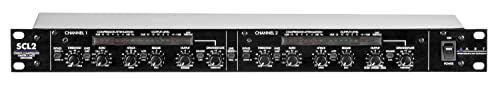
- Dual channel or linked stereo operation
- Balanced TRS and XLR inputs
- Auto/manual attack and release control
Best For: Podcast rigs needing stereo or dual-channel compression
Multi-channel preamp/compressor
Universal Audio 4-710d 4-Channel Preamp and Compressor
- Four channels for multiple podcast sources
- Tube/FET preamp and DI with tone blending
- 8-channel 24-bit/192kHz A/D conversion
Best For: Multi-mic podcasts needing an all-in-one rack processor
Single-channel vocal compressor
ART Solo VLA Single Channel Multi-Voice Compressor

- Single-channel design for one podcast voice
- Variable blend of compressed and uncompressed signals
- Selectable tube or solid-state control
Best For: Single-mic podcasting with flexible vocal shaping
Premium channel strip

- Mic preamp, compressor/limiter, and DI in one unit
- Sidechain input adds flexible dynamics control
- Heavy stainless steel build for studio use
Best For: Podcasters wanting an all-in-one premium front end
Dual-channel rack pick
Professional Black Dynamic Processor

- Dual-channel compressor for two sources
- Noise gate and sidechain insert included
- XLR/TRS I/O for studio and streaming setups
Best For: Podcast setups needing rackmount control over two channels
Classic single-channel choice

- Single-channel discrete compressor design
- Custom CineMag USA transformers included
- Classic all-buttons-in ratio mode supported
Best For: Podcasters wanting vintage-style single-channel compression
Built-in Interface Compression – Universal Audio Volt 276 USB Audio Interface
If you want audio compressors for podcasting that live right inside your interface, the Universal Audio Volt 276 is a practical all-in-one pick. Its built-in analog compressor is based on the 1176, so it can add clarity and punch to voice tracks without adding extra outboard gear.
Best For: Podcasters who want a compact interface with built-in compression and a polished recording workflow.
Pros:
- Built-in analog compressor based on the classic 1176 design
- Vintage mode adds the sound of UA 610-style preamps
- Works with Mac, Windows, iPad, and iPhone for flexible recording
- Includes LUNA DAW support for recording and mixing
Cons:
- Requires an external Volt power supply
- iPad use may need an Apple Lightning to USB Camera Adapter
The Volt 276 is a strong fit if you want compression at the front end while keeping the setup simple. It is geared toward recording voices cleanly and quickly, especially for creators who want a more studio-like result from a small desktop rig.
Budget Rack Dynamics – Behringer Composer Pro-XL MDX2600 Compressor with De-esser
Among audio compressors for podcasting, the Behringer Composer Pro-XL MDX2600 is a budget-friendly rack unit for controlling levels, taming peaks, and managing vocal dynamics. Its 2-channel compressor/limiter/gate design makes it useful when you want a straightforward hardware processor for spoken-word tracks.
Best For: Podcasters building a low-cost rack setup that needs compression, limiting, and gating in one unit.
Pros:
- 2-channel compressor/limiter/gate in a single unit
- Useful for audio production, mixing, and mastering
- Compact rack-friendly design
- Includes de-essing capability in the product name and function set
Cons:
- Requires corded power
- Bulkier than interface-based compression for simple home setups
The MDX2600 makes the most sense if you already use rack gear and want a single processor to handle several dynamics tasks. It is less about convenience and more about giving you hands-on control in a traditional studio chain.
Rackmount Voice Control – dbx 266xs Professional Audio Compressor/Gate
If you are comparing audio compressors for podcasting and want a proven rack processor, the dbx 266xs offers straightforward compression and gating in a 1U format. It is designed to smooth uneven levels and tighten spoken-word recordings with simple front-panel controls and clear gain-reduction metering.
Best For: Podcasters who want a simple, rackmount compressor/gate for clean voice leveling.
Pros:
- Compresses and gates in one 1U rack space unit
- Front-panel controls with separate LED displays for setup
- Program-adaptive expander/gates for smoother behavior
- Sidechain insert adds routing flexibility
Cons:
- Analog rack hardware is less portable than USB alternatives
- Requires corded power and external cabling
The 266xs is a solid choice for creators who prefer a dedicated compressor instead of an interface with built-in processing. Its focus is on dependable dynamics control, with enough routing and metering to make setup easier.
Classic FET Rack Compressor – Klark Teknik 76-KT Classic FET-Style Compressor
For audio compressors for podcasting with a more classic studio flavor, the Klark Teknik 76-KT brings a FET-style design modeled after the 1176LN. It is built for professional audio applications and uses a discrete signal path with MIDAS transformers, making it a strong fit when you want character along with compression.
Best For: Podcasters and engineers who want an 1176-style compressor with a vintage hardware feel.
Pros:
- Modeled after iconic 1176LN D and E revisions
- Completely discrete signal path
- Class-A line-level output amplifier
- MIDAS input and output transformers
Cons:
- More specialized than a simple compressor/gate combo
- Requires rack space and corded power
The 76-KT is best for users who want classic FET compression behavior rather than an all-purpose utility processor. It is less about convenience and more about delivering a recognizable studio-style sound for voice or music production.
Stereo rack compressor – ART SCL2 Stereo Compressor/Limiter
If you need audio compressors for podcasting that can handle a full stereo chain, the ART SCL2 is built for dual-channel or linked stereo operation. Its balanced TRS and XLR inputs, selectable auto/manual attack and release, and precise LED level meters make it a practical rack option for managing consistent levels during recording or post-production.
Best For: Podcast setups that want a stereo-capable compressor/limiter with straightforward control and visual metering.
Pros:
- Dual channel or linked stereo operation suits paired sources or stereo processing.
- Balanced 1/4-inch TRS and XLR inputs fit common studio connections.
- Selectable auto/manual attack and release give you more control over compression behavior.
- Precise LED level meters help monitor gain and limiting at a glance.
Cons:
- Rack-style hardware may be more than you need for a simple single-mic podcast rig.
- Designed around analog signal flow, so it is not a one-box portable solution.
The SCL2 makes sense when your podcast workflow needs reliable hardware compression across two channels or a linked stereo path. It is a solid fit for users who want clear metering and flexible attack/release settings in a traditional rack unit.
Multi-channel preamp/compressor – Universal Audio 4-710d 4-Channel Preamp and Compressor
For podcasting workflows that want microphone preamp and compression in one unit, the Universal Audio 4-710d combines four channels of tube/FET preamp and DI with tone blending control. It also includes 8-channel 24-bit/192kHz A/D conversion, which makes it a strong rack-based option when you need to capture multiple sources cleanly.
Best For: Multi-host or multi-mic podcast setups that want preamp, compression, and conversion in a single rack unit.
Pros:
- Four channels give you room for several podcast microphones or sources.
- Tube/FET preamp and DI design with a tone blending knob adds flexibility.
- Built-in 8-channel 24-bit/192kHz A/D conversion supports a more integrated recording chain.
- Rack format suits permanent studio installations.
Cons:
- Feature set may be more complex than needed for a basic single-host podcast.
- Heavier rack hardware is less convenient for portable or minimalist setups.
The 4-710d stands out when your priority is consolidating several studio functions into one processor. For podcast teams that record multiple voices, it offers a clean path from mic input to digital conversion with compression available in the chain.
Single-channel vocal compressor – ART Solo VLA Single Channel Multi-Voice Compressor
If you are comparing audio compressors for podcasting and want a focused single-channel unit, the ART Solo VLA is built around a mastering-quality signal path with selectable multi-voice tube or solid-state control. Its optical isolators, variable blend between compressed and uncompressed signals, and switchable +4dBu/-10dBV level modes make it useful for shaping podcast vocals without a complicated setup.
Best For: Single-mic podcast chains that need straightforward, high-control compression with blend options.
Pros:
- Single-channel design keeps the workflow simple for one voice or one source.
- Variable blend lets you mix uncompressed and compressed signals.
- Selectable tube or solid-state control offers more tonal flexibility.
- Switchable +4dBu/-10dBV level modes help match different gear levels.
Cons:
- Single-channel format is not ideal for multi-host or stereo podcasting.
- Rack-unit dimensions and corded power make it a studio-focused piece of gear.
The Solo VLA is a good fit when you want one compressor dedicated to a podcast voice and prefer blend control over a more hands-off design. It brings together optical compression and selectable voicing in a unit that feels aimed at careful signal shaping.
Premium channel strip – Empirical Labs EL-9 Mike-E
If you want one of the more versatile audio compressors for podcasting, the Empirical Labs EL-9 Mike-E stands out as a microphone preamp, compressor/limiter, and DI in a single channel strip. Its sidechain input gives you more control over dynamics, making it a strong pick when you want clean, controlled voice tracks with flexible routing.
Best For: Podcasters who want a premium channel strip with preamp, compression, and limiter control in one unit.
Pros:
- Combines microphone preamp, compressor/limiter, and DI in one unit
- Includes sidechain input for more advanced dynamic control
- Stainless steel build with substantial, rack-style hardware feel
- Useful when you want a single front-end for voice recording and processing
Cons:
- Heavy unit at 12.19 pounds, so it is not very portable
- Larger chassis may take up more studio space than simpler compressors
- More feature-rich than a basic podcast compressor if you only need simple leveling
Overall, the Mike-E is best viewed as a high-end recording front end rather than just a basic compressor. For podcasting setups that need preamp quality and dynamics control together, it offers a lot of functionality in one box.
Dual-channel rack pick – Professional Black Dynamic Processor
This dual-channel option is a practical choice among audio compressors for podcasting if you need straightforward rackmount dynamics control for more than one source. It offers Overeasy compression, auto attack and release, XLR/TRS connectivity, and a built-in noise gate, so it fits well in studio, streaming, or live voice setups.
Best For: Creators who need a dual-channel rack compressor with noise gate and sidechain options.
Pros:
- Dual-channel design gives you control over two sources
- Overeasy compression with auto attack/release for smoother dynamics
- Built-in noise gate helps reduce unwanted background noise
- XLR and 1/4-inch TRS inputs and outputs support flexible routing
Cons:
- 1U rackmount format is less convenient for small desktop setups
- Styled more like a studio/live unit than a podcast-specific processor
- Best results will depend on careful knob adjustment
For podcasters building a more advanced rack system, this compressor offers useful control without overcomplicating the signal path. The dual-channel layout and noise gate make it especially appealing when you are managing multiple microphones or other dynamic sources.
Classic single-channel choice – Warm Audio WA76
The Warm Audio WA76 is a classic-style option for audio compressors for podcasting when you want a single-channel compressor with a simple, proven layout. Its fully discrete signal path, CineMag USA transformers, and famous all-buttons-in ratio mode make it a strong fit for voice recording chains that need character and control.
Best For: Podcasters who want a classic single-channel compressor with a vintage-style signal path.
Pros:
- Single-channel design is straightforward for one microphone or voice chain
- Fully discrete signal path with Custom CineMag USA transformers
- Supports the well-known all-buttons-in ratio setting
- Compact rack footprint compared with larger channel strips
Cons:
- Single-channel layout may be limiting for multi-mic podcast rigs
- No built-in preamp or noise gate described in the supplied notes
- Best suited to users who already know how to set up compressor gain and ratio
As a dedicated compressor, the WA76 is a focused tool rather than an all-in-one processor. That makes it a good match for podcasters who want classic compression behavior and a simple signal chain.
How We Picked the Best Audio Compressors for Podcasting
We selected these Audio Compressors for Podcasting based on compression style, ease of use, channel count, sidechain and gate features, build quality, and fit for spoken-word production. We also looked for options that make sense in real podcast workflows, from simple voice control to more advanced studio routing.
Quick Comparison
For a straightforward setup, channel compressors and interface-integrated options are easiest to live with. Rack units tend to offer more control, while premium compressor/preamp combos can add color, character, and stronger gain staging. If you record multiple hosts or run a studio, dual-channel and stereo models are often the most flexible.
Key Buying Factors for Audio Compressors for Podcasting
Compression Character
Different compressors behave differently. FET-style units are fast and punchy, VCA-style designs are often clean and precise, and vari-mu or tube-inspired models can sound smoother or warmer. For podcast voice, a clean, predictable response is usually the safest choice unless you want added tone.
Controls and Ease of Setup
Look for clear threshold, ratio, attack, and release controls. If you are new to compression, a unit with simple metering and a forgiving sound is easier to dial in without overprocessing your voice.
Noise Management and Dynamics Tools
Some Audio Compressors for Podcasting include a gate, de-esser, or sidechain insert. These extras can help reduce room noise, plosives, and sibilance, which matters a lot in untreated recording spaces.
Connectivity and Workflow
Make sure the compressor fits your signal chain. USB interface models are convenient for compact setups, while 1U rack compressors work better in dedicated studios or live recording rigs. Multi-channel units are useful if you record co-hosts or guests.
Who Should Buy Which Audio Compressors for Podcasting?
Solo podcasters who want a simple, all-in-one recording path should consider interface-based or single-channel options. Creators building a more serious home studio may prefer rack compressors with more detailed control and cleaner gain staging. If you record interviews, roundtables, or live streams, dual-channel or stereo models are the most practical choice.
For the best results, choose a compressor that complements your voice and your room rather than chasing the most features. A well-matched unit will usually sound better than an aggressive setting on a more complex model.