
The best mechanical keyboard for typing should make long writing sessions feel comfortable, predictable, and easy to customize. The right choice depends on more than switch type: layout, sound, connectivity, keycap quality, and desk space all matter.
We selected 10 keyboards spanning compact 75% designs, full-size models, wireless options, quiet switches, typewriter-inspired styles, and hot-swappable builds so you can match your keyboard to the way you work.
Best 10 Mechanical Keyboard for Typing Picks for 2026
Best Customizable Pick

- Compact 75% layout with arrow keys
- Hot-swappable 3- or 5-pin switches
- Tri-mode wireless and USB-C connectivity
Best For: Typists wanting wireless flexibility and easy switch customization
Best Full-Size Office Pick
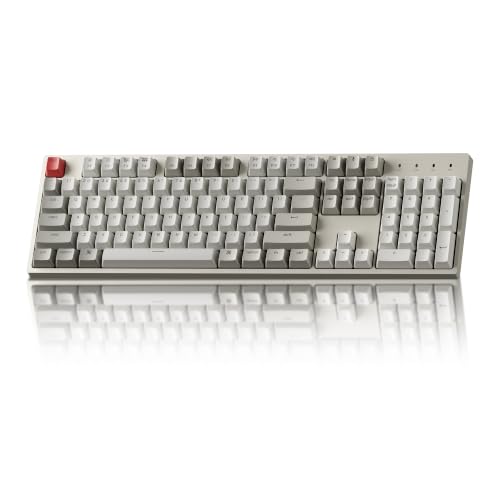
- Traditional 104-key full-size layout
- Tactile brown switches for responsive feedback
- USB-C wired connection with Mac and Windows support
Best For: Writers and office users who need a number pad
Best Long-Battery Wireless Pick
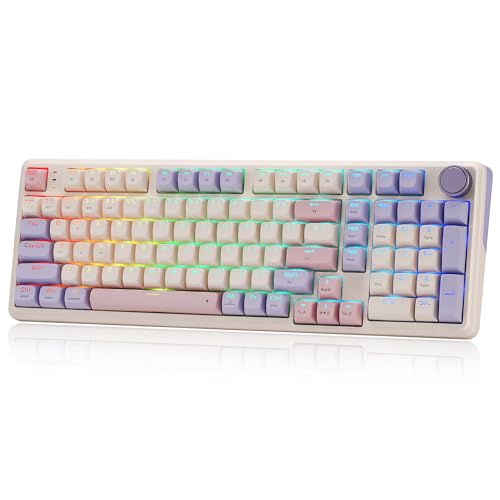
- 8000mAh battery with tri-mode connectivity
- 100-key layout with a multifunction knob
- Gasket design, linear switches, and PBT keycaps
Best For: Wireless users seeking long runtime and a cushioned linear feel
Best Quiet Low-Profile Pick

- Quiet low-profile linear red switches
- Full-size 108-key aluminum design
- Bluetooth and USB receiver support for three devices
Best For: Shared workspaces and users wanting smooth, quieter typing
Retro Clicky Pick
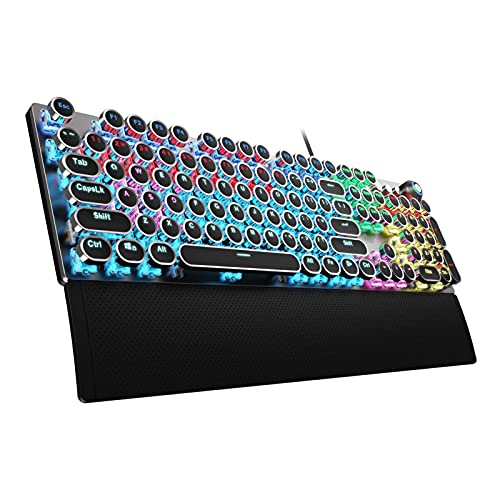
- Clicky blue switches with tactile feedback
- Full-size layout with media controls
- Includes magnetic wrist rest
Best For: Retro-style typing with audible click feedback
Quiet Customizable Pick
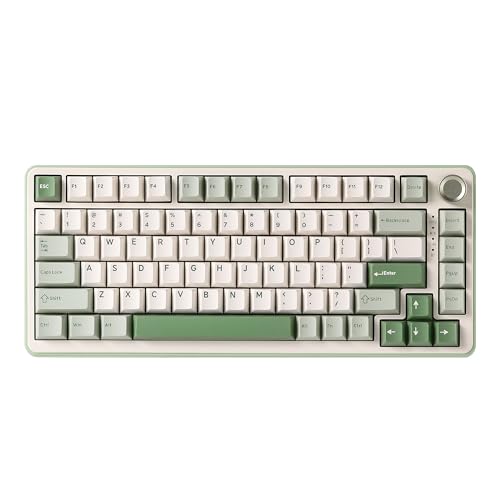
- Gasket mount with five-layer padding
- Bluetooth, 2.4GHz, and wired modes
- Hot-swappable 3-pin/5-pin sockets
Best For: Compact, quieter typing with wireless flexibility
Practical Linear Pick

- Smooth, light linear red switches
- Full-size 104-key layout
- Hot-swappable with spare switches
Best For: Full-size wired typing with smooth key presses
Best Wireless Flexibility

- Tri-mode connectivity with up to five devices
- 96% layout retains the number pad
- Hot-swappable switches and 8000mAh battery
Best For: Multi-device work, study, and gaming
Best Wired Number-Pad Pick

- Compact 98-key layout with dedicated number pad
- Gasket mount and five-layer sound absorption
- Hot-swappable pre-lubed linear switches
Best For: Wired workstations, data entry, and gaming
Best Compact Wireless Typing Board

- Space-saving 75% layout with essential navigation keys
- Tri-mode connectivity and 4000mAh rechargeable battery
- Gasket mount with hot-swappable linear switches
Best For: Small desks, laptops, and hybrid work
Best Customizable Pick – AULA F75 Pro
The AULA F75 Pro is a versatile mechanical keyboard for typing when you want a compact layout, flexible connectivity, and a softer, quieter-feeling build. Its 75% layout retains arrow keys, while the pre-lubricated switches, gasket-style construction, and multi-layer dampening are designed for a smoother typing experience.
Best For: Typists who want a compact wireless keyboard with customization options and a multifunction knob.
Pros:
- Tri-mode Bluetooth 5.0, 2.4GHz, and USB-C connectivity can support up to five devices.
- Hot-swappable PCB accepts 3-pin and 5-pin switches without soldering.
- Pre-lubricated switches, stabilizers, silicone padding, and five-layer filling target a softer, less hollow sound.
- 4000mAh battery, PBT keycaps, RGB lighting, and a programmable knob add practical flexibility.
Cons:
- The 75% layout omits the dedicated number pad.
- Its many gaming-focused lighting and programming features may be unnecessary for a basic office setup.
The F75 Pro is a strong choice if you value typing feel and future customization more than a full-size layout. It offers a feature-rich setup for work, gaming, and multi-device use in a space-saving design.
Best Full-Size Office Pick – Keychron C2
The Keychron C2 is a straightforward full-size mechanical keyboard for typing, with tactile brown switches, a dedicated number pad, and a wired USB-C connection. Its inclined frame and adjustable feet provide two typing angles, while the Mac- and Windows-compatible layout suits mixed-device households and offices.
Best For: Office users, writers, and spreadsheet-focused typists who prefer a traditional 104-key layout.
Pros:
- Tactile Keychron brown switches provide responsive feedback for typing.
- Full-size 104-key layout includes a number pad and dedicated multimedia and function keys.
- Wired USB-C connection supplies consistent power without battery charging.
- Includes extra keycaps for Mac and Windows systems, plus adjustable typing angles.
Cons:
- This version is non-backlit, so it lacks illuminated keys.
- Wired connectivity is less flexible than wireless alternatives.
- The ABS keycaps may be less wear-resistant than PBT keycaps.
The C2 focuses on dependable everyday typing rather than wireless features or extensive customization. Choose it when a full-size layout, tactile feedback, and a simple wired setup are your priorities.
Best Long-Battery Wireless Pick – Redragon K768 PRO
The Redragon K768 PRO is a mechanical keyboard for typing that combines a near-full-size 100-key layout with a cushioned gasket design and linear switches. Its tri-mode connection and 8000mAh battery are useful for people who want wireless convenience, while PBT keycaps and adjustable RGB lighting support a durable, personalized setup.
Best For: Wireless typists who want long battery life, a number-pad-friendly layout, and a soft linear feel.
Pros:
- Tri-mode USB-C, Bluetooth, and 2.4GHz connectivity supports flexible device use.
- 8000mAh battery is designed to provide substantially longer runtime than typical gaming keyboards.
- Gasket covers and five-layer dampening aim for a cushioned, creamy typing sound.
- Hot-swappable sockets accept most 3-pin and 5-pin switches, and PBT keycaps resist glossing.
Cons:
- The 100-key layout is not a conventional full-size 104-key design.
- Its custom linear switches may not suit typists who prefer tactile feedback.
- The gaming-oriented software and RGB features may be more than some office users need.
The K768 PRO is particularly appealing when battery endurance and wireless versatility matter. Its linear, gasket-mounted design favors a smooth and cushioned feel, while the 100-key layout preserves more functionality than a compact board.
Best Quiet Low-Profile Pick – ProtoArc K310 Pro
The ProtoArc K310 Pro is a practical mechanical keyboard for typing in shared spaces, using low-profile linear red switches intended to keep noise down. Its full-size 108-key layout, aluminum construction, multi-device support, and adjustable backlight make it suitable for office work, programming, and everyday use.
Best For: Office and home users who want a quiet, low-profile full-size keyboard with wireless device switching.
Pros:
- Low-profile linear switches provide a smooth typing feel with reduced noise.
- Connects with up to three devices through Bluetooth or a USB receiver.
- Full-size 108-key layout includes dedicated keys for conventional desktop use.
- Aluminum top case, adjustable tilt legs, rechargeable battery, and 10 backlight effects add convenience.
Cons:
- Backlighting supports a single color rather than RGB.
- Macro customization currently works only through a 2.4G USB connection, and the device is not detected through a multi-port hub.
- Linear switches provide less tactile feedback than brown or other tactile options.
The K310 Pro is a sensible choice for quieter typing without giving up a full-size layout. Its low-profile design and three-device connectivity make it especially useful for office setups that move between computers and mobile devices.
Retro Clicky Pick – AULA F2088 Typewriter Style
If you want a mechanical keyboard for typing with a vintage look and pronounced tactile feedback, the AULA F2088 combines round typewriter-style keycaps with clicky blue switches. Its full-size layout, wrist rest, media controls, and wired USB connection make it practical for office work as well as gaming.
Best For: Typists who enjoy audible clicky feedback, a full-size layout, and retro styling.
Pros:
- Clicky blue switches provide tactile feedback and a crisp sound.
- Full 104-key layout includes dedicated media controls and a multifunction control knob.
- Includes a magnetic wrist rest and aluminum alloy top panel.
- Offers 19 lighting effects plus adjustable brightness and speed.
Cons:
- Clicky switches may be loud in shared workspaces.
- Wired-only connectivity limits placement flexibility.
- The keyboard is not water resistant.
The F2088 is a strong choice if typing feel and visual character matter more than a compact footprint or wireless convenience. Its stepped round keycaps and wrist support may also help maintain comfortable hand positioning during longer sessions.
Quiet Customizable Pick – YUNZII B75 PRO 75% Wireless
The YUNZII B75 PRO is a compact mechanical keyboard for typing that emphasizes a cushioned feel, flexible connectivity, and customization. Its 75% layout retains arrow, function, and number-row keys while leaving out the dedicated number pad, and its gasket mount, five-layer padding, and pre-lubricated switches are designed for a smoother, quieter experience.
Best For: Typists who want a compact, quieter-feeling keyboard with wireless connectivity and switch customization.
Pros:
- Gasket mount and five-layer padding are designed to reduce typing noise.
- Supports Bluetooth, 2.4GHz wireless, and wired Type-C connections.
- Hot-swappable sockets support compatible 3-pin and 5-pin switches.
- Built-in 4000mAh battery supports extended wireless use.
Cons:
- The 75% layout does not include a dedicated number pad.
- RGB customization software is for Windows systems.
- The compact layout may require adjustment for users accustomed to full-size keyboards.
With its tri-mode connectivity and hot-swappable design, the B75 PRO is the most adaptable option here. It suits users who want a cleaner desk setup and the ability to change the typing feel over time.
Practical Linear Pick – Redragon K671 Full-Size Wired
The Redragon K671 is a straightforward mechanical keyboard for typing when you prefer smooth linear red switches and a familiar full-size layout. It connects by USB, supports hot-swapping, offers macro editing, and includes multiple backlight modes for work or gaming.
Best For: Users who want a full-size wired keyboard with light linear switches, programmable functions, and replaceable switches.
Pros:
- Linear red switches require less force and feel smooth during repeated typing.
- Full-key anti-ghosting supports simultaneous keystrokes.
- Hot-swappable design includes four spare switches and two replacement keycaps.
- Macro editing and 12 multimedia shortcuts add practical customization.
Cons:
- Connectivity is limited to a wired USB connection.
- Backlighting has adjustable effects, but the color cannot be changed.
- It lacks the tactile bump and click of blue-style switches.
The K671 offers a familiar 104-key arrangement and an easy-to-press linear feel, making it a practical choice for mixed typing and gaming use. Its hot-swappable switches provide useful repair and customization flexibility without requiring a compact layout.
Best Wireless Flexibility – AULA F99
The AULA F99 is a versatile mechanical keyboard for typing when you want wireless convenience, a compact layout, and room to customize. Its 96% design retains arrow keys and a number pad while offering Bluetooth, 2.4GHz, and USB-C connections.
Best For: Multi-device workspaces, gaming, and users who want a customizable wireless keyboard with a number pad.
Pros:
- Tri-mode connectivity supports Bluetooth 5.0, 2.4GHz wireless, and USB-C, with up to five connected devices.
- Hot-swappable PCB accepts 3-pin and 5-pin switches without soldering.
- Gasket structure, five-layer filling, pre-lubed linear switches, and PBT keycaps support a smoother, quieter typing experience.
- Large 8000mAh battery and programmable RGB lighting add convenience for extended use.
Cons:
- The 96% layout is less compact than a tenkeyless or 75% keyboard.
- Linear switches may not suit typists who prefer tactile feedback.
- Customization features and macros require using the included driver.
The F99 stands out if you need one keyboard for work, study, and gaming across several devices. Its number pad, substantial battery, and hot-swap support make it a flexible long-term option, though its larger footprint may not suit small desks.
Best Wired Number-Pad Pick – RK Royal Kludge R98 Pro
The RK Royal Kludge R98 Pro is a practical mechanical keyboard for typing if you prefer a wired setup with a dedicated number pad. Its 98-key layout saves space compared with a full-size board while keeping navigation keys and most functions.
Best For: Desk-based work, data entry, and gaming users who want a compact keyboard with a number pad and volume control.
Pros:
- 98-key layout preserves the number pad while using less desk space than a full-size design.
- Gasket mount and five layers of sound-absorbing foam are designed for a softer, creamier typing sound.
- Pre-lubed linear switches are hot-swappable with 3-pin and 5-pin options.
- MDA-profile double-shot PBT keycaps, a detachable aluminum volume knob, and programmable controls add useful upgrades.
Cons:
- USB-C wired connectivity does not provide wireless flexibility.
- Linear switches may feel less tactile for users who prefer pronounced key feedback.
- RGB customization and remapping are handled through the online driver.
The R98 Pro is a strong fit for a permanent workstation where reliable wired operation and number-pad access matter. Its compact 98-key format balances productivity and desk space, while the hot-swap design leaves room for future switch changes.
Best Compact Wireless Typing Board – Kisnt KN85
The Kisnt KN85 is a space-saving mechanical keyboard for typing with a 75% layout, tri-mode connectivity, and a cushioned sound profile. It keeps function keys and arrows while removing the number pad, freeing more room for mouse movement.
Best For: Small desks, laptop setups, hybrid work, and typists who want wireless flexibility without a number pad.
Pros:
- Compact 85-key layout retains F1-F12 keys, arrows, and shortcuts while reducing desk footprint.
- Bluetooth 5.0, 2.4GHz, and USB-C connections support PCs, tablets, phones, and consoles.
- Gasket mount, pre-lubed linear switches, and PBT keycaps are designed for a smooth, mellow typing sound.
- Hot-swappable 3-pin and 5-pin support enables solder-free switch changes.
Cons:
- The 75% layout lacks a dedicated number pad for frequent numeric entry.
- Driver-based remapping and macro features are available only on Windows in wired or 2.4GHz mode.
- Animated RGB effects can reduce battery life, and the manufacturer recommends a full initial charge.
The KN85 is a sensible choice when desk space and wireless device switching matter more than number-pad access. Its softer gasket-mounted feel and hot-swap capability make it appealing for everyday typing, while the compact layout remains practical for portable or minimalist setups.
How We Picked the Best Mechanical Keyboard for Typing
We focused on features that directly affect everyday typing: switch feel, key stability, layout, connectivity, construction, and customization. The lineup includes compact boards for smaller desks, full-size keyboards with dedicated number pads, and 96% layouts that preserve most essential keys while saving space.
We also considered practical extras such as hot-swappable switch sockets, gasket-mounted construction, wireless modes, backlighting, volume knobs, programmable keys, and battery capacity. Because typing preferences vary, no single keyboard is ideal for everyone.
Quick Comparison
| Best For | Recommended Layout | Features to Prioritize |
|---|---|---|
| Long writing sessions | 75% or full-size | Comfortable switches, stable keys, ergonomic support |
| Number-heavy work | Full-size or 96% | Dedicated number pad, reliable wired or wireless connection |
| Small desks | 75% | Compact footprint, function-layer shortcuts |
| Quiet shared spaces | Any layout | Linear or quiet switches, sound-dampening construction |
| Customization | 75% or 96% | Hot-swappable sockets, replaceable keycaps, RGB lighting |
Key Buying Factors for a Mechanical Keyboard for Typing
Switch Feel and Noise
Brown or tactile switches provide a noticeable bump that can make key presses feel deliberate. Linear switches are smoother and often preferred for fast, uninterrupted typing. Quiet or damped switches are better for offices, shared rooms, and calls, while clicky switches provide pronounced sound and feedback but may disturb others.
Layout and Desk Space
A full-size keyboard includes the function row, navigation cluster, and number pad, making it useful for spreadsheets and data entry. A 96% model keeps nearly all of those keys in a tighter arrangement. A 75% board removes the number pad and compresses the navigation keys, creating more mouse room without losing the function row.
Connectivity and Battery
Wired keyboards offer simple, consistent operation and do not require charging. Bluetooth is convenient for laptops and tablets, while 2.4GHz wireless typically provides a more responsive desktop connection. If you choose wireless, check battery capacity, charging over USB-C, and whether the keyboard can be used while charging.
Customization and Construction
Hot-swappable sockets let you change switches without soldering, which is valuable if your preferences evolve. PBT keycaps generally resist shine better than standard ABS caps. Gasket mounts, pre-lubed switches, stabilizers, and sound-dampening materials can improve feel and acoustics, but they should support—not replace—a comfortable layout.
Who Should Buy Which Mechanical Keyboard for Typing?
Choose a Compact 75% Board If:
You want a practical typing layout with a smaller footprint, extra mouse space, and access to customizable switches and lighting. This is a strong all-around format for writers, students, and general office use.
Choose a Full-Size or 96% Board If:
You regularly enter numbers, use navigation keys, or prefer not to rely on function-layer shortcuts. These layouts are especially useful for finance, spreadsheets, and productivity-heavy work.
Choose a Wireless Model If:
You switch between devices, want a cleaner desk, or need flexible placement. Confirm the supported connection modes and battery details before buying.
Choose a Quiet or Linear Model If:
You share an office, work near other people, or prefer a smooth, low-distraction keystroke. For maximum feedback, select tactile switches instead; for prominent sound, consider a clickier design only if noise is not a concern.