
A USB hub with an Ethernet port can add reliable wired networking and much-needed connectivity to laptops, tablets, and desktops with limited ports. The right model can also connect displays, storage, keyboards, and other peripherals from one compact accessory.
We selected 10 options spanning USB-A and USB-C designs, basic hubs, multiport docks, and models with gigabit networking. Use the guide below to match port selection, speed, compatibility, and power needs to your setup.
Best 10 USB Hub with Ethernet Port Picks for 2026
Best Ethernet Expansion
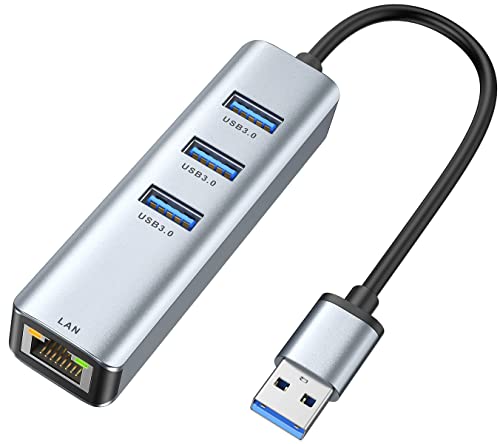
- Gigabit Ethernet and three USB 3.0 ports
- Simultaneous port operation
- Compact aluminum housing with 24-month warranty
Best For: USB 3.0 laptops needing wired networking and extra USB-A ports
Best Full-Feature USB-C Dock
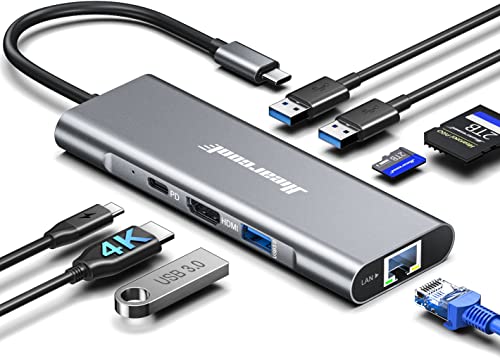
- 1Gbps Ethernet with 4K@60Hz HDMI
- 100W pass-through charging
- USB-A, USB-C, SD, and microSD connectivity
Best For: USB-C workstations needing networking, display output, charging, and card readers
Best Simple USB-A Option
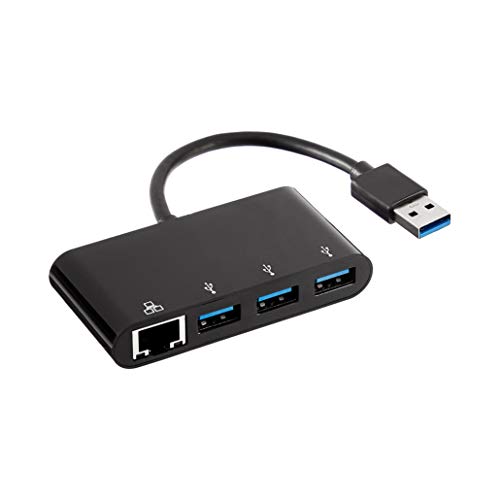
- Three USB 3.0 ports plus Gigabit Ethernet
- Plug-and-play operation
- Slim, lightweight USB-A design
Best For: Laptop users wanting basic wired networking and USB-A expansion
Best Compact USB-C Pick

- Ethernet, HDMI, USB data, and PD input
- 4K@30Hz display support
- Up to 65W pass-through charging
Best For: Portable USB-C setups needing wired networking and basic workstation connectivity
Flexible 7-in-1 Expansion

- 4-foot cable for flexible placement
- Gigabit Ethernet and six USB 3.0 ports
- Data only; does not support charging
Best For: Desktops and laptops needing extra reach and many USB-A ports
Balanced Everyday Connectivity
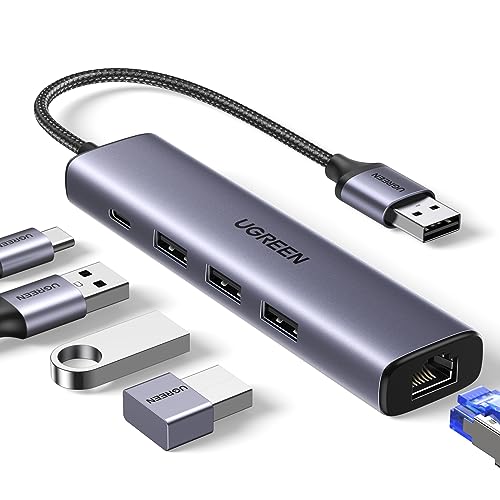
- Gigabit Ethernet with three USB 3.0 ports
- USB-C input powers high-demand peripherals
- Driver-free setup on newer Windows, macOS, and Chrome OS
Best For: Everyday laptop connectivity and peripheral expansion
Complete USB-C Workstation

- Adds Ethernet, HDMI, card readers, and USB ports
- Supports 4K output and up to 10Gbps data
- Up to 85W pass-through charging
Best For: USB-C laptop workstations with displays and memory cards
Best Dual-Connector Pick

- USB-A and USB-C connectors
- Gigabit Ethernet up to 1000Mbps
- Three USB-A 3.0 ports
Best For: Flexible wired networking and USB expansion
Best Full-Feature USB-C Pick

- Gigabit Ethernet and 4K@60Hz HDMI
- SD/TF card readers included
- Up to 85W pass-through charging
Best For: USB-C MacBook workstations and media setups
Best for Maximum USB Expansion
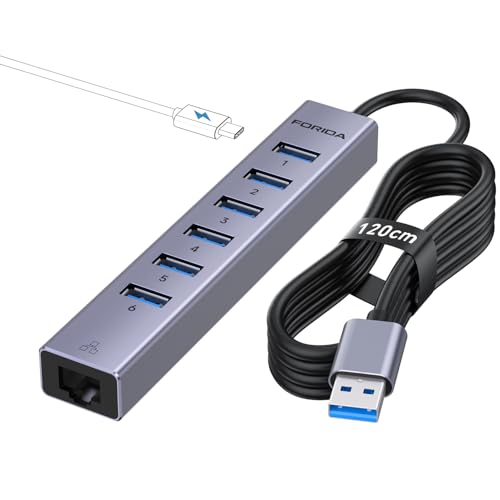
- Six USB 3.0 peripheral ports
- Gigabit Ethernet connection
- 3.9-foot cable and 15W power input
Best For: USB-A desktops with many connected peripherals
Best Ethernet Expansion – ABLEWE 4-in-1 USB 3.0 Hub
If you need a straightforward USB hub with Ethernet port, the ABLEWE 4-in-1 model combines three USB 3.0 ports with a Gigabit RJ45 connection. It is designed for laptops and other compatible devices with USB 3.0, and supports plug-and-play wired networking without requiring additional drivers.
Best For: Users who want Gigabit Ethernet plus several USB-A connections from one USB 3.0 port.
Pros:
- Gigabit Ethernet supports 10/100/1000Mbps connections.
- Three USB 3.0 ports can connect peripherals such as drives, keyboards, mice, and printers.
- USB ports and Ethernet can work simultaneously.
- Compact aluminum design and a 24-month warranty support travel and regular use.
Cons:
- Designed around USB 3.0 rather than USB-C connectivity.
- It does not include display output, card readers, or USB-C charging features.
The ABLEWE is a practical choice when wired internet and extra USB-A ports are the main priorities. Its broad listed operating-system compatibility and compact design make it a useful basic expansion hub.
Best Full-Feature USB-C Dock – Hiearcool 8-in-1 USB-C Hub
For a more versatile USB hub with Ethernet port, the Hiearcool 8-in-1 USB-C hub adds 1Gbps wired networking alongside HDMI, USB-A, USB-C, and SD/TF connectivity. Its 4K@60Hz HDMI output and 100W pass-through charging make it suited to laptop workstations and travel setups.
Best For: USB-C laptop users who need Ethernet, an external display, charging, and media-card access in one hub.
Pros:
- 1Gbps Ethernet provides a stable wired network connection.
- HDMI supports up to 4K resolution at 60Hz.
- 100W USB-C power-delivery pass-through can charge a compatible laptop.
- Includes three USB-A 3.0 ports plus SD and microSD card readers.
Cons:
- Requires a device with USB-C connectivity.
- Charging performance depends on the connected charger and device.
- Its larger feature set may be unnecessary for users who only need Ethernet and USB ports.
The Hiearcool offers the broadest connectivity package in this group. It is particularly compelling for home offices, presentations, and creative workflows where display output, wired internet, charging, and card transfers are useful together.
Best Simple USB-A Option – Amazon Basics 4-Port Hub
The Amazon Basics 4-port hub is a simple USB hub with Ethernet port for laptops that use USB-A connectivity. It provides three USB 3.0 ports for peripherals and an RJ45 Gigabit Ethernet port, with plug-and-play setup and backward compatibility for USB 2.0 devices.
Best For: Laptop users who want an uncomplicated USB-A hub with wired networking and basic peripheral expansion.
Pros:
- RJ45 Ethernet supports 10/100/1000Mbps bandwidth.
- Three USB 3.0 ports offer up to 5Gbps data transfer.
- USB ports are backward compatible with USB 2.0 devices.
- Plug-and-play operation does not require additional drivers.
Cons:
- It lacks HDMI, USB-C charging, and card-reader ports.
- The plastic enclosure is less premium than an aluminum design.
- It is intended for laptops rather than a broad range of device types.
This Amazon Basics model keeps the feature set focused and the setup uncomplicated. Choose it when you need reliable wired networking and a few extra USB-A ports without the added cost or complexity of a full docking station.
Best Compact USB-C Pick – Anker PowerExpand 6-in-1 Hub
The Anker PowerExpand is a compact USB hub with Ethernet port that adds wired networking, HDMI, USB data ports, and USB-C power delivery to compatible laptops and tablets. It supports up to 4K@30Hz display output and up to 65W pass-through charging when paired with an appropriate wall charger.
Best For: USB-C laptop and tablet users who need Ethernet, one external display, and pass-through charging in a compact hub.
Pros:
- Six-in-one design includes Ethernet, HDMI, USB-C data, two USB data ports, and PD input.
- HDMI supports external displays up to 4K at 30Hz.
- Pass-through charging supports a 65W wall charger.
- Aluminum construction and a compact profile suit home-office or travel use.
Cons:
- HDMI is limited to 4K at 30Hz.
- It has fewer USB expansion ports than some larger hubs.
- Requires a compatible USB-C host device and a separate wall charger for pass-through charging.
The Anker is a balanced option for users who want more than Ethernet but do not need a large desktop dock. Its compact selection of ports covers common laptop-workstation needs while keeping the hub easy to carry.
Flexible 7-in-1 Expansion – 4FT USB Ethernet Hub
If you need a usb hub with ethernet port that can sit comfortably away from your computer, this 7-in-1 model combines a 4-foot cable, gigabit Ethernet, and USB 3.0 expansion. It is designed for data transmission only and does not charge connected devices.
Best For: Desktops, laptops, and workspaces where extra cable reach and multiple USB connections are useful.
Pros:
- 4-foot cable offers flexible placement.
- Gigabit Ethernet supports 10/100/1000Mbps networks.
- Six USB 3.0 ports provide up to 5Gbps data transfer.
- Aluminum enclosure and plug-and-play support for Windows, Mac, and Linux.
Cons:
- Supports data transmission but not charging.
- Its larger port count may be more than needed for simple setups.
This is a practical choice when wired networking and abundant USB-A expansion matter more than charging or video output. The long cable is especially useful for keeping the hub accessible on a desk or beside a couch.
Balanced Everyday Connectivity – UGREEN 5-in-1 Ethernet Hub
UGREEN’s 5-in-1 option is a compact usb hub with ethernet port for adding stable gigabit networking and three USB 3.0 ports to a compatible computer. It also includes a USB-C power input for high-power peripherals, though it cannot charge the host laptop.
Best For: Laptop users who want wired Ethernet, several USB-A ports, and optional power for connected peripherals.
Pros:
- Gigabit Ethernet supports network speeds up to 1000Mbps.
- Three USB 3.0 ports support up to 5Gbps data transfer.
- USB-C power input can help power high-power peripherals such as hard drives.
- Plug-and-play on Windows 11/10/8.1, macOS, and Chrome OS.
Cons:
- Windows XP/7/8/Vista and Linux require driver installation.
- USB-C power input does not charge the host device.
- Provides fewer expansion ports than larger multiport hubs.
The UGREEN hub strikes a sensible balance between portability and functionality. It is a strong everyday pick for users who need Ethernet and a few fast USB ports without adding HDMI or card readers.
Complete USB-C Workstation – Anker 8-in-1 Ethernet Hub
For a USB-C laptop, Anker’s 8-in-1 model is a full-featured usb hub with ethernet port that adds wired networking, HDMI, card readers, USB data ports, and pass-through charging. It supports up to 4K video output, with the refresh rate depending on the laptop’s DisplayPort version.
Best For: USB-C laptop users building a workstation with Ethernet, external displays, memory-card access, and charging.
Pros:
- Includes Ethernet, HDMI, microSD/SD readers, USB-C, and two USB-A data ports.
- Supports up to 4K at 60Hz with a DP 1.4 laptop, or 4K at 30Hz with DP 1.2.
- USB data ports reach up to 10Gbps.
- Pass-through Power Delivery supports up to 85W.
Cons:
- Not compatible with Linux.
- Requires a compatible USB-C connection with DisplayPort Alt Mode for video.
- The hub requires 15W, and Anker recommends a 100W charger and cable for adequate power.
This is the most versatile choice of the three for a USB-C workstation. Its combination of gigabit networking, display output, card readers, fast data ports, and PD passthrough makes it better suited to demanding desk setups than basic Ethernet hubs.
Best Dual-Connector Pick – Acer USB Ethernet Hub
If you need a usb hub with ethernet port that works with both USB-A and USB-C devices, the Acer adapter is a practical choice. It combines a Gigabit Ethernet connection with three USB-A 3.0 ports, while supporting up to 5Gbps shared USB data speeds. Its aluminum body and compact size also suit travel and everyday office use.
Best For: Users who need flexible USB-A/USB-C compatibility, wired Gigabit networking, and several USB-A peripheral connections without HDMI or charging features.
Pros:
- Dual USB-A and USB-C connector design works with a wide range of devices.
- Gigabit Ethernet supports wired speeds up to 1000Mbps.
- Three USB-A 3.0 ports support up to 5Gbps shared bandwidth.
- Works across Windows, macOS, Linux, Chrome OS, and Android, with a durable aluminum enclosure.
Cons:
- It does not include HDMI, USB-C data, or USB Power Delivery charging.
- The three USB-A ports share a total 5Gbps bandwidth.
- Some older systems, including XP and Windows 7, may require a driver.
The Acer is a focused networking and peripheral hub rather than a full docking station. Choose it when dual-connector flexibility and Gigabit Ethernet matter more than display output or laptop charging.
Best Full-Feature USB-C Pick – UGREEN Revodok Pro 9-in-1
The UGREEN Revodok Pro is a versatile usb hub with ethernet port for USB-C laptops and tablets. Along with Gigabit Ethernet, it adds 4K HDMI at 60Hz, SD and TF card readers, USB data ports, and up to 85W pass-through charging from a 100W input.
Best For: USB-C MacBook users who want wired networking, external display support, memory-card access, fast USB transfers, and pass-through charging in one hub.
Pros:
- Nine-port design includes Gigabit Ethernet, HDMI, SD/TF readers, and USB-A/C data connections.
- HDMI supports 4K output at 60Hz.
- Gigabit Ethernet provides a faster, more reliable wired connection than Wi-Fi in supported setups.
- USB data speeds reach up to 10Gbps, with up to 85W available for pass-through laptop charging.
Cons:
- The USB-C charging port supports charging only, not data or video output.
- The supplied compatibility details focus on macOS devices, including newer MacBook models.
- Its broader feature set may be unnecessary if you only need Ethernet and basic USB ports.
This is the strongest all-in-one option of the three for a USB-C workstation. Its display, card-reader, high-speed data, and charging features make it more capable than a basic Ethernet hub, provided your device and workflow support them.
Best for Maximum USB Expansion – FORIDA 8-in-1 Ethernet Hub
For desktops and laptops that need many peripheral connections, this FORIDA is a usb hub with ethernet port built around USB-A expansion. It provides six USB 3.0 ports, a Gigabit Ethernet port, and a USB-C 5V/3A power interface, connected by a long 3.9-foot cable.
Best For: Users who need numerous USB-A ports, a long reach from the host device, and wired Gigabit networking for keyboards, storage drives, mice, and other peripherals.
Pros:
- Six USB 3.0 ports provide extensive peripheral expansion.
- Gigabit Ethernet offers a more stable wired connection than Wi-Fi in supported networks.
- USB 3.0 data transfers reach up to 5Gbps and remain backward compatible with USB 2.0 and 1.0.
- USB-C 5V/3A power input can provide up to 15W when multiple ports are in use.
Cons:
- It expands a USB-A connection rather than offering a USB-C host connector.
- The USB-C port is described as a 5V charging interface, not a USB-C data port.
- It does not include HDMI or other display outputs.
The FORIDA stands out when port count and cable reach are more important than compactness or video output. Its powered design can help support multiple connected USB devices, making it a useful desktop-oriented expansion hub.
How We Picked the Best USB Hub with Ethernet Port
We focused on hubs that combine USB expansion with a built-in RJ45 Ethernet connection, prioritizing gigabit-capable models when available. The selection also considers connector type, USB transfer speeds, display support, power options, cable length, operating-system compatibility, and practical use cases. Models range from simple USB-A adapters to larger USB-C docks with HDMI and multiple peripheral ports.
Specifications can vary by computer, operating system, and available USB-C bandwidth. Confirm the manufacturer’s compatibility notes before buying, especially if you need video output, charging, or access to full gigabit speeds.
Quick Comparison
| Best For | Look For |
|---|---|
| Basic wired networking | Compact USB-to-Ethernet adapter or small hub |
| Older laptops and desktops | USB-A connection and gigabit RJ45 port |
| Modern USB-C laptops | USB-C hub with Ethernet and sufficient USB bandwidth |
| Monitors and desk setups | HDMI output, preferably 4K at 60Hz where supported |
| Many accessories | Six or more USB ports and external power support |
Key Buying Factors for a USB Hub with Ethernet Port
Connector and Compatibility
Start with the port on your computer. USB-A hubs suit older laptops and desktops, while USB-C models are more versatile for current systems. Check support for Windows, macOS, ChromeOS, tablets, or other devices you plan to use. Some USB-C hubs require a compatible USB-C port with data, display, or charging support; not every USB-C port provides all three.
Ethernet Speed
A gigabit Ethernet port is generally preferable to 10/100 Ethernet for fast broadband, network storage, and large file transfers. Actual performance depends on your router, cable, internet plan, computer, and network conditions. Use Cat5e or better cabling for gigabit connections.
Port Selection and Bandwidth
Count the ports you need now, then leave room for expansion. USB 3.0 ports are useful for storage and other high-speed devices, but connected peripherals share the hub’s available bandwidth. HDMI-equipped models can be convenient, although maximum resolution and refresh rate depend on the hub and host device.
Power and Build
Bus-powered hubs are portable and simple, but several hard drives or power-hungry accessories may require external power. Look for a powered model or power-delivery pass-through when your setup is demanding. A sturdy enclosure, strain relief, and an appropriately long cable can also improve everyday usability.
Who Should Buy Which USB Hub with Ethernet Port?
- Choose a compact USB-A hub if you mainly need wired internet and a few extra ports on an older computer.
- Choose a USB-C hub if your laptop has limited USB-C connectivity and you want Ethernet alongside USB peripherals.
- Choose a multiport USB-C dock if you need Ethernet, HDMI, storage, and several accessories at a desk.
- Choose a long-cable or powered design if your ports are hard to reach or you regularly connect multiple high-draw devices.