
Connecting a USB-C phone, tablet, or laptop to a soundbar, DAC, amplifier, or other TOSLINK-equipped device can be simple—if the cable supports the right signal path and hardware.
These 10 optical audio cables for mobile setups prioritize practical differences such as USB-C compatibility, unidirectional output, cable length, included adapters, braided construction, and everyday portability.
Best 10 Optical Audio Cables for Mobile Setups Picks for 2026
Compact Studio Link

- 24-bit/96kHz audio support
- Durable triple-braided construction
- Compact 3-foot mobile setup length
Best For: Short USB-C-to-optical PCM/LPCM connections
Dual-Port Mobile Connector
USB-A & USB-C to Optical Cable

- Works with USB-A and USB-C sources
- Optical output reduces interference
- Plug-and-play mobile and computer use
Best For: Mixed USB-A and USB-C optical audio setups
Longer Hi-Res Connection

- Supports audio up to 192kHz
- Compatible systems support 5.1 audio
- Flexible 5-foot braided cable
Best For: USB-C laptops, tablets, and phones needing extra reach
Best Mobile-to-Optical Pick
Adoreen USB-C to Toslink Cable

- 4-foot braided cable for compact setups
- Supports up to 16-bit/96kHz PCM audio
- Plug-and-play, unidirectional USB-C to Toslink
Best For: Short mobile and laptop connections to optical audio gear
Best 6-Foot Value Option
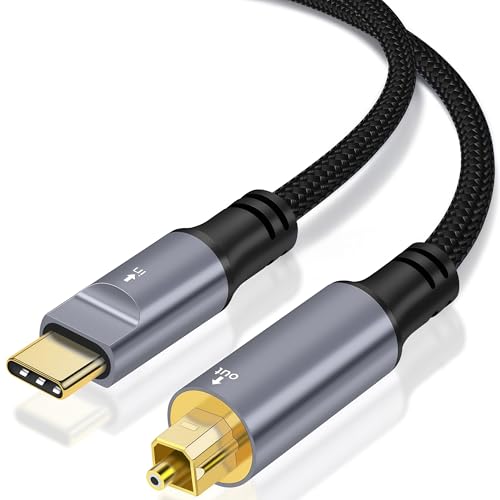
- 6-foot length for more flexible placement
- Supports 16-bit/96kHz audio
- Designed for USB-C source to optical output
Best For: Gaming, music, and home-theater connections
High-Resolution Pick
USB-C to Toslink Optical Cable

- Supports audio up to 192kHz/24-bit
- 6.6-foot braided cable for flexible placement
- Unidirectional USB-C to optical transmission
Best For: Longer USB-C computer, MacBook, or compatible phone setups
Adapter-Friendly Pick
USB-C to Toslink Cable with USB-A Adapter

- Includes a USB-A adapter for older source devices
- 3.3-foot braided cable suits compact setups
- Supports unidirectional digital audio output
Best For: Mixed USB-C and USB-A PC, laptop, and gaming setups
Balanced Mobile Setup Pick

- Offers 5 feet of flexible cable length
- Supports up to 24-bit/96kHz digital audio
- Works with USB-C phones, tablets, laptops, and consoles
Best For: General mobile-to-soundbar, DAC, or home-theater connections
Computer & PS5 Audio Bridge – USB-C to TOSLINK Cable
For computer-focused optical audio cables for mobile setups, this 6.6-foot USB-C to TOSLINK cable offers a clean digital connection to a DAC, amplifier, AV receiver, or speaker system. It supports up to 192kHz/24-bit audio and is designed specifically for computers and PS5, with PS5 limited to stereo output.
Best For: Computer and PS5 users connecting USB-C devices to optical audio equipment.
Pros:
- Supports high-resolution digital audio up to 192kHz/24-bit.
- Optical transmission helps avoid electrical interference, hum, and ground-loop noise.
- Durable aluminum housing and braided jacket.
- Plug-and-play design requires no driver installation.
Cons:
- Compatibility is limited to computers and PS5 according to the supplied specifications.
- PS5 use supports stereo only.
- Not intended for TVs, Xbox, Switch, projectors, or other non-computer USB devices.
This is a strong option when your setup centers on a computer or PS5 and you want a longer, noise-resistant optical connection. Confirm source compatibility before purchasing, since its USB-C input is not broadly supported across every device category.
Compact Studio Link – Kumiho USB-C Optical Cable
The Kumiho is a compact 3-foot choice for optical audio cables for mobile setups, connecting compatible USB-C phones, tablets, laptops, and consoles to optical-equipped audio systems. It supports 24-bit/96kHz transmission, uses a unidirectional design, and automatically recognizes PCM/LPCM formats.
Best For: Short-distance connections from USB-C mobile devices to soundbars, amplifiers, speakers, or headphone amplifiers.
Pros:
- Supports lossless 24-bit/96kHz audio transmission.
- Broadly suited to compatible USB-C smartphones, tablets, laptops, and game consoles.
- Triple-braided nylon jacket, aluminum connectors, and reinforced stress points improve durability.
- Plug-and-play operation requires no additional drivers.
Cons:
- Does not support Dolby 5.1.
- Its 3-foot length may be restrictive for larger setups.
- Requires a USB-C source with digital audio output and works in one direction only.
Choose this cable when you need a durable, short run between a mobile USB-C source and optical audio gear. The lack of Dolby 5.1 support makes it better suited to PCM/LPCM listening than surround-focused home theater systems.
Dual-Port Mobile Connector – USB-A & USB-C to Optical Cable
For flexible optical audio cables for mobile setups, this dual-interface cable accepts either USB-A or USB-C and outputs to TOSLINK optical equipment. It is designed for compatible phones, notebooks, and other source devices with digital audio output, while its built-in decoding chip supports plug-and-play use.
Best For: Users who need one optical cable for both USB-A and USB-C source devices.
Pros:
- Supports both USB-A and USB-C source connections.
- Optical fiber transmission helps isolate electromagnetic interference.
- Plug-and-play design with an aluminum shell, braided cable, and gold-plated connector.
- Can connect compatible mobile devices and computers to speakers, amplifiers, soundbars, and other optical systems.
Cons:
- The source device must support USB digital audio output.
- Unidirectional only: optical input to USB-A or USB-C output is not supported.
- It cannot be used for audio recording.
This is the most versatile pick of the group for mixed-device households because it accommodates both common USB source formats. Compatibility still depends on digital audio output support, so check the source device before relying on it for a mobile setup.
Longer Hi-Res Connection – KAIY USB-C to TOSLINK Cable
The KAIY provides a 5-foot USB-C-to-TOSLINK connection for optical audio cables for mobile setups, linking compatible laptops, MacBooks, tablets, and smartphones with soundbars, AV receivers, DACs, amplifiers, and home stereo systems. It supports up to 192kHz audio and compatible 5.1-channel playback.
Best For: Longer USB-C runs from modern mobile or computer devices to existing optical home audio equipment.
Pros:
- Supports high-resolution digital audio transmission up to 192kHz.
- Compatible systems can use 5.1-channel digital audio.
- 5-foot braided cable offers useful reach for desktop and home theater layouts.
- Aluminum alloy connectors and nylon braiding support everyday durability.
Cons:
- Unidirectional USB-C to optical operation only.
- Requires a USB-C device with digital audio output.
- Not compatible with PS5, PS4, or Nintendo Switch.
With its longer length and stated 5.1 support, this cable is a practical bridge between newer USB-C devices and established optical home audio gear. It is less suitable for console setups and should be paired only with sources that provide digital audio output over USB-C.
Best Mobile-to-Optical Pick – Adoreen USB-C to Toslink Cable
For optical audio cables for mobile setups, the Adoreen is a practical 4-foot option for converting USB-C audio to a soundbar, amplifier, speaker, or headphone amp with a Toslink input. It is unidirectional, plug-and-play, and designed for compatible USB-C devices that support audio output.
Best For: Short mobile, tablet, laptop, and gaming-console connections to optical audio equipment.
Pros:
- Supports up to 16-bit/96kHz PCM audio with low-latency transmission.
- Braided nylon jacket, alloy housings, and gold-plated connectors promote durability and stable signal transmission.
- Requires no drivers or external power and includes protective caps.
Cons:
- Transmits only from USB-C to Toslink; it cannot work in reverse.
- Computer volume controls may not adjust the connected optical receiver.
- Some USB-C devices may require confirmation that their port supports audio output.
The Adoreen offers a well-rounded balance of portability, protection, and high-resolution support. Its 4-foot length suits compact setups, provided your source device supports USB-C audio output.
Best for Flexible Placement – USB-C to Toslink Optical Cable
This 6.6-foot cable gives mobile and desktop users extra reach when connecting a USB-C source to an optical-enabled speaker, soundbar, AV receiver, or headphone amplifier. It uses a braided cable and aluminum housing, with plug-and-play operation for compatible devices.
Best For: Longer home-theater, gaming, and monitor-speaker layouts using newer USB-C phones, tablets, computers, or consoles.
Pros:
- The 6.6-foot length allows more flexible equipment placement.
- Supports up to 96kHz/24-bit audio for high-resolution digital transmission.
- Aluminum housing and braided construction help resist interference and everyday wear.
Cons:
- It is unidirectional and cannot transmit from Toslink to USB-C.
- The notes specify compatibility with audio devices supporting 96kHz/24-bit or higher, excluding devices rated at 48kHz/16-bit or lower.
- It is intended for indoor use.
The added length makes this a useful choice when your source and optical equipment are not close together. Check the receiving device’s supported audio format before buying, as the stated 96kHz/24-bit requirement is a key limitation.
Best 6-Foot Value Option – USB-C to SPDIF Optical Cable
For optical audio cables for mobile setups, this 6-foot USB-C to Toslink cable provides extra reach for connecting smartphones, tablets, laptops, or game consoles to a soundbar, amplifier, DAC, or home-theater system. Its built-in high-performance chip supports plug-and-play digital audio conversion without external power.
Best For: Users who need a longer USB-C-to-optical connection for music, gaming, films, or TV audio.
Pros:
- Supports 16-bit/96kHz audio and low-latency synchronized transmission.
- Works with compatible USB-C sources and optical-input audio equipment.
- Alloy housing and gold-plated connectors are designed for durability and stable transmission.
Cons:
- Only supports USB-C source to optical output; it cannot receive optical audio through USB-C.
- It is not intended for recording audio from DACs or amplifiers.
- Compatibility depends on the USB-C device supporting audio output.
This cable is a straightforward longer-length solution for connecting modern USB-C hardware to traditional optical systems. Its main consideration is direction: verify that your USB-C device is the audio source before ordering.
High-Resolution Pick – USB-C to Toslink Optical Cable
For mobile and desktop optical audio cables, this 6.6-foot USB-C to Toslink model is a flexible choice when you want to connect a compatible USB-C source to an optical input. It supports high-resolution audio up to 192kHz and requires no driver or external power.
Best For: USB-C computers, compatible phones, MacBooks, and PS5 setups connecting to soundbars, DACs, amplifiers, or AV receivers.
Pros:
- Supports up to 192kHz/24-bit audio and computer 5.1 surround sound.
- Optical transmission helps reduce electrical interference, ground-loop noise, and hum.
- Long, nylon-braided 6.6-foot cable supports flexible placement.
- Plug-and-play design with chrome-plated connectors.
Cons:
- Unidirectional only; it cannot send audio from Toslink back to USB-C.
- PS5 output is limited to stereo according to the supplied notes.
- The USB-C source must support audio output, and sampling rates should match the receiving equipment.
This is the strongest option here for users who want extra cable length and support for higher-resolution audio. Confirm USB-C audio compatibility and optical input requirements before buying.
Adapter-Friendly Pick – USB-C to Toslink Cable with USB-A Adapter
This 3.3-foot cable is a practical option among optical audio cables for mobile setups when you need both native USB-C and USB-A connectivity. Its included adapter broadens compatibility with older laptops and other USB-A-equipped source devices.
Best For: Compact PC, laptop, smartphone, and PS5 connections to a soundbar, DAC, amplifier, or home theater system.
Pros:
- Includes a USB-A adapter alongside the native USB-C plug.
- Braided nylon construction and an aluminum alloy shell help protect the cable in tight spaces.
- Supports low-latency digital audio and PCM, Dolby Digital, and DTS streams as described.
- Plug-and-play setup with gold-plated connectors and dust caps.
Cons:
- At 3.3 feet, it offers less reach than the longer options.
- Unidirectional only and does not support optical-to-USB recording.
- The supplied setup guidance recommends selecting USB Audio Device and PCM/Stereo.
The included USB-A adapter makes this the most versatile pick for mixed-device setups. Choose it when compatibility and a shorter, easier-to-manage cable matter more than maximum reach.
Balanced Mobile Setup Pick – 5-Foot USB-C to Toslink Cable
For shoppers comparing optical audio cables for mobile setups, this 5-foot USB-C to Toslink cable offers a middle ground between compact and extended models. It supports up to 24-bit/96kHz audio and connects USB-C devices to optical-equipped audio components without external power.
Best For: USB-C phones, tablets, laptops, and game consoles paired with soundbars, speakers, DACs, amplifiers, or home theater systems.
Pros:
- Provides 5 feet of reach for flexible placement.
- Supports up to 24-bit/96kHz audio with backward compatibility for common sampling rates.
- Nylon-braided construction, gold-plated connectors, and aluminum alloy casing support durability.
- Plug-and-play design includes an intelligent conversion chip and noise-reduction features.
Cons:
- Unidirectional only; it cannot transmit audio from optical to USB-C.
- USB-C devices must support audio output through their USB-C port.
- Volume must be adjusted on the connected speaker, amplifier, DAC, or other receiving device.
This is a well-balanced choice if you want more reach than a short cable while staying within 96kHz support. Its broad source-device compatibility makes it suitable for flexible mobile, computer, and home-audio connections.
How We Picked the Best Optical Audio Cables for Mobile Setups
We focused on USB-C-to-TOSLINK cables designed to send digital audio from a mobile or compact source to an optical input. The selection emphasizes clearly stated directionality, useful cable lengths, connector design, portability, and compatibility with common devices such as smartphones, tablets, laptops, soundbars, amplifiers, TVs, game consoles, and DACs.
We also considered practical construction details, including braided jackets, strain relief, USB-A adapters, and short lengths that are easier to pack. Because USB-C audio support varies by device, no cable should be treated as universally compatible without checking the source device’s specifications.
Quick Comparison
| What to Compare | Best For | Why It Matters |
|---|---|---|
| 3–4 feet | Desk, bedside, or travel setups | Less cable clutter and easier packing |
| 5–6.6 feet | TV stands, consoles, and flexible placement | More reach when devices are separated |
| Unidirectional design | USB-C source to optical input | Confirms the intended signal direction |
| Braided cable | Frequent travel or daily handling | May offer better resistance to kinks and abrasion |
| USB-A adapter | Mixed-device owners | Adds connection flexibility, but does not replace USB-C audio support |
Key Buying Factors for Optical Audio Cables for Mobile Setups
Check the Signal Direction
Most products in this category are unidirectional: USB-C is the source and TOSLINK is the output. They are not interchangeable with standard TOSLINK-to-USB-C cables, and they generally will not send optical audio into a phone or tablet.
Confirm USB-C Audio Compatibility
A USB-C port does not automatically provide digital audio output. Check whether your phone, tablet, laptop, or handheld device supports USB audio output and whether its operating system recognizes this type of adapter cable.
Match the Optical Input
Your receiving equipment needs a standard optical or SPDIF/TOSLINK input. Remove protective caps from the optical connector before use, and avoid sharply bending the fiber cable.
Choose the Right Length and Build
Shorter cables suit mobile and desktop setups, while 5- to 6.6-foot options help when a source must reach a soundbar, amplifier, TV, or console. A braided jacket can be worthwhile for frequent transport, but careful coiling matters more than thickness.
Set Realistic Format Expectations
Optical connections can carry supported stereo and surround formats, but the cable does not upgrade a device’s audio capabilities. The source, app, operating system, and receiving equipment determine available resolution and channel formats.
Who Should Buy Which Optical Audio Cables for Mobile Setups?
- For travel and compact desks: Choose a 3- or 3.3-foot cable for easier storage and minimal slack.
- For soundbars and amplifiers across a room: A 5- or 6.6-foot option provides more placement flexibility.
- For frequent handling: Look for braided construction and reinforced connectors.
- For mixed computer accessories: A model with a USB-A adapter may be useful, provided the actual source supports compatible digital audio output.
- For straightforward mobile-to-optical connections: Select a clearly labeled unidirectional USB-C-to-TOSLINK cable and verify both devices before ordering.