
If you want cleaner monitoring, lower-latency workflow control, and easy voice shaping without loading your computer, audio interfaces with DSP effects are a smart upgrade.
This roundup highlights 10 standout options for streaming, podcasting, music recording, and hybrid creator setups so you can match the right feature set to your budget and workflow.
Best 10 Audio Interfaces with Dsp Effects Picks for 2026
Stream-Friendly DSP Mixer

- 80dB gain for demanding XLR mics
- Built-in voice enhancer, compressor, and EQ
- Wave Link integration for routing and monitoring
Best For: Streamers and podcasters who want built-in vocal processing
Portable Recording Pick

- Plug-and-play USB-C connection with bus power
- 24-bit/192kHz recording and zero-latency monitoring
- Two combo inputs plus loopback support
Best For: Portable creators who want simple high-fidelity recording
Advanced DSP Streaming Hub

- DSP effects for vocals, guitar, and studio shaping
- Loopback plus dual independent headphone mixes
- 123 dB conversion with 75 dB gain
Best For: Users who want advanced onboard processing and flexible monitoring
Built-In DSP Budget Interface
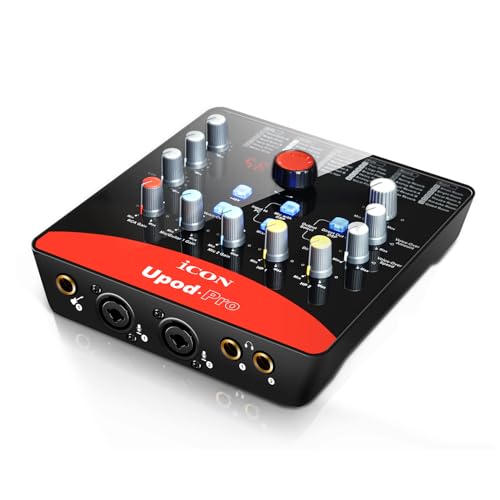
- Built-in 72-DSP effect with control knob
- 2 mic inputs, 1 guitar input, and phantom power
- Basic 16-bit/48kHz USB recording
Best For: Entry-level users wanting onboard effects on a budget
Compact Songwriter Interface
Focusrite Scarlett Solo 4th Gen USB-C Audio Interface

- 120dB dynamic range with 24-bit/192kHz recording
- Improved Air mode adds vocal and guitar presence
- Includes major recording software and plugins
Best For: Songwriters and solo creators who want a compact, polished recording interface
DSP Mixer for Small Setups
4 Channel Audio Mixer with USB Interface

- 99 DSP effects with reverb and EQ presets
- 2 XLR plus 2 stereo inputs with 3-band EQ
- USB recording and Bluetooth streaming included
Best For: Karaoke and home audio users who want built-in effects and easy control
Creator Routing Interface
MAONO P1 USB Audio Interface with 70dB Gain
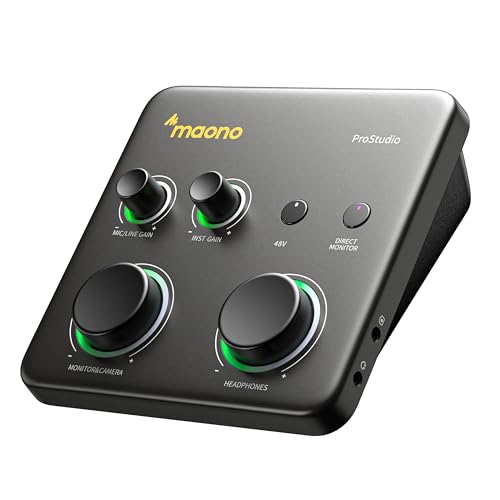
- Up to 70dB gain for hungry dynamic microphones
- ProStudio2 adds routing, loopback, VST effects, and noise reduction
- Dual USB works with computer, phone, and iPad setups
Best For: Streamers and podcasters who want flexible routing and creator-friendly controls
Compact DSP Hub
Yamaha URX22C 2-in/2-out USB-C Interface

- Latency-free DSP monitoring with reverb and amp models
- 32-bit/192kHz audio with 2 combo inputs and Hi-Z support
- Metal chassis plus MIDI I/O and included software
Best For: Small studios and guitar/vocal setups that need onboard DSP
Simple Studio Starter
Focusrite Scarlett Solo 3rd Gen

- One XLR mic input and one Hi-Z instrument input
- Air mode adds clarity for acoustic sources
- Includes recording software and effects bundle
Best For: Solo creators who want a compact interface with bundled tools
Stream-Friendly DSP Mixer – Elgato Wave XLR MK.2
If you want audio interfaces with dsp effects built around voice work and streaming control, the Elgato Wave XLR MK.2 is a strong fit. It pairs very high gain with onboard voice enhancer, compressor, EQ, and Wave FX processing, so you can shape a microphone signal without relying entirely on computer-side plugins.
Best For: Streamers, creators, and podcasters who want built-in voice processing plus tight software control.
Pros:
- 80dB gain can drive demanding XLR microphones
- Onboard effects include voice enhancer, compressor, EQ, and more
- Ultra-low-latency monitoring with 24-bit/48kHz audio
- Touch control and LED feedback make level changes fast and visible
Cons:
- Only 2 channels, so it is not aimed at larger multi-input rigs
- Requires Wave Link software for the full routing workflow
Overall, this model stands out if you want a compact interface that combines strong mic gain, practical DSP, and simple live control. It is especially appealing when your workflow is centered on one primary mic and you want the interface to do more of the sound shaping for you.
Portable Recording Pick – Alloy Red 2×2 USB-C Interface
For buyers comparing audio interfaces with dsp effects, this 2×2 USB-C model is more about clean capture and straightforward monitoring than heavy onboard processing. It focuses on class-compliant plug-and-play use, 24-bit/192kHz recording, monitor mix, loopback, and zero-latency direct monitoring in a compact desktop design.
Best For: Home recording, portable setups, and creators who need simple high-fidelity input with easy monitoring.
Pros:
- Class-compliant USB-C setup with no drivers required
- 24-bit/192kHz conversion for detailed recording
- Two combo inputs with 48V phantom power support
- Monitor mix, loopback, and zero-latency direct monitoring
Cons:
- Does not list onboard DSP effects like compressor or EQ
- Windows-focused details are provided in the notes
This is a practical choice if you value simplicity, portability, and clear audio over deep onboard processing. It gives you the core tools for recording vocals or instruments and keeps the setup process very light.
Advanced DSP Streaming Hub – Antelope Audio Zenith 2
Among audio interfaces with dsp effects, the Antelope Audio Zenith 2 is the most feature-packed option here for real-time processing. It adds a complete virtual guitar chain, Smart Vocal Chain, loopback, dual headphone mixes, and Studio Wizard controls with premium Synergy Core effects, making it built for users who want to monitor and record through processed sound.
Best For: Streamers, podcasters, and musicians who want advanced onboard effects and flexible monitoring.
Pros:
- Built-in DSP effects for vocals, guitar, and studio shaping
- Loopback and Smart Vocal Chain suit streaming and podcasting
- Two independent headphone outputs for separate mixes
- High-resolution conversion and 75 dB clean gain
Cons:
- Feature set may be more complex than a basic interface
- Optional software control is useful, but the device itself already does a lot
If you want one interface to cover vocal processing, guitar tones, and live content workflows, this is a standout. It is especially compelling when you want to monitor with effects in real time without leaning on your computer’s CPU.
Built-In DSP Budget Interface – iCON Pro Audio UPod Pro
If you are shopping for audio interfaces with dsp effects on a tighter budget, the iCON Pro Audio UPod Pro keeps things simple and functional. It offers a built-in 72-DSP effect with a top-panel control knob, plus 2 mic inputs, 1 guitar input, phantom power, and basic 16-bit/48kHz recording.
Best For: Entry-level users who want a basic USB interface with onboard effects control.
Pros:
- Built-in 72-DSP effect with an onboard control knob
- 2 mic inputs and 1 guitar input add flexibility
- Includes +48V and +5V phantom power
- Supports multiple operating systems, including Windows, macOS, iOS, Android, and Linux-related audio stacks
Cons:
- 16-bit/48kHz is lower than higher-resolution modern interfaces
- Only one channel is listed in the details, so setup expectations should be checked carefully
This is a straightforward option for users who want onboard processing without paying for a more advanced streaming or studio interface. It is best approached as a practical starter device rather than a full-featured production hub.
Compact Songwriter Interface – Focusrite Scarlett Solo 4th Gen USB-C Audio Interface
If you want a simple entry point into audio interfaces with dsp effects-like vocal shaping and modern studio polish, the Scarlett Solo 4th Gen is built for solo recording. It gives you one XLR mic preamp, one Hi-Z instrument input, and improved Air mode for adding presence and harmonic drive to vocals and guitars.
Best For: Songwriters, guitarists, and solo creators who want a clean, compact interface with software included.
Pros:
- 120dB dynamic range and 24-bit/192kHz support for detailed recording
- Improved Air mode helps vocals and guitars sit forward in the mix
- Includes Pro Tools Intro+, Ableton Live Lite, Cubase LE, and Hitmaker Expansion
- USB-C connectivity and PC/Mac/iPad compatibility
Cons:
- Only 2 channels, so it is not built for multi-mic recording
- No built-in DSP effect engine or onboard effects routing mentioned in the notes
Overall, this is a straightforward pick if you want strong audio quality and a very focused recording setup. It is less about live processing and more about getting polished results from a minimal interface.
DSP Mixer for Small Setups – 4 Channel Audio Mixer with USB Interface
Among audio interfaces with dsp effects, this 4-channel mixer is the most effect-focused option here. It combines USB recording, Bluetooth streaming, 48V phantom power, and 99 selectable DSP effects, making it a practical choice for karaoke, home audio, and basic recording setups.
Best For: Karaoke users, home audio setups, and small recording rigs that want built-in effects and flexible routing.
Pros:
- 99 built-in DSP effects, including reverb and EQ presets
- 2 XLR mic inputs plus 2 stereo line inputs with 3-band EQ on each channel
- 48V phantom power supports condenser microphones
- USB recording/playback and Bluetooth streaming add convenience
Cons:
- Only 4 channels, so it is suited to smaller setups
- USB recording is described for Mac and PC, but advanced DAW-style features are not listed
This mixer makes sense if you want audible effects and simple hands-on control without building a more complex studio chain. The tradeoff is that it is more of a compact mixer-first device than a deep production interface.
Creator Routing Interface – MAONO P1 USB Audio Interface with 70dB Gain
If you are comparing audio interfaces with dsp effects for streaming or creator workflows, the MAONO P1 stands out for its software-based routing tools and recording flexibility. It supports dual USB connectivity, high gain for dynamic mics, direct monitoring, loopback, and ProStudio2 features that let you route desktop audio and add VST effects.
Best For: Streamers, podcasters, and creator musicians who need flexible routing and low-latency monitoring.
Pros:
- Up to 70dB gain and 24-bit/192kHz recording for demanding microphones
- ProStudio2 supports routing, loopback, VST effects, and real-time noise reduction
- Dual USB ports with MFi-certified connectivity for computer, phone, and iPad use
- Auto-Gain, direct monitoring, and independent mute controls simplify live use
Cons:
- Software-heavy workflow may be more than some users need for simple recording
- Built for creators, so it is less of a traditional no-frills studio interface
This is the strongest pick for creators who want an interface that handles routing, monitoring, and effects in one compact box. It is especially appealing if you record across devices and want fewer technical steps between idea and output.
Compact DSP Hub – Yamaha URX22C 2-in/2-out USB-C Interface
If you want audio interfaces with dsp effects for a small recording setup, the Yamaha URX22C is built around low-latency monitoring and clean two-channel I/O. It pairs 32-bit/192kHz USB audio with D-PRE mic preamps, MIDI I/O, and onboard effects like REV-X reverb, Channel Strip, and Guitar Amp Classics, making it a practical fit for tracking vocals, guitar, and basic hybrid workflows.
Best For: Home recordists, guitar players, and creators who want DSP monitoring in a durable 2-in/2-out interface.
Pros:
- Latency-free DSP-powered monitoring with REV-X reverb, Channel Strip, and Guitar Amp Classics.
- 32-bit/192kHz conversion with 2 combo inputs, phantom power, and Hi-Z support.
- Includes MIDI I/O plus Cubase AI, Steinberg Plus, and dspMixFx software.
- Full-metal housing adds durability for desk or mobile use.
Cons:
- Only offers 2-in/2-out analog I/O, so it is not built for larger sessions.
- DSP features are geared toward monitoring, not a large onboard effects chain.
The URX22C is a strong choice if you value simple wiring, reliable build quality, and usable onboard processing. It is especially appealing when you want DSP effects without moving up to a bigger interface than you need.
Creator-Friendly DSP – MAONO P2 Hybrid USB Audio Interface
For buyers comparing audio interfaces with dsp effects, the MAONO P2 stands out for hybrid connectivity and a workflow aimed at streaming as much as recording. It offers dual USB connectivity for computer and mobile use, 24-bit/192kHz capture, dual XLR inputs, and ProStudio 2 support for routing audio and adding VST effects, real-time noise reduction, and loopback handling.
Best For: Podcasters, streamers, and creator-musicians who want flexible phone/PC recording with software-based effects.
Pros:
- Dual USB ports let you connect to a computer and phone or iPad simultaneously.
- ProStudio 2 adds VST effects, real-time noise reduction, and loopback routing.
- 24-bit/192kHz audio, 56dB dual XLR gain, and -130dB EIN support clean recording.
- Independent mute, headphone, and monitor controls are useful for streaming workflows.
Cons:
- DSP-style features are software-driven through ProStudio 2 rather than hardware effects.
- Designed around two XLR inputs, so it is not meant for larger multi-input sessions.
The P2 is a smart pick if your priority is flexibility across phone, tablet, and computer recording. Its mix of loopback, monitoring controls, and VST-based processing makes it especially practical for modern content creation.
Simple Studio Starter – Focusrite Scarlett Solo 3rd Gen
If you are shopping audio interfaces with dsp effects for a lean recording setup, the Focusrite Scarlett Solo 3rd Gen keeps things simple while still adding useful creative software. It delivers one XLR mic preamp, one Hi-Z instrument input, 24-bit/192kHz conversion, and Air mode for extra clarity, while the included Hitmaker Expansion bundle adds effects, instruments, and mastering tools.
Best For: Solo singers, guitarists, and podcasters who want a straightforward interface with bundled creative tools.
Pros:
- One XLR mic preamp and one Hi-Z instrument input suit solo recording.
- Air mode adds extra clarity to acoustic instruments.
- 24-bit/192kHz recording and balanced outputs support clean playback and capture.
- Includes software such as Pro Tools Intro+, Ableton Live Lite, Cubase LE, and Hitmaker Expansion.
Cons:
- Limited to a very small I/O count, so it is not ideal for multi-mic projects.
- Its onboard processing is minimal compared with interfaces built around dedicated DSP monitoring.
The Scarlett Solo is a dependable entry point if you need a compact interface and want software extras right away. It is best viewed as a streamlined recording tool rather than a feature-heavy DSP box.
How We Picked the Best Audio Interfaces with Dsp Effects
We focused on Audio Interfaces with Dsp Effects that offer practical creator benefits: dependable driver support, usable input and output options, solid preamp gain, direct monitoring, and onboard processing that helps reduce strain on the host device. We also looked for models suited to common use cases like solo vocal recording, streaming, podcasting, and small home-studio setups.
Quick Comparison
At a high level, solo creators usually need one or two inputs, strong mic gain, and simple routing. Streamers may value loopback, mixer-style controls, and processing for voice polish. Music producers often want cleaner conversion, MIDI support, and flexible analog connections. If you only need a straightforward voice chain, a compact unit can be enough; if you want live effects and routing, look for more detailed DSP controls.
Key Buying Factors for Audio Interfaces with Dsp Effects
DSP Tools and Real-World Use
Not all onboard processing is equal. Some interfaces provide basic channel strip tools, while others include compression, EQ, reverb, amp simulation, or mixer-style routing. Choose the DSP features you will actually use during recording or live broadcasts.
Inputs, Gain, and Connectivity
Check how many microphones, instruments, or line sources you need to connect now and later. For gain-sensitive microphones, higher clean gain matters. Also confirm compatibility with your devices, especially if you plan to use PC, Mac, iPad, iPhone, or USB-C gear.
Monitoring and Latency
Low-latency monitoring is critical when singing, tracking guitar, or streaming live. Hardware monitoring and onboard effects can help you hear a polished signal without distracting delay.
Software and Workflow
The best interfaces are easy to configure and stable in daily use. Bundled software, control apps, and routing options can save time, but only if they are intuitive and well supported.
Who Should Buy Which Audio Interfaces with Dsp Effects?
If you are a streamer or podcaster, prioritize DSP processing, easy monitoring, and simple voice routing. If you record vocals or guitar, focus on preamp quality, instrument input performance, and clean conversion. If you want a compact starter setup, a single-input interface may be enough. If you need more flexibility for guests, hybrid devices, or live mixing, choose a model with extra inputs and more robust DSP control.
In short, the best choice depends on whether you want the simplest recording path or a more powerful desktop hub for Audio Interfaces with Dsp Effects that can grow with your setup.