
If you need dependable digital routing, low-latency monitoring, and scalable I/O, an audio interface with MADI is built for serious production work.
From compact USB options to PCIe solutions and hybrid systems, these picks help you match channel count, connectivity, and workflow without overspending.
Best 10 Audio Interface with Madi Picks for 2026
Studio-Grade MADI USB
RME MADIface USB Audio Interface

- 2 x MADI I/O in optical and coaxial formats
- USB 2.0 interface with up to 64 channels
- TotalMix FX software for routing and management
Best For: Laptop and desktop users who want compact USB MADI connectivity
PCIe MADI Expansion

- PCIe card for MADI-equipped devices
- x86-compatible desktop hardware platform
- Up to 96 kHz with 110 dB SNR
Best For: Desktop PC users needing an internal PCIe MADI interface
High-Channel Routing Hub

- 32x32 analog I/O with 130 dB dynamic range
- Thunderbolt 3 plus USB connectivity
- MADI optical support for 128 channels at 48 kHz
Best For: Studios needing flexible multi-format routing and expanded digital I/O
Dante and MADI Bridge
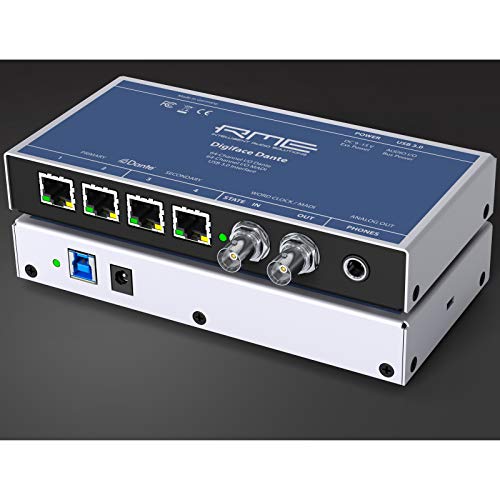
- 128-in/128-out Dante, MADI, and USB 3.0 interface
- Bus-powered with headphone output
- 24-bit/192 kHz support plus TotalMix FX
Best For: Compact digital routing between Dante, MADI, and USB systems
Ultra-High-Channel PCIe Pick
HDSPe MADI FX 390-Channel Card

- 390 channels with 194 inputs and 196 outputs
- 3 x MADI I/O: 2 optical, 1 coaxial
- PCIe interface with Windows, macOS, and Linux support
Best For: Engineers needing massive MADI routing in a PCIe desktop system
USB MADI Desktop Hub
RME MADIface XT II USB 3.0 Interface

- 394-channel USB 3.0 interface for high-capacity routing
- 2 MADI optical ports plus 1 MADI coax port
- Includes 2 mic/line inputs, analog outs, and headphone out
Best For: Studio users wanting USB MADI connectivity with basic analog monitoring
Compact Starter Interface
PIYONE 2X2 USB-C Audio Interface

- 24-bit/192kHz USB-C interface with class-compliant setup
- Two combo inputs with 48V phantom power
- Direct monitoring, loopback, and bus-powered portability
Best For: Solo creators recording vocals or guitar on a simple USB-C setup
Portable Studio Flagship
Antelope Zen Quadro with Synergy Core

- 4 Discrete mic preamps with up to 75 dB gain
- Real-time Synergy Core FX with near-zero latency
- 14-in/10-out layout with ADAT, S/PDIF, and dual USB-C
Best For: Travel-friendly recording and streaming with pro conversion and FX
Beginner Streamer Pick
MAONO PS22 Lite USB Audio Interface

- 24-bit/192kHz recording with 106 dB dynamic range
- 56 dB mic preamp gain plus 48V phantom power
- Loopback and virtual channels for streaming workflows
Best For: Entry-level recording, podcasting, and streaming
Compact Classic
Focusrite Scarlett Solo 3rd Gen USB-C

- One XLR mic preamp with Air mode
- One Hi-Z instrument input for guitar or bass
- 24-bit/192kHz conversion in a compact USB-C build
Best For: Solo recording and podcasting with a simple setup
Studio-Grade MADI USB – RME MADIface USB Audio Interface
If you want an audio interface with madi that keeps the setup simple, the RME MADIface USB is a focused choice. It gives you 2 x MADI I/O in optical and coaxial formats over USB 2.0, with support for up to 64 channels and 192 kHz operation on Mac or Windows systems.
Best For: Laptop or desktop users who need compact USB MADI connectivity with TotalMix FX control.
Pros:
- 2 x MADI I/O with both optical and coaxial connections
- USB 2.0 interface with support for 64 channels
- Up to 192 kHz maximum sample rate
- TotalMix FX management software for routing and control
Cons:
- USB-only design may not suit PCIe-based studio workflows
- No onboard analog input or output details are listed in the supplied notes
For users building around MADI devices, this model stays straightforward and purpose-built. It is a strong fit when you want reliable digital interfacing, computer compatibility, and software control without extra complexity.
PCIe MADI Expansion – RME HDSPe Madi
The RME HDSPe Madi is an audio interface with madi built for PCIe-based computer integration. Instead of a USB box, it is a PCIe card designed to connect MADI-equipped devices to a computer, making it a practical option when you want an internal installation for a desktop workflow.
Best For: Desktop PC users who need an internal PCIe MADI interface for connected studio hardware.
Pros:
- PCIe card design for interfacing MADI-equipped devices with a computer
- Built for PC use with x86-compatible hardware platform support
- Up to 96 kHz maximum sample rate
- 110 dB signal-to-noise ratio
Cons:
- Requires an available PCIe slot, so it is not a portable USB solution
- The supplied notes do not list external I/O flexibility beyond MADI interfacing
If your studio is centered on a desktop machine and internal expansion, this card is easy to place in the conversation. It is a no-frills way to bring MADI connectivity into a computer-based setup.
High-Channel Routing Hub – Antelope Orion 32+ Gen 4
This audio interface with madi is aimed at studios that need lots of routing options and high-channel connectivity. The Antelope Orion 32+ Gen 4 offers 32×32 analog I/O, Thunderbolt 3 streaming up to 128 channels, USB support for 32 channels, and MADI optical connectivity that supports 128 channels at 48 kHz.
Best For: Studios that need a flexible multi-format interface for recording, monitoring, and expanded digital I/O.
Pros:
- 32×32 channels of analog I/O
- Thunderbolt 3 streaming with up to 128 channels at 192 kHz
- MADI optical connectivity supporting 128 channels at 48 kHz
- Routing matrix and monitoring calibration for custom workflows
Cons:
- Larger, heavier unit than compact interfaces
- USB mode is limited to 32 channels according to the supplied notes
For buyers who want one interface to handle serious studio routing, this model brings a lot to the table. Its combination of analog I/O, Thunderbolt, USB, and MADI makes it especially useful in complex production setups.
Dante and MADI Bridge – RME Digiface Dante
If you need an audio interface with madi that also works in Dante-centric environments, the RME Digiface Dante is built for that role. It combines 128-in/128-out Dante/MADI/USB 3.0 operation with headphone output, bus power, and 24-bit/192 kHz support on Mac or PC.
Best For: Users who want a compact bridge between Dante, MADI, and USB workflows.
Pros:
- 128-in/128-out Dante, MADI, and USB 3.0 audio interface
- Bus-powered design with headphone output
- 24-bit/192 kHz support
- TotalMix FX software included for management
Cons:
- Windows support is listed in the supplied notes, while Mac support is mentioned in the title bullet only
- Does not include the analog I/O counts found on larger studio interfaces
This model makes sense when your priority is digital routing rather than traditional analog channel count. It is a strong match for systems that need Dante and MADI compatibility in a compact USB-based interface.
Ultra-High-Channel PCIe Pick – HDSPe MADI FX 390-Channel Card
If you need an audio interface with madi for a high-channel-count studio rig, the HDSPe MADI FX is built for serious routing. It uses a PCIe connection and combines 3 x MADI I/O with AES/EBU support via breakout cable, making it a strong fit for complex computer-based setups on Windows, macOS, or Linux.
Best For: Engineers and producers who want a PCIe MADI solution with very high channel capacity and multi-OS support.
Pros:
- 390 total channels, with 194 inputs and 196 outputs
- 3 x MADI I/O: 2 optical plus 1 coaxial
- AES/EBU I/O available via breakout cable
- Supports Windows, macOS, and Linux
Cons:
- Requires a PCI Express desktop setup
- No built-in mic preamps or standalone analog interface features listed
This is a specialized card for users who need massive I/O and MADI flexibility more than a simple desktop interface. If your workflow centers on a DAW and large-format digital routing, it delivers the connectivity to match.
USB MADI Desktop Hub – RME MADIface XT II USB 3.0 Interface
If you’re shopping for an audio interface with madi that still connects through USB, the RME MADIface XT II is a flexible high-capacity option. It pairs 2 mic/line inputs, 2 MADI optical ports, 1 MADI coax connection, and analog headphone/output monitoring in a single USB 3.0 unit.
Best For: Studio users who want a USB-connected MADI interface with both digital and basic analog I/O.
Pros:
- 394-channel capacity for large routing demands
- USB 3.0 connectivity for laptop or desktop use
- 2 mic/line inputs plus 2 analog outs and headphone out
- Includes 1 MADI coax and 2 MADI optical ports
Cons:
- Only 2 analog inputs are listed
- Designed for advanced workflows rather than simple plug-and-play recording
For users who want MADI connectivity without giving up USB convenience, this model covers both digital expansion and essential local monitoring. Its mix of high channel count and onboard analog I/O makes it especially practical in hybrid studio setups.
Compact Starter Interface – PIYONE 2X2 USB-C Audio Interface
While this model is not an audio interface with madi, it can still be a practical choice if you only need a simple USB-C recording setup. The 2×2 design offers 24-bit/192kHz recording, two combo inputs, direct monitoring, and class-compliant operation on Mac and PC.
Best For: Solo creators who want a small USB-C interface for vocals, guitar, and home recording.
Pros:
- 24-bit/192kHz audio with class-compliant USB-C operation
- Two combo inputs with 48V phantom power
- Direct monitoring and loopback support
- Portable bus-powered design with 3.5mm headphone jack
Cons:
- No MADI connectivity
- Only 2 channels, so it is not suited to large multichannel rigs
This is the most straightforward option here for everyday recording, but it serves a very different need from a MADI interface. If your priority is portability and basic studio inputs rather than expansion, it offers a clean, low-friction setup.
Portable Studio Flagship – Antelope Zen Quadro with Synergy Core
If you’re shopping for an audio interface with madi-style studio expansion flexibility, the Antelope Zen Quadro is built for creators who want a compact interface that still handles serious tracking and routing. It pairs four Discrete mic preamps, dual Hi-Z inputs, dual USB-C, and ADAT/S/PDIF connectivity in a bus-powered unit that can move from desktop to mobile use.
Best For: Small studio owners, traveling musicians, and streamers who want premium conversion, onboard effects, and flexible routing.
Pros:
- Four Discrete 6-transistor mic preamps with up to 75 dB of gain
- Real-time Synergy Core FX with 37 included effects and 90+ available
- Up to 130 dB AD/DA dynamic range and 64-bit AFC clocking
- 14-in/10-out routing with ADAT expansion, S/PDIF, dual headphone outs, and loopback
Cons:
- Built for users who will actually use its advanced routing and FX tools
- Smaller footprint means fewer onboard channels than larger rack interfaces
This is the strongest pick in the group for users who want a compact interface with pro-level conversion and flexible expandability. If your setup needs clean sound, low-latency effects, and multiple connection paths, the Zen Quadro offers a lot of capability in a travel-friendly design.
Beginner Streamer Pick – MAONO PS22 Lite USB Audio Interface
The MAONO PS22 Lite is a practical audio interface with madi-like routing flexibility for creators who want simple control over recording, streaming, and instrument input. It offers 24-bit/192kHz recording, a dedicated guitar input, and ProStudio Routing Software with virtual channels and loopback, making it a good fit for desktop content workflows.
Best For: Beginners, streamers, podcasters, and home users who want an easy USB interface with routing tools.
Pros:
- 24-bit/192kHz recording with 106 dB dynamic range
- Mic support with up to 56 dB preamp gain and 48V phantom power
- Dedicated instrument input with impedance adjustment for guitar
- ProStudio Routing Software adds virtual channels, loopback, and ASIO support
Cons:
- More focused on entry-level creator use than advanced studio expansion
- Compact, single-purpose design may not suit larger recording setups
For buyers who want an easy-to-use interface without a steep learning curve, the PS22 Lite covers the basics well and adds helpful streaming features. It is especially appealing if you need quick switching between mic, guitar, and broadcast workflows on a PC, Mac, or iPad.
Compact Classic – Focusrite Scarlett Solo 3rd Gen USB-C
The Focusrite Scarlett Solo 3rd Gen is a straightforward audio interface with madi-inspired simplicity for solo musicians and podcasters who want reliable recording without extra complexity. It gives you one XLR mic preamp, one Hi-Z instrument input, Air mode for added clarity, and 24-bit/192kHz conversion in a compact USB-C design.
Best For: Solo singers, guitarists, and podcasters who need a simple, dependable recording interface.
Pros:
- High-performance mic preamp with switchable Air mode
- One Hi-Z instrument input for guitar or bass
- 24-bit/192kHz converters for clean recording and playback
- Includes beginner-friendly software such as Pro Tools Intro+ and Ableton Live Lite
Cons:
- Only one mic preamp, so it is not built for multi-mic sessions
- Fewer inputs and outputs than larger interfaces
The Scarlett Solo remains a smart choice if you want a proven, no-fuss interface for one vocalist and one instrument. It keeps the feature set focused, which makes it easy to set up and easy to use for home recording on macOS, Windows, or iPadOS.
How We Picked the Best Audio Interface with Madi
We focused on MADI-capable interfaces and cards that make sense for real-world studio and live-use cases: stable drivers, meaningful I/O options, flexible host connectivity, and a clear fit for different production budgets. We also favored products with strong reputations for reliability, since an Audio Interface with Madi is often chosen for mission-critical sessions.
Quick Comparison
Before you buy, compare three things first: host connection type, total channel capacity, and whether you need an interface for tracking, expansion, or system integration. USB models are easier to deploy, PCIe cards often deliver the most efficient performance, and hybrid units can be the best fit if your workflow crosses multiple environments.
Key Buying Factors for Audio Interface with Madi
Connection and System Compatibility
Make sure the interface works with your computer and operating system, and check whether you need USB, Thunderbolt, or PCIe. In many setups, the right connection matters more than raw specs because it determines stability and latency.
Channel Count and Expansion
MADI is often chosen for routing many channels through a single digital link, so confirm how many inputs and outputs you actually need now and how much you may add later. A high-channel-count system can save you from replacing gear as your studio grows.
Clocking, Conversion, and Monitoring
Good clocking keeps multi-device systems tight, while clean conversion and dependable monitoring help preserve sound quality and workflow speed. If you record talent live, prioritize direct monitoring and a layout that makes level control simple.
Standalone Use Vs. System Integration
Some buyers want a straightforward interface for recording, while others need a piece of a larger digital rig. If you are integrating consoles, converters, or expanders, pay close attention to routing flexibility and whether the device supports your broader setup.
Who Should Buy Which Audio Interface with Madi?
Choose a compact USB model if you want a simpler entry point into MADI or need portable studio functionality. Choose a PCIe-based option if you value maximum efficiency, low overhead, and a fixed workstation. Choose a hybrid or expanded routing platform if you run larger sessions, multiple sources, or a studio that may grow over time. If your needs are modest and you do not require MADI today, a basic USB interface may be enough—but for expandable digital routing, an Audio Interface with Madi remains the smarter long-term investment.