
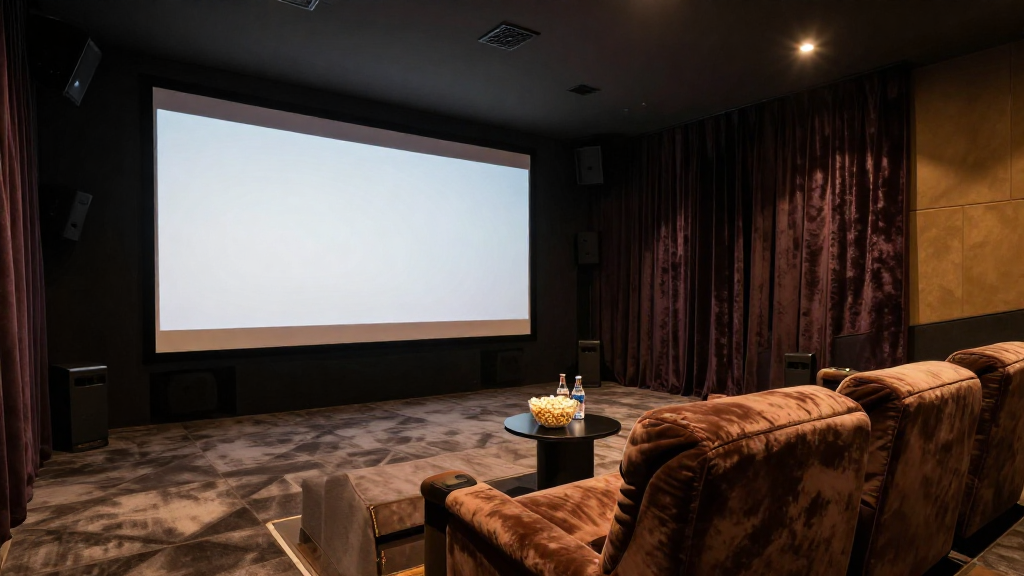
Choosing the right home theater screen is crucial for achieving the best viewing experience in your personal cinema.
What Types of Home Theater Screens Are Available?
When exploring how to choose a home theater screen, it’s important to understand the different types available. Each type has its own unique features and benefits.
Fixed Frame Screens
Fixed frame screens are permanently mounted and provide a taut surface for projection. They deliver excellent picture quality and are ideal for dedicated home theaters.
Motorized Screens
Motorized screens retract when not in use, making them a great option for multi-purpose rooms. They can be controlled with a remote, offering convenience and ease of use.
Manual Pull-Down Screens
Manual pull-down screens are budget-friendly and versatile. They are pulled down and retracted manually, making them suitable for various settings.
What Size Home Theater Screen Should You Choose?
Determining the right size is one of the key steps in how to choose a home theater screen. The size should correspond with the room dimensions and seating distance.
Measuring Viewing Distance
A general rule of thumb for screen size is to calculate the distance from the screen to your seating area. The ideal viewing distance is typically 1.5 to 2.5 times the diagonal screen size.
Aspect Ratio Considerations
The aspect ratio affects how images are displayed. Standard ratios include 16:9 for widescreen and 2.35:1 for cinema-style presentations. Choose an aspect ratio that complements your viewing habits.
Room Setup and Screen Placement
Consider the layout of your room when choosing the screen size. Ensure there is adequate space for the screen and that it aligns with your seating for optimal viewing.
What Material Should a Home Theater Screen Be Made Of?
The material of the screen significantly impacts the quality of the projection. Selecting the right material is essential when deciding how to choose a home theater screen.
Matte White Screens
Matte white screens are popular due to their versatility and wide viewing angles. They diffuse light evenly, making them suitable for various lighting conditions.
High-Gain Screens
High-gain screens reflect more light, which can enhance brightness in well-lit rooms. However, they may have narrower viewing angles, so consider your seating arrangement.
Ambient Light Rejecting (ALR) Screens
ALR screens are designed to reduce the impact of ambient light on image quality. They are ideal for rooms with windows or other sources of light.
How Important Is Screen Gain in Home Theater Screens?
Screen gain is a crucial factor when learning how to choose a home theater screen, as it determines how much light is reflected back to the viewer.
Understanding Screen Gain Ratings
Screen gain ratings typically range from 1.0 to 2.5. A rating of 1.0 means the screen reflects light evenly, while higher ratings indicate increased brightness.
Choosing Gain Based on Projector Brightness
Consider the brightness of your projector when selecting screen gain. A brighter projector can work well with lower gain screens, while dimmer projectors may benefit from higher gain options.
Impact of Room Lighting on Gain Selection
Room lighting conditions play a significant role in gain selection. In darker rooms, a lower gain screen may suffice, while brighter rooms may require a higher gain option.
What Other Factors Should You Consider?
In addition to size, type, material, and gain, there are several other factors that influence how to choose a home theater screen.
Budget Considerations
Your budget will influence the type and quality of the screen you can purchase. Set a realistic budget that encompasses all necessary features.
Screen Installation Options
Consider how you will install the screen. Some screens require professional installation, while others can be set up by the homeowner. Ensure you factor in installation costs.
Reviews and Recommendations
Researching reviews and getting recommendations can help you make an informed decision. Look for feedback on performance, durability, and ease of use from other users.
How Can You Enhance Your Home Theater Experience?
Investing in Quality Audio Equipment
High-quality audio can significantly enhance your viewing experience. Pair your screen with a surround sound system for an immersive environment.
Lighting Solutions
Consider installing adjustable lighting to create the perfect ambiance. Dimmable lights or smart lighting options can complement your home theater setup.
Comfortable Seating Arrangements
Comfort is key in a home theater. Invest in comfortable seating that allows for long viewing sessions without discomfort.