
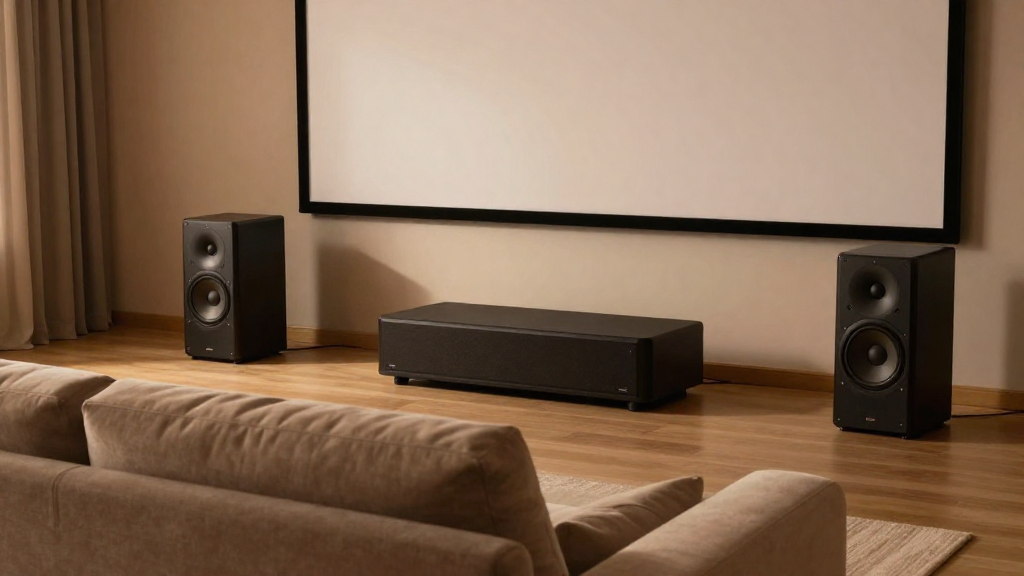
In this article, we will explore the best practices for home theater speaker placement to enhance your audio experience.
What is the Ideal Home Theater Speaker Placement?
The ideal placement of home theater speakers is crucial for achieving a balanced and immersive sound experience. Proper positioning can significantly enhance your movie and music enjoyment. Here’s how you can achieve the best speaker configuration:
Understanding Speaker Types
Before diving into placement, it’s essential to understand the different types of speakers used in home theaters:
- Front Speakers: These include the left, center, and right speakers, which are critical for dialogue clarity and overall soundstage.
- Surround Speakers: Positioned to the sides or behind the seating area, these speakers provide ambient sounds that enrich the experience.
- Subwoofers: Essential for low-frequency effects, subwoofers can be placed in various locations depending on room acoustics.
Room Layout Considerations
The layout of your room significantly affects speaker placement. Consider the following aspects:
- Room Size: Larger rooms may require additional speakers for balanced sound.
- Furniture Arrangement: Ensure that speakers are not obstructed by furniture.
- Acoustic Treatments: Adding carpets or curtains can improve sound quality and should be considered during placement.
Common Placement Guidelines
Here are some general guidelines for placing your home theater speakers effectively:
- **Front Speakers:** Place the left and right speakers at a 22-30 degree angle from the listening position.
- **Center Speaker:** Mount or place it directly above or below your TV screen, facing the listening area.
- **Surround Speakers:** Position them slightly above ear level and 90-110 degrees from the listening position.
How Do You Measure Distance for Speaker Placement?
Measuring the distance for speaker placement is critical for achieving the best audio experience. Proper measurements ensure that sound waves reach the listener simultaneously. Here’s how to do it effectively:
Using a Measuring Tape
A simple measuring tape can help you establish precise distances:
- Start from the listening position to the front and surround speakers.
- Ensure that all speakers are equidistant from the primary listening spot for balanced sound.
- Consider the distance from walls to avoid sound reflections that can distort audio.
Utilizing Room Calibration Tools
Many modern AV receivers come with built-in calibration tools:
- These tools analyze the room acoustics and automatically adjust speaker settings.
- Follow the on-screen instructions for optimal placement suggestions.
- Recheck the manual settings for any adjustments needed post-calibration.
Listening Tests
Conducting listening tests can help you make necessary adjustments:
- Play familiar tracks and assess the sound quality from different positions.
- Make minor adjustments in speaker locations based on your observations.
- Repeat the process until you achieve the desired sound quality.
What Are the Common Mistakes in Home Theater Speaker Placement?
Even experienced users can make placement mistakes that affect audio quality. Avoiding these common pitfalls can enhance your home theater experience:
Ignoring the Room’s Acoustics
Room acoustics play a significant role in sound quality:
- Hard surfaces can cause echoes, while soft materials dampen sound.
- Consider adding acoustic panels to mitigate unwanted reverberations.
- Test different arrangements to find what works best for your space.
Inconsistent Speaker Heights
Speaker height consistency is often overlooked:
- Ensure all speakers are at ear level when seated for optimal listening.
- Adjust surround speakers to be slightly above ear height for an immersive effect.
- Using adjustable mounts can help achieve uniform heights.
Neglecting to Experiment
Many users stick to conventional placements without experimentation:
- Be open to moving speakers around to find the best configuration.
- Every room has unique acoustics; what works for one may not work for another.
- Keep experimenting until you find the optimal setup.
How Can You Optimize Your Home Theater Speaker Placement?
Optimizing home theater speaker placement can lead to an unparalleled audio experience. Here are some strategies to consider:
Utilizing Angles and Distances
Proper angles and distances are key to sound clarity:
- Adjust the angle of your speakers to direct sound towards the listening area.
- Maintain a distance of at least 1-2 feet from walls to reduce sound distortion.
- Experiment with toeing in your speakers for better soundstage.
Employing Subwoofer Placement Techniques
Subwoofer placement can greatly affect bass response:
- Try the “subwoofer crawl” method by placing the subwoofer in your listening position and moving around the room to find the best spot.
- Consider placing the subwoofer near a wall or corner for enhanced bass, but be cautious of boomy sound.
- Test different locations to find the sweet spot for low frequencies.
Regularly Updating Your Setup
Technology and personal preferences change over time:
- Stay updated on advancements in speaker technology that could improve your system.
- Reassess your speaker placement as you acquire new equipment.
- Regularly invite friends for listening sessions to gather feedback on your setup.