
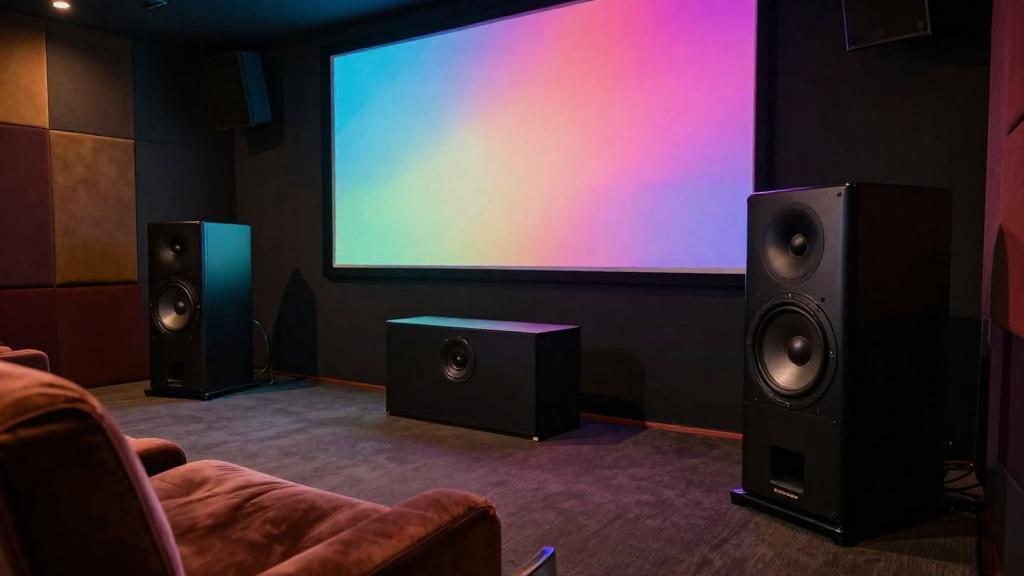
In this article, we will explore the concept of home theater low frequency effects explained, detailing their importance and impact on your overall audio experience.
What are Low Frequency Effects (LFE)?
Low Frequency Effects, often abbreviated as LFE, refer to the audio frequencies that fall below 120 Hz. These sounds are specifically designed to enhance the audio experience in a home theater setup.
Understanding the Frequency Range
The frequency range of sound can be divided into various categories. The low frequencies, typically considered to be below 120 Hz, include bass sounds that create a sense of depth and immersion. In a home theater context, these low frequency effects are crucial for delivering a realistic sound experience.
Characteristics of Low Frequency Effects
- Powerful Bass: LFE channels produce powerful bass sounds that can be felt as much as they can be heard.
- Immersive Experience: These effects add a layer of immersion to movies, making action sequences more thrilling.
- Subwoofer Role: The subwoofer is the primary speaker responsible for reproducing these low frequencies, enhancing the overall sound quality.
How Do Low Frequency Effects Impact Home Theater?
Understanding how low frequency effects impact a home theater can help you appreciate their significance in creating a stunning audio experience.
Enhancing Audio Realism
Low frequency effects make audio more realistic by accurately reproducing sounds that occur in the real world, such as explosions, rumbling thunder, or even the subtle vibrations of a car engine. These frequencies fill in the sonic space, allowing you to experience movies as if you’re part of the action.
Adding Depth and Dimension
When low frequency effects are effectively integrated into a home theater, they add depth and dimension to the sound. This can make dialogue clearer and music more impactful. A well-calibrated system ensures that you can appreciate the nuances of both sound effects and musical scores.
What Equipment is Required for Low Frequency Effects?
To fully experience low frequency effects in your home theater, you need specific equipment designed to reproduce these sounds effectively.
Subwoofers
A subwoofer is essential for delivering low frequency effects. Unlike standard speakers that handle a broad range of frequencies, subwoofers are specialized for low-end sounds, ensuring that you feel the bass in your chest.
AV Receivers with LFE Support
Your AV receiver must support low frequency effects to properly decode and send the signals to the subwoofer. Look for models that specifically mention LFE channels in their specifications.
Appropriate Cables and Connections
Using quality cables and proper connections is crucial to ensure that low frequency signals are transmitted without loss. Consider using RCA cables for the best connection between your receiver and subwoofer.
How to Optimize Low Frequency Effects in Your Home Theater?
Optimizing low frequency effects can significantly enhance your home theater experience. Here are some strategies to achieve that.
Placement of Subwoofer
The placement of your subwoofer plays a critical role in the quality of low frequency effects. Ideally, it should be positioned in a corner or near a wall to maximize bass response. Experimenting with different locations can help you find the sweet spot.
Calibration of the Audio System
Calibrating your audio system ensures that the low frequency effects blend seamlessly with the rest of your sound setup. Use calibration tools or software to balance the levels between your main speakers and subwoofer.
Room Acoustics
The acoustics of your room can greatly influence how low frequency effects are perceived. Adding sound-absorbing materials like carpets, curtains, and acoustic panels can reduce unwanted echoes and enhance sound quality.
What Are Common Mistakes to Avoid?
Over-driving the Subwoofer
One of the most frequent mistakes is over-driving the subwoofer, which can lead to distortion and damage. Ensure that you are not pushing the volume too high while still maintaining sound clarity.
Ignoring Room Size
Another common error is failing to consider the size of your room. A subwoofer that is too powerful for a small room can cause overwhelming bass, which may negatively affect the listening experience.
Neglecting Calibration
Many users overlook the importance of calibration. Without proper calibration, low frequency effects may not be accurately represented, resulting in a less immersive experience.
Conclusion: Why Low Frequency Effects Matter
Understanding home theater low frequency effects explained is essential for maximizing your audio experience. By investing in the right equipment, optimizing your setup, and avoiding common mistakes, you can truly enjoy the depth and richness of sound that these effects provide.