
A good pop filter helps keep harsh plosives from overwhelming vocals, podcasts, livestreams, and voiceovers. Dual-layer designs add a practical balance of airflow control and speech clarity without requiring complicated setup.
We compared 10 popular options by filter construction, mounting hardware, microphone compatibility, adjustability, and overall ease of use. The right choice depends on your microphone size, recording space, and how much flexibility you need from the arm and clamp.
Best 10 Dual Layer Microphone Pop Filters Picks for 2026
Best Overall
Aokeo Professional Dual-Layer Pop Filter
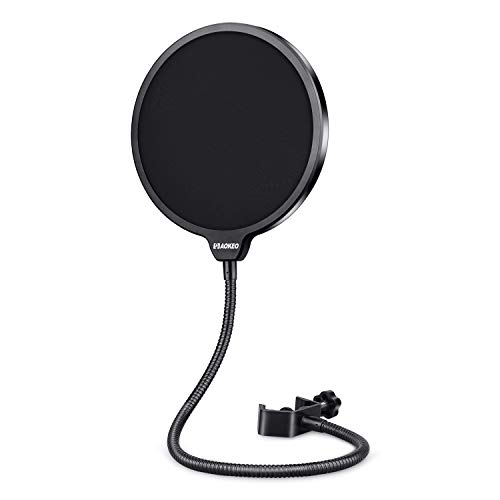
- Two-stage screen helps contain plosive air blasts
- 360-degree gooseneck enables flexible positioning
- Scratch-proof clamp fits many tubular stands and booms
Best For: Versatile vocal, streaming, and recording setups
Best Flexible Mount
NEEWER Professional Pop Filter Shield

- Dual screens help disperse plosive air pressure
- Adjustable steel gooseneck supports precise placement
- Swivel clamp makes installation and repositioning simple
Best For: Adjustable vocal setups using a boom or microphone stand
Best Compact Option
FIFINE PF1 Dual-Layer Wind Screen

- Compact dual-layer mesh helps reduce pops and airflow
- Metal gooseneck is designed to resist sagging
- Works with several specified FIFINE microphone models
Best For: Compact recording, gaming, and dubbing setups
Best Table-Edge Mount
IXTECH Dual-Layer Sound Shield
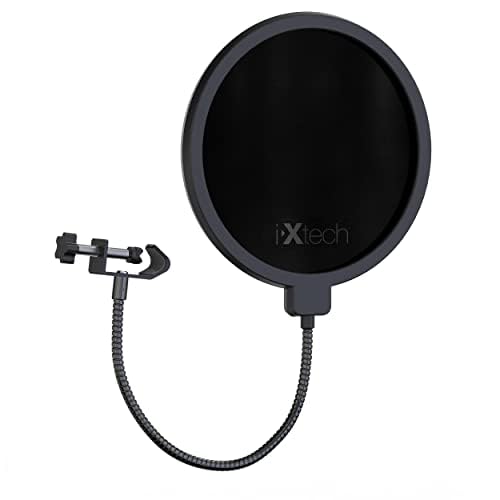
- Two nylon mesh layers help reduce plosives and wind
- Clasp fits desk or stand surfaces up to 1.75 inches
- 360-degree gooseneck allows flexible positioning
Best For: Desk-based streaming, singing, and recording
Most Versatile
Six-Layer Flexible-Arm Pop Filter

- Six filtering layers reduce plosives and sibilance
- Flexible arm supports precise positioning
- Clamp fits tubing up to 1.38 inches
Best For: Flexible recording, streaming, and broadcasting setups
Best Simple Studio Pick
6-Inch Dual-Layer Nylon Pop Filter

- Sonically transparent dual-layer nylon mesh
- 14.5-inch gooseneck enables precise placement
- Fits stand tubing up to 1.25 inches
Best For: Economical studio and home recording setups
Best for Blue Yeti
Six-Layer Filter and Foam Windscreen

- Designed specifically for Blue Yeti microphones
- Includes a foam windscreen and pop filter
- 360° gooseneck supports adjustable placement
Best For: Blue Yeti recording, podcasting, and streaming
Flexible Studio Shield
Dual-Layer Gooseneck Pop Filter

- 360-degree flexible gooseneck
- Adjustable microphone-stand clamp
- Reduces plosives, hissing, and saliva exposure
Best For: Studio vocals and adjustable stand-mounted setups
Three-Layer Coverage
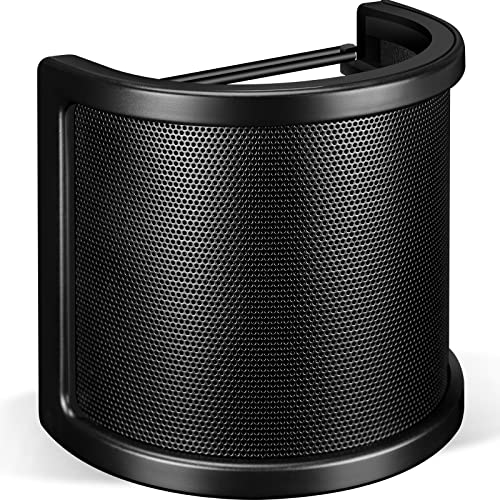
- Foam, metal mesh, and etamine layers
- Fits many 45–63 mm microphones
- Designed for vocals, streaming, and video
Best For: Compatible handheld and studio microphones
Home Recording Pick
Dual-Layer Gooseneck Mic Windscreen

- Flexible 360-degree gooseneck arm
- Adjustable stand clamp
- For speech, singing, and studio use
Best For: Home recording and versatile vocal setups
Best Overall – Aokeo Professional Dual-Layer Pop Filter
For singers, streamers, and actors seeking dual layer microphone pop filters, the Aokeo Professional model combines two-stage plosive control with a flexible mounting setup. Its first screen blocks air blasts while the space between layers disperses remaining pressure before it reaches the second screen.
Best For: Users who want broad microphone compatibility, flexible positioning, and added protection from plosives and saliva.
Pros:
- Dual-layer design helps reduce bursts from “B” and “P” sounds.
- 360-degree steel gooseneck supports angle and distance adjustments.
- Rotating clamp with scratch-proof gripper fits various tubular booms and stands.
- Swivel mount simplifies installation, removal, and repositioning.
Cons:
- The supplied dimensions indicate a relatively large filter assembly.
- The clamp-based design requires a compatible tubular boom, stand, or mounting surface.
With its adjustable gooseneck, secure clamp, and dual-layer screen, this is a versatile choice for home recording and live vocal setups.
Best Flexible Mount – NEEWER Professional Pop Filter Shield
The NEEWER Professional Pop Filter Shield is one of the dual layer microphone pop filters designed for straightforward vocal recording. Its two screens disperse air pressure between layers, while the adjustable gooseneck lets you position the shield where it best fits your microphone.
Best For: Singers, streamers, and actors who need a repositionable filter for a compatible boom or microphone stand.
Pros:
- Dual-layer construction helps control plosives and air blasts.
- Steel gooseneck supports angle and distance adjustments.
- Adjustable rotating clamp accommodates various tubular mounting booms and stands.
- Swivel mount allows convenient installation, removal, and location changes.
Cons:
- Microphone is not included.
- The clamp mounting system depends on a suitable tubular support.
- Its listed 8.3-ounce weight may require a securely tightened clamp.
This model offers a practical balance of dual-layer protection and easy adjustment, making it useful when microphone placement changes between sessions.
Best Compact Option – FIFINE PF1 Dual-Layer Wind Screen
The FIFINE PF1 is a compact option among dual layer microphone pop filters, using separate screens to interrupt airflow and reduce unwanted “B,” “P,” and “S” sounds. Its metal gooseneck and clamp are designed for flexible placement during recording, gaming, dubbing, or live streaming.
Best For: Users wanting a compact metal pop filter with a firm clamp and compatibility with selected FIFINE microphones.
Pros:
- Dual-layer design gives each screen a role in reducing plosive airflow.
- Compact mesh surface helps cover the microphone’s front area.
- Metal gooseneck is designed to resist bending or sagging.
- Compatible with FIFINE T669, T683, T732, and K780A microphones.
Cons:
- The listed maximum height is only 10 centimeters, so placement range may be limited.
- Its broadest stated compatibility is specifically with tubular booms, stands, and listed FIFINE models.
The PF1 stands out for its compact format and sturdy metal construction, particularly for users who want to reduce editing caused by plosive pops without adding a large accessory.
Best Table-Edge Mount – IXTECH Dual-Layer Sound Shield
The IXTECH Dual-Layer Sound Shield uses two nylon mesh layers to reduce plosives, wind interference, and saliva spray. Unlike filters limited to a particular microphone body, its adjustable clasp can mount to a desk edge, microphone stand, or boom pole, with a stated fit for surfaces up to 1.75 inches.
Best For: Desk-based recording, streaming, singing, and broadcasting setups that need a sturdy table-edge mounting option.
Pros:
- Double nylon mesh layers help reduce plosives and wind interference.
- Adjustable screw clamp includes a scratch-proof gripper.
- Clasp can fit surfaces up to 1.75 inches and mount to a desk edge or stand.
- Flexible 360-degree gooseneck supports positioning adjustments.
Cons:
- The listed connectivity details are not central to a passive pop filter’s typical use.
- The desk-edge mounting range is limited to surfaces up to 1.75 inches.
For creators working at a desk, the IXTECH is appealing because its mounting design can attach directly to the workspace while retaining dual-layer plosive protection and gooseneck adjustment.
Most Versatile – Six-Layer Flexible-Arm Pop Filter
This professional dual layer microphone pop filter uses dual metal mesh alongside high-density foam layers to reduce plosives, sibilance, and unwanted noise. Its long, flexible arm and rotating clamp make it practical for recording, broadcasting, singing, streaming, and home setups.
Best For: Creators who want broad positioning flexibility and compatibility with larger-diameter microphone stands or boom arms.
Pros:
- Six filtering layers, including dual metal mesh and high-density foam, help reduce plosives and sibilance.
- 360° carbon-steel arm can be shaped to different angles and is rated for over 10,000 bends.
- Rotating L-shaped clamp fits tubing up to 1.38 inches and includes an anti-scratch EVA pad.
- Large 5.91-inch outer diameter and 13.39-inch arm support versatile positioning.
Cons:
- The larger overall dimensions may require more desk or stand clearance.
- The notes do not specify compatibility with every individual microphone model.
Choose this model if adjustability and clamp range matter as much as pop reduction. Its multi-layer construction also helps protect the microphone from moisture and saliva during regular use.
Best Simple Studio Pick – 6-Inch Dual-Layer Nylon Pop Filter
This dual layer microphone pop filter uses a sonically transparent 6-inch nylon mesh to break up bursts of air without changing the recorded sound. Its adjustable 14.5-inch steel gooseneck offers precise placement for studio microphones and isolation-shield setups.
Best For: Home and studio users seeking a straightforward, economical pop filter for compatible microphone stands.
Pros:
- Dual-layer nylon mesh helps control plosive air bursts while remaining sonically transparent.
- Large 6-inch screen provides broad coverage in front of the microphone.
- Adjustable 14.5-inch steel gooseneck supports precise positioning.
- Attaches to stands with upper tubing up to 1.25 inches in diameter.
Cons:
- Stand compatibility is limited to tubing up to 1.25 inches.
- The notes do not mention added foam layers or a microphone-specific clip.
This is a focused choice for buyers who prioritize transparent nylon screening and an easy-to-position gooseneck. Confirm your stand’s tubing diameter before purchasing.
Best for Blue Yeti – Six-Layer Filter and Foam Windscreen
Designed specifically for the Blue Yeti, this dual layer microphone pop filter combines double metal mesh with high-density foam layers to reduce plosives, saliva, dust, and vapor. It also includes a foam windscreen, adjustable gooseneck, and swivel clip for recording, podcasting, and streaming.
Best For: Blue Yeti owners who want a microphone-specific pop filter and included foam cover in one package.
Pros:
- Six-layer construction uses double metal mesh and two high-density windproof sponge layers.
- Includes both a Blue Yeti pop filter and foam windscreen.
- 360° carbon-steel gooseneck supports angle and distance adjustments and is rated for over 10,000 bends.
- L-style adjustable swivel clip is designed for secure mounting to a microphone stand or Blue Yeti.
Cons:
- Its design is specifically intended for the Blue Yeti, so it may be less suitable for other microphones.
- The supplied notes do not specify the clamp’s maximum tubing diameter.
For Blue Yeti users, the included windscreen adds practical value beyond the six-layer pop screen. The adjustable neck and swivel clip also make it easier to maintain consistent placement while recording.
Flexible Studio Shield – Dual-Layer Gooseneck Pop Filter
For shoppers comparing dual layer microphone pop filters, this shield focuses on flexible positioning and secure stand mounting. Its two-layer design is intended to reduce hissing, lisping, and plosive sounds while also helping protect the microphone from saliva buildup.
Best For: Studio recording, vocal work, and Blue Yeti or other microphone setups that need adjustable placement.
Pros:
- 360-degree flexible gooseneck makes positioning convenient.
- Adjustable clamp secures the filter to a microphone stand.
- Helps reduce “S” sounds, “B” and “P” plosives, and saliva exposure.
- Swivel mount supports straightforward installation.
Cons:
- Microphone is not included.
- Designed around stand mounting, so setup requires a compatible stand.
This is a practical choice if adjustable positioning and a clamp-mounted design matter more than a compact slip-on windscreen.
Three-Layer Coverage – Aokeo B-7 Mic Pop Filter
The Aokeo B-7 expands on the dual layer microphone pop filters category with three layers: foam, metal mesh, and etamine. It is designed to reduce plosives, crackles, wind interference, and breath sounds, with an elastic-band and rubber-ring setup for compatible microphones.
Best For: Vocal recording, streaming, YouTube, and compatible 45–63 mm microphones such as many AT, MXL, Rode, and CAD models.
Pros:
- Three-layer construction targets pops, breath sounds, wind, and crackles.
- Fits microphones measuring approximately 45–63 mm in diameter.
- Elastic bands and an inner rubber ring make installation and removal convenient.
- Metal mesh helps keep saliva away from the microphone.
Cons:
- Does not fit the Blue Yeti according to the supplied specifications.
- Compatibility depends on the microphone’s diameter.
Choose this model when your microphone falls within the stated size range and you prefer a fitted cover with layered protection rather than a separate gooseneck screen.
Home Recording Pick – Dual-Layer Gooseneck Mic Windscreen
This dual layer microphone pop filter is built for flexible placement around a microphone stand. Its gooseneck arm and adjustable clamp make it suitable for reducing popping sounds during speech and singing in recording, broadcast, karaoke, stage, and home environments.
Best For: Home recording, broadcasting, karaoke, stage use, and other professional vocal recording environments.
Pros:
- 360-degree flexible gooseneck supports convenient positioning.
- Adjustable clamp fixes securely to a microphone stand.
- Dual-layer screen helps eliminate popping caused by fast-moving air.
- Works with Blue Yeti and other microphones according to the supplied listing.
Cons:
- Microphone is not included.
- Requires a compatible microphone stand for the clamp.
Its lightweight, stand-mounted design makes it a straightforward option for vocalists and creators who want adjustable pop protection across several recording settings.
How We Picked the Best Dual Layer Microphone Pop Filters
We focused on the features that affect real-world recording performance: layered mesh or foam construction, filter diameter, gooseneck flexibility, clamp stability, and compatibility with common microphones such as the Blue Yeti. We also considered whether each design is better suited to a desk setup, studio boom arm, handheld microphone, or compact recording space.
Layer count alone does not determine quality. A well-positioned two-layer screen can reduce plosive bursts effectively, while a poorly supported filter may sag, vibrate, or sit too close to the microphone. We therefore gave weight to mounting practicality as well as the filtering material.
Quick Comparison
| Best For | Look For |
|---|---|
| Most home studios | Two-layer screen with a stable clamp and adjustable gooseneck |
| Blue Yeti users | Wide filter and hardware that clears the microphone body |
| Maximum airflow control | Metal mesh, foam, or multi-layer construction |
| Small desks | Compact filter with a shorter, easy-to-position arm |
| Portable recording | Lightweight foam or slip-on windscreen design |
Key Buying Factors for Dual-Layer Microphone Pop Filters
Filter Material and Layers
Dual-layer mesh filters are a dependable choice for spoken vocals because they interrupt bursts of air while remaining acoustically open. Foam covers are lighter and convenient, but they may provide less precise plosive control depending on thickness and fit. Three-layer designs can offer additional protection, though more material is not automatically better if it dulls high frequencies.
Size and Microphone Compatibility
A larger screen gives you more positioning tolerance and works well with wide desktop microphones. Check the listed diameter and clamp reach, particularly if your microphone has a bulky shock mount or integrated stand. A screen should sit between your mouth and the capsule without touching the microphone.
Arm Adjustment and Clamp Quality
A flexible 360-degree arm makes it easier to position the filter precisely and move it aside when not recording. Look for a clamp that fits your desk or stand securely. Excessively weak clamps can shift during use, while overly stiff goosenecks may be difficult to fine-tune.
Cleaning and Long-Term Use
Removable or washable screens are easier to maintain in shared recording spaces. Metal mesh typically handles regular cleaning better than delicate fabric. Keep the filter several inches from the microphone and wipe it periodically to prevent moisture and debris buildup.
Who Should Buy Which Dual Layer Microphone Pop Filters?
Choose a Standard Dual-Layer Screen for Everyday Recording
For podcasts, video calls, streaming, and home vocals, a conventional mesh filter with a flexible arm offers the best balance of protection, adjustment, and value.
Choose a Wider Filter for Desktop Microphones
Blue Yeti and similarly shaped USB microphones benefit from a broad screen that covers the capsule area without forcing an awkward angle.
Choose a Foam or Multi-Layer Cover for Portability
If you frequently change locations or use a handheld microphone, a lightweight slip-on design is easier to pack and reposition than a clamp-mounted studio filter.
Choose Reinforced Mounting Hardware for Frequent Use
Regular streamers, voice actors, and studio users should prioritize a strong clamp and durable gooseneck. Reliable positioning matters as much as the filter material when you record often.