
Choosing the right DI box can make a noticeable difference in live sound, from cleaner signal runs to fewer ground noise issues. The best models are simple, rugged, and matched to how you actually perform.
Below, we focus on practical DI boxes for live performance that suit guitars, basses, stereo sources, and stage rigs without adding unnecessary complexity.
Best 10 Di Boxes for Live Performance Picks for 2026
Passive Stage Favorite
Radial Pro DI Passive Direct Box

- Passive mono direct box with custom transformer
- Rugged stainless steel I-beam construction
- Works with guitars, bass, keyboards, and drum machines
Best For: Live players needing a durable passive DI
Active Utility Pick
Samson MDA1 Mono Active Direct Box

- Active mono DI with balanced XLR output
- 0dB/-15dB pad plus ground lift switch
- Runs on phantom power or 9V battery
Best For: Bass and guitar rigs needing simple active control
Stereo Keyboard Solution
Mackie MDB-2P Passive Stereo DI Box

- Dual 1/4-inch inputs for stereo keyboards and DJ rigs
- Passive box with no power needed
- 15 dB pads and ground lift for cleaner live signal
Best For: Stereo keyboard and DJ setups
Compact Active Choice
Radial Pro48 Active 48-Volt Compact Direct Box
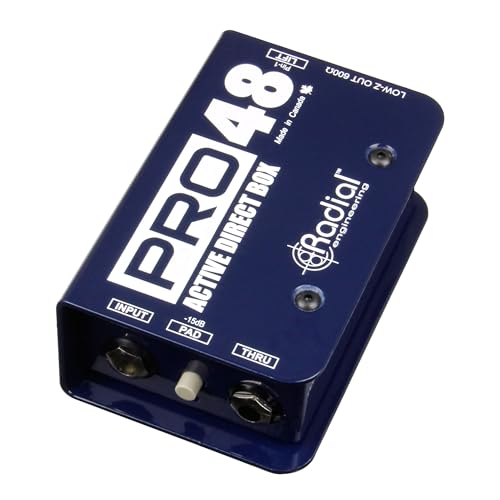
- Phantom-powered active DI for live use
- -15 dB pad for hotter passive sources
- Compact steel enclosure with low-noise circuit
Best For: Passive guitars and basses needing an active DI
Stage-Ready Stereo DI

- Passive design with no power supply needed
- Stereo input via 1/8” TRS and RCA
- Summed mono output for live routing
Best For: Stereo sources that need passive conversion on stage
Budget Workhorse DI
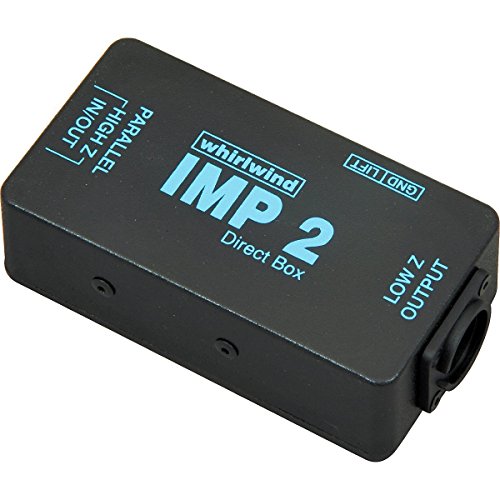
- Passive transformer DI for instrument or line signals
- Compact footprint for simple stage use
- TRHL transformer is riveted to the chassis
Best For: Affordable, durable signal conversion on stage
Heavy-Duty Stage DI
Monoprice Sound Block Stage Right

- 14 gauge steel construction for durability
- Ground lift and attenuator included
- Bidirectional impedance matching via XLR
Best For: Rugged passive DI use with basic stage controls
Live Sound Essential

- Passive DI with 1/4" high-impedance input
- Balanced XLR output ignores +48V phantom power
- Variable attenuation and ground lift options
Best For: Players needing a simple passive DI for stage use
Budget Hum Fixer
Pyle Passive DI Box for Instruments

- Converts unbalanced sources to balanced XLR
- Includes input attenuator and hum cancellation
- Supports guitars, bass, keyboards, and more
Best For: Affordable live sound setups needing a basic passive DI
Dual-Output Performer
PRORECK DC21 for Live and Studio

- 50kΩ passive DI with impedance transformer
- Thru output for amp monitoring and mixer feeds
- Ground lift and isolation transformer reduce hum
Best For: Performers needing one DI for stage and recording
Passive Stage Favorite – Radial Pro DI Passive Direct Box
For DI boxes for live performance, the Radial Pro DI is a straightforward passive option built for dependable stage use. Its custom transformer, mono signal path, and rugged I-beam stainless steel construction make it a practical choice when you want clean conversion from instruments to a mixer or snake without adding power requirements.
Best For: Players who want a rugged passive DI for acoustic guitar, bass, keyboards, drum machines, and other live sources.
Pros:
- Passive mono design with a custom transformer
- Rugged stainless steel, I-beam construction
- Works with live or studio use for guitars, bass, keyboards, and drum machines
- XLR connectivity for professional snake systems and consoles
Cons:
- Mono output only
- Passive design does not include active power features
This is a solid no-fuss DI when durability and simple signal handling matter more than extra controls. If your live rig needs a dependable passive box that can handle common instrument sources, the Pro DI fits that role well.
Active Utility Pick – Samson MDA1 Mono Active Direct Box
When comparing DI boxes for live performance, the Samson MDA1 stands out as a simple active mono option with practical stage features. It offers a ground lift, a 0dB/-15dB attenuation switch, balanced XLR output, and both phantom power and 9V battery power options for flexible setup.
Best For: Bass and guitar players who want an active DI with attenuation, ground lift, and flexible powering.
Pros:
- Active mono DI with balanced XLR output
- 0dB/-15dB attenuation switch for hotter signals
- Ground lift switch helps reduce hum
- Phantom power or 9V battery operation
Cons:
- Mono only
- Designed mainly for guitar and bass use
The MDA1 is a practical stage tool if you need a compact active box with basic controls that solve common live signal problems. It keeps the feature set focused, which is useful for fast setup and reliable performance.
Stereo Keyboard Solution – Mackie MDB-2P Passive Stereo DI Box
For DI boxes for live performance, the Mackie MDB-2P is aimed at stereo keyboards and DJ rigs that need a clean feed to the mixer. Its dual high-impedance 1/4-inch inputs, passive design, 15 dB pads, and ground lift make it a useful stage box when you want to tame hot signals and reduce noise.
Best For: Stereo keyboard players, DJs, and backing-track rigs that need a passive, no-power DI.
Pros:
- Dual 1/4-inch high-impedance inputs for stereo sources
- Passive design requires no power
- 15 dB pads help handle hot signals
- Ground lift helps stop hum and buzz
Cons:
- Not intended as a mono instrument-only DI
- Passive design offers fewer active features
This model makes sense when your live setup centers on stereo gear and you want a simple roadworthy box. It is especially practical for keyboard and DJ applications where noise control and easy setup are priorities.
Compact Active Choice – Radial Pro48 Active 48-Volt Compact Direct Box
If you are shopping for DI boxes for live performance and need an active model for passive guitars or basses, the Radial Pro48 is built for that job. It is phantom powered, includes a -15 dB pad, and uses a low-noise proprietary analog circuit, all in a compact steel enclosure.
Best For: Passive guitars and basses that need a compact phantom-powered active DI.
Pros:
- Phantom-powered active DI for live use
- -15 dB pad helps with hotter sources
- Low-noise proprietary analog circuit
- Compact steel enclosure for stage durability
Cons:
- Built mainly for guitars and basses
- Not a passive box
The Pro48 is a good fit when you want an active direct box with a small footprint and solid noise performance. It keeps the feature set focused on reliable conversion for common passive instrument sources.
Stage-Ready Stereo DI – Klark Teknik PRO DI DI 10P
If you need one of the more flexible di boxes for live performance, the Klark Teknik PRO DI DI 10P is built around stereo inputs and a summed mono output. Its passive design means no power supply to manage, while the MIDAS transformer and high-headroom layout are aimed at clean signal handling on stage.
Best For: Players and engineers who want a passive stereo DI with summed mono output and no power requirement.
Pros:
- Passive design does not require a power supply
- Stereo input on 1/8” TRS and RCA connectors
- Summed mono output for simplified live routing
- Custom-built MIDAS transformer for signal integrity
Cons:
- Passive design may not suit every gain-boosting need
- More focused on stereo-to-mono workflows than single-source use
This is a practical choice when your live setup needs stereo input handling without extra power or complexity. The DI10P keeps the feature set straightforward, with a focus on clean conversion and solid stage compatibility.
Budget Workhorse DI – Whirlwind IMP 2
The Whirlwind IMP 2 is a straightforward option among di boxes for live performance, converting unbalanced instrument or line signals to a low-impedance mic-level balanced signal. It uses a transformer-based passive design and keeps the footprint compact, making it a practical fit when durability and simplicity matter.
Best For: Budget-conscious users who need a durable passive DI for instruments or line-level sources.
Pros:
- Converts unbalanced signal to low-impedance balanced mic level
- Passive in-line transformer design
- Compact footprint for easy stage placement
- Uses Whirlwind’s TRHL transformer, riveted to the chassis
Cons:
- Single-channel design only
- Basic feature set compared with more versatile DI options
For live setups that prioritize reliability over extras, the IMP 2 delivers a simple and economical signal-matching solution. Its small size and transformer construction make it a solid utility DI for routine stage use.
Heavy-Duty Stage DI – Monoprice Sound Block Stage Right
Monoprice Sound Block Passive Direct Box - With Ground Lift and Attenuator - Stage Right Series
Check Price On AmazonThe Monoprice Sound Block Passive Direct Box is built for live performance setups that need a sturdy, no-frills DI with ground lift and attenuation. Its 14 gauge steel construction and bidirectional impedance matching make it a practical stage tool for connecting microphones, mixers, or audio interfaces through XLR.
Best For: Users who want a rugged passive DI with ground lift and attenuator controls.
Pros:
- Heavy-duty 14 gauge steel construction
- Ground lift and attenuator included
- Bidirectional impedance matching
- Compatible with microphones, mixers, and audio interfaces
Cons:
- Single-channel design
- Feature set is focused on essentials rather than extras
This model is a sensible pick when stage durability and basic control are the priority. It keeps the live-performance essentials in one rugged box without adding unnecessary complexity.
Live Sound Essential – Livewire SPDI for Live Sound
If you need di boxes for live performance, the Livewire SPDI is built around the basics that matter on stage: a 1/4″ high-impedance input, balanced XLR output, attenuation, and a ground lift option. It is designed to handle instrument and line-level sources while helping reduce hum and dealing with phantom power on the XLR side.
Best For: Guitarists and bassists who want a simple passive DI with attenuation and ground-lift control for live use.
Pros:
- 1/4″ high-impedance input and throughput for instruments
- Balanced, floating XLR output ignores +48V phantom power
- Variable attenuation adds input flexibility
- Lift mode disconnects the ground between input and XLR output
Cons:
- Passive design may be less feature-rich than powered alternatives
- Primarily focused on core DI functions rather than advanced routing
The SPDI is a straightforward stage tool: it keeps the signal path practical, gives you attenuation when needed, and offers ground control to help with noisy setups. For players who want a no-nonsense passive box, it covers the essentials cleanly.
Budget Hum Fixer – Pyle Passive DI Box for Instruments
For shoppers comparing di boxes for live performance, the Pyle Premium Direct Injection Audio Box focuses on practical signal cleanup. It converts unbalanced instrument or line sources to balanced XLR output, includes an input attenuator, and adds buzz-and-hum cancellation for cleaner feeds into a mixer or PA.
Best For: Budget-minded musicians who need a passive DI for guitars, bass, keyboards, or consumer audio sources.
Pros:
- Works with guitars, bass, keyboards, and outboard processors
- Input attenuator helps with flexible level matching
- Buzz and hum cancellation support cleaner live audio
- Can also connect to consumer stereo or boom box line outputs
Cons:
- Passive unit with a basic feature set
- Compact box size suggests a simple, utilitarian design
This Pyle unit is a practical choice when you mainly want reliable direct injection and hum reduction without extra complexity. It’s aimed at getting multiple sources into a main PA or recording mixer with less noise.
Dual-Output Performer – PRORECK DC21 for Live and Studio
If you want di boxes for live performance that can also pull double duty in the studio, the PRORECK DC21 adds a thru output, ground lift, and balanced/unbalanced conversion in one passive box. Its built-in impedance transformer is designed to help match instruments to mixers or amplifiers while preserving signal detail over long runs.
Best For: Musicians who want one passive DI for stage monitoring, PA feeds, and recording.
Pros:
- 50kΩ impedance transformer supports proper matching
- Ground lift and isolation transformer help eliminate hum and buzz
- Thru direct output supports stage amp monitoring and mixer feeds at once
- Compatible with guitars, basses, keyboards, processors, and submixers
Cons:
- Passive design may not suit every signal chain
- Feature set is focused on core DI tasks rather than extras
The DC21 stands out for players who need a flexible, do-it-all direct box. With dual outputs and noise-reduction features, it is built to handle live and recording workflows from the same unit.
How We Picked These Di Boxes for Live Performance
We focused on core stage needs: dependable noise reduction, useful ground lift or pad options, durable housings, and straightforward connectivity. For Di Boxes for Live Performance, the goal is not maximum feature count, but reliability under real gig conditions.
We also looked at whether each unit fits common use cases such as passive instruments, active electronics, stereo keyboards, and longer cable runs to the mixer. That helps narrow the field to models that are easy to integrate into typical live rigs.
Quick Comparison: Passive, Active, and Stereo Options
Passive DI boxes are often the best all-around choice for passive basses, guitars, and many stage inputs because they do not need power and tend to be very dependable. Active models can be a better fit for lower-output sources or setups that benefit from extra headroom and impedance matching.
Stereo DI boxes are useful when you need to carry two channels from keyboards, modelers, or playback devices with fewer boxes and less cabling. If your rig is simple, a single-channel DI may be all you need; if your stage setup changes often, flexibility matters more.
Key Buying Factors for Di Boxes for Live Performance
Input Type and Signal Source
Match the DI to the source you use most often. Passive instruments, especially bass and guitar, commonly pair well with passive DI boxes. Line-level gear, active pickups, and keyboard rigs may benefit from active designs or stereo units.
Ground Lift and Pad Controls
A ground lift can help eliminate hum caused by grounding conflicts on stage. A pad is valuable when you need to tame hotter signals and avoid overloading the mixer input. These are two of the most useful features in live environments.
Build Quality and Portability
Metal chassis, secure jacks, and compact footprints matter when gear gets packed, loaded, and handled frequently. For touring or regular gigging, rugged construction is worth prioritizing over cosmetic extras.
Transformer Character and Noise Performance
Transformer quality can influence isolation and overall sound integrity. While most players simply want a clean feed, better transformer design can improve noise rejection and preserve clarity over long cable runs.
Who Should Buy Which Di Boxes for Live Performance?
If you want a simple, dependable option for a single instrument, a basic passive DI is usually the smartest pick. If you play stereo keyboards or dual-source setups, a stereo DI can reduce clutter and simplify stage wiring.
Players dealing with hum, inconsistent venue power, or more demanding signal chains should prioritize models with strong isolation, ground lift, and pad controls. If you are shopping for Di Boxes for Live Performance as a long-term stage tool, choose the unit that best matches your most common source first, then the venue realities you face most often.