
The best desktop laser cutting machines make it easier to turn digital designs into signs, gifts, prototypes, and small-batch products. The right choice depends on more than laser wattage: enclosure design, material compatibility, work area, software, and ventilation all affect everyday results.
Our selection spans compact diode engravers, enclosed machines, high-speed models, and CO2 systems. Use the guide below to compare capabilities and choose a machine that matches your workspace, projects, and experience level.
Best 10 Desktop Laser Cutting Machines Picks for 2026
Best Overall
xTool P2S 55W CO2 Laser Cutter

- 55W CO2 power for substantial cutting capacity
- 26 x 14-inch bed with long-material passthrough
- Cameras, LiDAR autofocus, and multiple safety features
Best For: Makers and small businesses handling larger or repeated projects
Best Budget Pick
Twotrees TTS-55 Pro 5.5W Laser Engraver

- Compact 300 x 300mm working area
- Supports LightBurn, LaserGRBL, Wi-Fi, and TF cards
- Cuts listed thin plywood, acrylic, and leather materials
Best For: Beginners and hobbyists making smaller projects
Best for Precision

- Fine 0.08 x 0.08mm laser spot
- 12W laser with 300 x 300mm work area
- Upgradeable and compatible with major maker software
Best For: Detail-focused DIY, education, and small-production projects
Best for Offline Control
Twotrees TTS-10 Pro 10W Engraver

- 10W diode laser with 300 x 300mm work area
- Supports TF-card offline and online engraving
- Includes air-assist pump, TF card, and assembly tools
Best For: Hobbyists and educators wanting flexible offline operation
Best for Large Projects

- 40W laser cuts up to 18mm cherry wood in one pass.
- Large bed with rotary and AutoPassthrough support.
- Enclosed Class 1 design with multiple safety protections.
Best For: Large signs, batch engraving, tumblers, and demanding workshop projects
Best Beginner-Friendly Compact Pick

- Camera positioning and auto focus simplify setup.
- Quick-swaps between compatible laser modules.
- Enclosed Class 1 design with safety monitoring.
Best For: Beginners, classrooms, compact workspaces, and portable engraving
Best for Fast Personalization
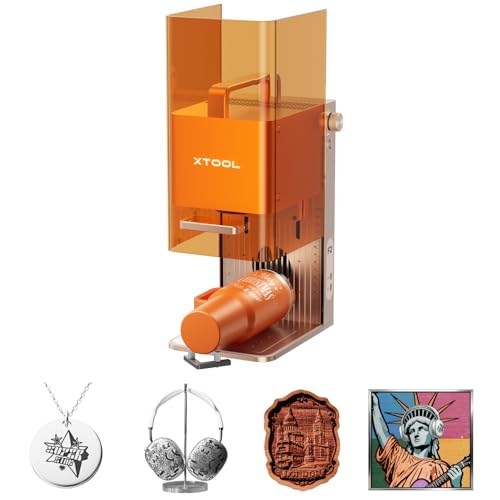
- 15W diode and 5W IR lasers expand material coverage.
- 50MP camera supports precise visual alignment.
- Up to 6000mm/s speed suits small-batch production.
Best For: Metal marking, detailed personalization, and on-site customization
Powerful Open-Frame Pick

- 10W output with air assist for cutting and engraving
- 4-in-1 rotary kit for shaped objects and tumblers
- Supports LightBurn, LaserGRBL, and offline TF-card jobs
Best For: Makers needing rotary engraving and air-assisted cutting
Safest Home-Crafting Choice

- Enclosed Class 1 design for home use
- Dual cameras simplify positioning and previews
- Templates and AI tools support beginner workflows
Best For: Home crafters prioritizing safety and ease of use
Compact Small-Business Workhorse

- Compact A4 work area fits under a desk
- Fast, beginner-friendly controls and offline jobs
- Upgradeable with an optional IR laser head
Best For: Small businesses and makers with limited workspace
Best Overall – xTool P2S 55W CO2 Laser Cutter
The xTool P2S is a high-capacity option for shoppers comparing desktop laser cutting machines for demanding cutting, engraving, and batch-production work. Its 55W CO2 laser, large bed, autofocus, cameras, and enclosed design make it especially capable for larger or more varied projects.
Best For: Makers and small businesses needing powerful cutting, batch processing, and expandable workspace.
Pros:
- 55W CO2 laser cuts acrylic up to 20mm and black walnut up to 18mm in one pass, according to the supplied specifications.
- Large 26 x 14-inch bed, Auto-Passthrough for materials up to 118 inches long, and optional riser support.
- Dual 16MP cameras, LiDAR autofocus, AI fire detection, automatic locking, and emergency stop.
- Engraving speeds up to 600mm/s with smart batch processing.
Cons:
- At 130.7 pounds and roughly 44 x 29 x 14 inches, it requires substantial workspace.
- Its enclosed CO2 configuration is more machine than many casual hobbyists need.
The P2S stands out when cutting capacity, automation, and workspace matter more than portability. It is a strong fit for production-oriented users who can accommodate its large footprint.
Best Budget Pick – Twotrees TTS-55 Pro 5.5W Laser Engraver
The Twotrees TTS-55 Pro is a compact, approachable choice among desktop laser cutting machines for hobby projects and light-duty cutting. Its 300 x 300mm work area, wireless control options, and support for common maker software provide useful flexibility at a smaller scale.
Best For: Beginners, hobbyists, and makers working on small wood, acrylic, leather, and paper projects.
Pros:
- 5.5W laser can cut up to 5mm plywood, 3mm acrylic, and 0.7mm leather based on the supplied notes.
- Fine 0.08 x 0.46mm spot focus and claimed engraving accuracy up to 0.1mm.
- Supports LaserGRBL and LightBurn across listed Windows, macOS, and Linux systems.
- Offers Wi-Fi, mobile or web control, TF-card offline engraving, and speeds up to 30,000mm/min.
Cons:
- Its 5.5W output is better suited to lighter materials and thinner cuts than high-powered CO2 machines.
- The 300 x 300mm work area limits larger signs and oversized projects.
This model makes sense for users who want a relatively small machine with modern control options and straightforward software compatibility. Consider a higher-power model if thick materials are central to your plans.
Best for Precision – ACMER S2 12W Laser Cutter
The ACMER S2 12W is a practical pick for shoppers seeking desktop laser cutting machines with fine detail and a moderate work area. Its 0.08 x 0.08mm spot, claimed 0.01mm engraving accuracy, and upgradeable design suit detailed DIY, education, and small-production work.
Best For: Detail-focused makers who want stronger diode performance and room to add accessories later.
Pros:
- True 12W laser head with 72W total system power and a claimed ability to work with more than 100 materials.
- 300 x 300mm workspace and speeds up to 10,000mm/min.
- Supports LightBurn, LaserGRBL, and Fr*e Acmerstudio on Windows, macOS, and Linux.
- Protective anti-UV acrylic cover, included goggles, and motion-detection pause function.
Cons:
- Rotary modules, risers, enclosures, and air pumps are optional accessories.
- Some thicker materials may require multiple passes, including the listed 12mm black acrylic capability.
The S2 offers a useful balance of precision, power, and expandability. It is particularly appealing when intricate engraving matters and you want the option to customize the setup over time.
Best for Offline Control – Twotrees TTS-10 Pro 10W Engraver
The Twotrees TTS-10 Pro is a versatile diode option for desktop laser cutting machines buyers who value offline operation and a sturdy motion system. Its 10W optical power, 300 x 300mm work area, included TF-card accessories, and software compatibility support a range of small maker projects.
Best For: Hobbyists, educators, and small businesses that want offline TF-card engraving and a metal-frame design.
Pros:
- 10W blue diode laser supports engraving on wood, bamboo, acrylic, leather, dark glass, and coated or anodized metal.
- 300 x 300mm work area fits coasters, jewelry, keychains, phone cases, and small signage.
- 32-bit dual-core controller supports online, web, mobile, and TF-card offline engraving.
- Includes a 4GB TF card, card reader, assembly tools, and air-assist pump with tubing.
Cons:
- It is not recommended for bare stainless steel or uncoated metal without marking spray or preparation.
- The 300 x 300mm area is limiting for projects larger than about 12 inches.
The TTS-10 Pro is a well-rounded choice when convenient file handling and included accessories are priorities. Its material limitations and compact work area should be checked against your intended projects before buying.
Best for Large Projects – xTool S1 40W Rotary Bundle
The xTool S1 is a powerful option for shoppers comparing desktop laser cutting machines for large signs, batch work, and demanding materials. Its 40W laser, spacious bed, rotary bundle, and enclosed Class 1 design make it suited to both cutting and engraving projects.
Best For: Large wood projects, batch engraving, tumblers, curved items, and makers who want guided software.
Pros:
- 40W laser can cut up to 18mm cherry wood in a single pass, according to the supplied specifications.
- Large 23.93-by-15.16-inch bed and AutoPassthrough support projects up to 118 inches long.
- Auto-focus, material presets, tutorials, and AI-assisted design simplify setup for beginners.
- Enclosed Class 1 design includes flame sensors, lid-open protection, and an emergency stop.
Cons:
- At 86.8 pounds, it is substantially less portable than smaller desktop models.
- The larger footprint and 40W capability may be more than casual engravers need.
The S1 stands out when cutting capacity, work area, and safety features matter more than portability. It is a strong fit for home workshops and serious makers handling oversized or repeated projects.
Best Beginner-Friendly Compact Pick – Creality Falcon A1C 10W
The Creality Falcon A1C is a practical choice for shoppers seeking desktop laser cutting machines with a compact, approachable design. Its enclosed Class 1 chassis, smart camera, auto focus, and quick-swap laser support make everyday engraving easier to set up and use.
Best For: Beginners, classrooms, small studios, portable projects, and makers who want flexible material options.
Pros:
- Built-in HD camera provides visual positioning and real-time previews to reduce alignment errors.
- Auto focus and PC or app control help shorten setup time.
- Quick-swap design supports compatible 5W, 10W, and separately sold 1.2W IR modules.
- Enclosed Class 1 construction includes flame detection, tilt protection, and a USB safety lock.
Cons:
- The included 10W diode module is intended for selected materials; additional capabilities require separately sold modules.
- Its compact design is better suited to smaller projects than large-format cutting.
The Falcon A1C prioritizes convenience and accessibility over maximum cutting power. Its camera-guided workflow and modular design make it an appealing entry point for personal, educational, or light workshop use.
Best for Fast Personalization – xTool F2 Dual Laser Engraver
The xTool F2 is designed for shoppers comparing desktop laser cutting machines for fast customization and small-batch production. Its 15W diode and 5W IR lasers cover different materials, while the 50MP camera and compact, fully enclosed body support precise work in shops, studios, and mobile settings.
Best For: Metal color marking, detailed personalization, on-site services, and small-batch production.
Pros:
- Dual lasers handle metal marking, 3D embossing, and cutting across 300-plus materials.
- 50MP camera offers claimed alignment accuracy of up to 0.1mm on small pieces.
- Speeds up to 6000mm/s and optional slide accessories support faster batch work.
- Fully enclosed, lightweight 10-pound design is suited to workshops, stores, fairs, and pop-ups.
Cons:
- It is a Class 4 laser, so users should take its operating requirements seriously despite the enclosed design.
- The purifier and productivity accessories are optional, adding to the overall setup cost.
- Its compact work area may not suit oversized projects.
The F2 is the most specialized option here for speed, metal marking, and portable personalization. It makes the most sense for users who value rapid, precise small-item production over a large cutting bed.
Powerful Open-Frame Pick – Creality Falcon 10W
For shoppers comparing desktop laser cutting machines, the Creality Falcon 10W stands out with a 10W output, air assist, and a rotary kit designed for cylindrical and other shaped objects. It supports LaserGRBL and LightBurn on Windows and macOS, while its open-frame design provides a relatively compact setup for workshop use.
Best For: Makers who want to cut and engrave wood, acrylic, and other materials while also working on tumblers, spheres, rings, and similar objects.
Pros:
- 10W laser can cut up to 12mm wood or 3mm black acrylic in one pass under the stated conditions.
- Adjustable air assist helps remove smoke and dust and can produce cleaner cutting edges.
- Included 4-in-1 rotary roller supports cylindrical, spherical, and ring-shaped items.
- Offers a 0.06mm laser spot, emergency stop, tilt protection, and offline TF-card operation.
Cons:
- Its open-frame Class 4 laser design requires careful setup and strict attention to safety procedures.
- The rotary kit may require checking the packaging carefully because its connection cable can be hidden in the foam.
The Falcon 10W is a versatile choice when rotary work and air-assisted cutting matter as much as ordinary flat-bed engraving. Buyers should be comfortable following the manuals and using appropriate laser-safety practices.
Safest Home-Crafting Choice – xTool M2 10W
Among desktop laser cutting machines, the xTool M2 10W is designed for convenient home crafting. Its fully enclosed Class 1 construction, built-in dual cameras, and beginner-oriented xTool Studio software make it a strong option for users who prioritize guided setup and accurate material placement.
Best For: Home crafters and DIY makers creating personalized gifts, home décor, stickers, and fabric or leather projects.
Pros:
- Fully enclosed Class 1 design includes real-time monitoring for a more home-friendly setup.
- Dual cameras provide workspace previews and support the “Place & Go” workflow.
- xTool Studio includes templates and an AI image generator for easier project creation.
- Optional modules can add CMYK printing or 3W IR laser engraving capability.
Cons:
- The CMYK inkjet module and RA3 Lite Rotary are not included with this standalone version.
- The 10W diode laser is the included configuration; additional capabilities require separately sold modules.
The M2 is particularly appealing for beginners who want an enclosed machine with camera-assisted positioning rather than an open-frame workshop tool. Its upgrade path is useful, but the advertised printing and specialized metal capabilities come at additional cost.
Compact Small-Business Workhorse – K15 Pro 10W
The K15 Pro is a compact contender among desktop laser cutting machines, pairing an approximately A4 work area with a verified 10W diode module and 15,000mm/min claimed speed. Its app, offline controls, one-touch focus, and included starter accessories are aimed at beginners, repeat jobs, and small craft businesses.
Best For: Small-business makers and home crafters producing coasters, keychains, pet tags, tumblers, signs, and personalized gifts.
Pros:
- 11.8 × 7.9-inch A4 work area fits many everyday projects while remaining compact.
- Supports 300+ materials and claims cuts up to 12mm plywood and 8mm acrylic.
- CutLabX supports computers, tablets, and phones, with LightBurn and LaserGRBL compatibility.
- One-touch focusing, offline TF-card jobs, memory for repeat files, and a three-minute assembly target support efficient workflows.
Cons:
- The work area is compact and may not suit large signs or oversized projects.
- The optional 1W IR laser head is required for bare-metal engraving and is not part of the standard diode setup.
- Some accessories, including the honeycomb plate, rotary roller, and air pump, are optional.
The K15 Pro makes a practical case for buyers who need a space-conscious machine with business-friendly repeat-job features. Its upgrade options extend its usefulness, but the base package should be checked carefully if rotary work, air assist, or bare-metal engraving is important.
How We Picked the Best Desktop Laser Cutting Machines
We evaluated these machines by comparing their laser technology, stated output, working area, cutting and engraving speed, enclosure and safety features, camera or autofocus systems, software support, and included accessories. We also considered how well each model fits common use cases, including hobby crafting, personalized gifts, prototyping, signage, tumblers, and light commercial production.
Specifications can vary by configuration, especially when listings combine different laser modules or accessory bundles. Confirm the exact model, power rating, work area, and included equipment before ordering.
Quick Comparison
| Best For | Look For |
|---|---|
| General DIY crafting | Enclosed diode laser, camera alignment, and simple software |
| Thicker wood and acrylic | Higher optical power, air assist, and multiple passes or CO2 capability |
| Metal marking | IR laser support or a compatible marking module |
| Small-batch production | Fast motion, dependable focus, ventilation, and repeatable positioning |
| Limited workspaces | Compact footprint, enclosed operation, and manageable exhaust requirements |
Key Buying Factors for Desktop Laser Cutting Machines
Laser Type and Real Cutting Capability
Diode lasers are versatile for wood, leather, paper, cardboard, and some opaque acrylic, but advertised electrical wattage is not the same as optical output. CO2 machines generally cut a broader range of nonmetal materials more effectively. IR modules are useful for certain metal-marking and detailed material applications. Check the manufacturer’s tested material settings rather than assuming a machine will cut every listed material.
Work Area, Speed, and Accuracy
A larger bed helps with signs and batch work, while a compact bed may be easier to fit and operate. Maximum speed is not the same as production speed; acceleration, image complexity, material preparation, and number of passes matter too. Autofocus, cameras, and rigid frames can improve alignment and repeatability.
Safety and Ventilation
An enclosed, interlocked machine is usually easier to use indoors than an open-frame model, but it still needs appropriate ventilation and supervision. Laser cutting creates smoke and potentially hazardous fumes. Never process PVC, vinyl, unknown plastics, or other materials that can release corrosive or toxic gases. Use eye protection and follow the manufacturer’s safety instructions.
Software and Accessories
Confirm compatibility with your preferred design workflow, such as LightBurn or the manufacturer’s software. Air assist can improve edges and reduce scorching, while rotary attachments expand the machine’s usefulness for cylindrical objects. A camera, honeycomb bed, exhaust system, and emergency stop can add significant practical value.
Who Should Buy Which Desktop Laser Cutting Machines?
Choose a compact 10W to 12W diode machine if you are learning, making small signs, engraving wood or leather, or need an affordable entry point. Choose a higher-power diode model if you expect to cut thicker plywood, work faster, or use a larger bed. Choose a dual-laser machine if you want one system for ordinary craft materials plus specialized metal marking or detailed work.
Choose an enclosed smart machine when safety, camera alignment, and a cleaner home-workshop setup matter most. Choose a CO2 desktop cutter if your priorities include frequent cutting, thicker nonmetal materials, or broader acrylic capability. Whichever model you select, budget for ventilation, maintenance, test materials, and the accessories required for your intended projects.