
The best computer monitor for programmers makes code easier to read, supports comfortable long work sessions, and gives you enough screen space for documentation, terminals, and applications.
Our 2026 roundup covers practical options across Full HD, QHD, 4K, and ultrawide formats, with attention to ergonomics, connectivity, refresh rate, and eye comfort.
Best 10 Computer Monitor for Programmers Picks for 2026
Best 4K Workspace
LG 32-inch Ultrafine 4K Monitor

- 32-inch 4K UHD display for sharp coding text
- OnScreen Control supports split-screen workspaces
- Reader Mode, matte finish, and built-in speakers
Best For: Programmers wanting a large, detailed single-screen setup
Best Ultrawide Comfort
Dell 34-inch WQHD USB-C Monitor

- 34-inch 3440x1440 ultrawide workspace
- USB-C connectivity with up to 65W power delivery
- ComfortView Plus and 120Hz refresh rate
Best For: Developers running several side-by-side applications
Best Budget Large Screen

- Large 32-inch Full HD display
- Borderless design suits multi-monitor setups
- Eye Saver Mode and Flicker Free technology
Best For: Budget-conscious programmers building a large or multi-monitor workspace
Best Adjustable QHD Display
Dell 27-inch QHD 144Hz Monitor

- 2560x1440 QHD resolution for detailed code
- Height, pivot, swivel, and tilt adjustments
- 144Hz refresh rate with AMD FreeSync
Best For: Programmers wanting ergonomic flexibility and gaming capability
Immersive Everyday Pick
Samsung 27-inch Essential S3 Curved Monitor

- 27-inch curved Full HD display
- 100Hz refresh rate with eye-comfort features
- HDMI and D-Sub connectivity
Best For: Programmers wanting a spacious curved screen for daily coding
Ergonomic Desk Pick
Dell 24 Plus FHD Adjustable Monitor

- 144Hz refresh with AMD FreeSync
- Height, pivot, swivel, and tilt adjustment
- Built-in speakers and two HDMI ports
Best For: Programmers prioritizing ergonomic positioning and smooth performance
Flexible Multitasking Pick

- 27-inch IPS Full HD display with HDR10
- 120Hz refresh and up to 99% sRGB coverage
- Switch app supports layouts of up to six sections
Best For: Programmers managing multiple windows on a large IPS screen
Best Balanced Pick
Dell SE2426H 24-inch IPS Monitor
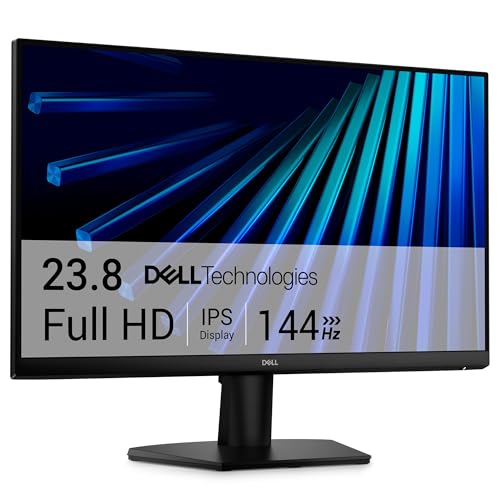
- 23.8-inch Full HD IPS display
- 144Hz refresh rate with FreeSync
- TÜV-certified eye-comfort features
Best For: Balanced coding, office, streaming, and light gaming setups
Best for Document Work
Philips 241V8LB 24-inch VA Monitor

- Full HD VA panel with 3000:1 contrast
- EasyRead and eye-care features
- Frameless design with VESA mounting
Best For: Text-heavy coding and multi-monitor workflows
Best Value for Smooth Motion
Acer KB242Y G0bi 24-inch IPS Monitor

- 23.8-inch Full HD IPS panel
- Up to 120Hz with Adaptive-Sync
- 1ms VRB response time and zero-frame design
Best For: Budget coding setups that also handle gaming and video
Best 4K Workspace – LG 32-inch Ultrafine 4K Monitor
The LG 32UR500K-B is a strong computer monitor for programmers who want a spacious 32-inch screen and sharp 4K UHD resolution. Its OnScreen Control software can help organize a coding workspace, while the matte display, Reader Mode, and built-in speakers support everyday work and entertainment.
Best For: Programmers who prioritize 4K clarity and a large single-screen workspace.
Pros:
- 4K UHD resolution provides detailed text and workspace visuals.
- OnScreen Control supports flexible screen splitting and monitor adjustments.
- Reader Mode, Flicker Safe features, and a matte finish support extended use.
- Built-in stereo speakers and two HDMI ports add convenience.
Cons:
- The 60Hz refresh rate is modest for fast-paced gaming.
- The stand offers tilt adjustment but does not list height, pivot, or swivel adjustment.
- Its large 32-inch footprint may require substantial desk space.
Choose this LG when sharp 4K text and a roomy display matter more than high refresh rates or extensive stand adjustability. FreeSync and HDR10 add versatility beyond coding.
Best Ultrawide Comfort – Dell 34-inch WQHD USB-C Monitor
The Dell S3425DW is a computer monitor for programmers who want an expansive ultrawide canvas for code, documentation, and side-by-side applications. Its 34-inch 3440×1440 display, 21:9 aspect ratio, USB-C connectivity, and up to 65W power delivery can help reduce desktop cable clutter.
Best For: Developers who prefer an ultrawide workspace and one-cable USB-C laptop connectivity.
Pros:
- Ultrawide 3440×1440 resolution supports multiple windows without a dual-monitor setup.
- USB-C can provide connectivity and up to 65W power delivery through one cable.
- ComfortView Plus reduces harmful blue light emissions to 35% or less.
- 120Hz refresh rate, FreeSync Premium, and built-in speakers suit work and entertainment.
Cons:
- The curved 34-inch design takes considerable desk space.
- Its 1440p vertical resolution provides less vertical workspace than a 4K monitor.
- The supplied details do not specify USB-C video input behavior beyond connectivity and power delivery.
This Dell is especially compelling for programmers who constantly compare code, terminals, browsers, and documentation. Its ultrawide format and USB-C workflow emphasize productivity and comfort over maximum pixel density.
Best Budget Large Screen – Samsung 32-inch FHD Monitor
The Samsung S32B304N is a practical computer monitor for programmers seeking a large 32-inch screen at Full HD resolution. Its three-sided borderless design works well in a multi-monitor arrangement, while Eye Saver Mode and Flicker Free technology are useful for longer coding sessions.
Best For: Budget-minded programmers who want a large display or a clean multi-monitor setup.
Pros:
- 32-inch screen provides a broad physical workspace.
- Three-sided borderless design helps displays align with fewer visual gaps.
- Eye Saver Mode and Flicker Free technology support extended viewing comfort.
- 75Hz refresh rate and FreeSync provide smoother motion than a basic 60Hz display.
Cons:
- 1920×1080 resolution is less sharp for text than QHD or 4K at this screen size.
- Only one HDMI port is listed.
- The 8ms response time and 75Hz refresh rate are not aimed at demanding gaming.
This Samsung makes sense when screen size, eye-care features, and affordability take priority. For dense code or multiple windows, however, its Full HD resolution may be limiting compared with higher-resolution alternatives.
Best Adjustable QHD Display – Dell 27-inch QHD 144Hz Monitor
The Dell S2725DSM is a versatile computer monitor for programmers who want a compact 27-inch QHD display with strong motion performance. Its 2560×1440 resolution gives coding text more detail than Full HD, while height, pivot, swivel, and tilt adjustments make it easier to position for focused desk work.
Best For: Programmers who want sharp QHD text, flexible ergonomics, and a monitor that also handles gaming.
Pros:
- QHD resolution offers a useful balance of text sharpness and desktop space.
- Height, pivot, swivel, and tilt adjustments support customized positioning.
- 144Hz refresh rate and AMD FreeSync provide smooth motion.
- Integrated dual 3W speakers and eye-comfort features add everyday convenience.
Cons:
- Only one HDMI port is listed.
- The listed 8ms response time differs from the advertised 1ms MPRT figure, which is a motion-response measure.
- The 27-inch screen provides less workspace than 32-inch and ultrawide options.
This Dell is a well-rounded choice for a programmer who wants a sharper-than-Full-HD display without moving to a large 4K or ultrawide monitor. Its adjustable stand is a particular advantage for long sessions and portrait-oriented coding.
Immersive Everyday Pick – Samsung 27-inch Essential S3 Curved Monitor
The Samsung Essential S3 is a practical computer monitor for programmers who want a roomy 27-inch workspace with a curved screen. Its Full HD resolution, 100Hz refresh rate, eye-comfort features, and HDMI connectivity make it suitable for coding, browsing, multimedia, and occasional gaming.
Best For: Programmers who prefer a larger curved display for everyday coding and multitasking.
Pros:
- 27-inch curved display provides an immersive viewing experience.
- 100Hz refresh rate helps reduce motion blur during scrolling and video.
- Blue-light filtering and flicker-free technology support longer sessions.
- 3,000:1 contrast ratio and 178-degree viewing angle support clear visuals.
Cons:
- Full HD resolution offers less workspace detail than higher-resolution monitors.
- Only one HDMI port is listed.
- The stand may be less flexible than models with height, pivot, and swivel adjustment.
Choose this Samsung when a curved 27-inch screen and eye-comfort features matter more than maximum pixel density or advanced ergonomic adjustment. It is a straightforward option for coding and general desktop use.
Ergonomic Desk Pick – Dell 24 Plus FHD Adjustable Monitor
The Dell 24 Plus is a versatile computer monitor for programmers who value desk ergonomics and smooth screen performance. Its 23.8-inch Full HD panel offers 144Hz refresh, AMD FreeSync, integrated speakers, and height, tilt, pivot, and swivel adjustments for a flexible workstation.
Best For: Programmers who need an adjustable monitor for coding, desktop work, and occasional gaming.
Pros:
- Height, tilt, pivot, and swivel adjustments support a customized setup.
- 144Hz refresh rate and 1ms MPRT provide smooth motion.
- Integrated dual 3W speakers handle basic audio without separate speakers.
- Two HDMI ports simplify connections to multiple devices.
Cons:
- At 23.8 inches, it provides less screen area than 27-inch alternatives.
- Full HD resolution may limit workspace compared with higher-resolution displays.
- The listed response time is 8 milliseconds, despite the separate 1ms MPRT specification.
The Dell is a strong fit for programmers who spend long hours at a desk and want meaningful stand adjustment. Its speakers and high refresh rate add convenience, while the compact size works well in smaller workspaces.
Flexible Multitasking Pick – LG 27-inch IPS 120Hz Monitor
The LG 27U411A-B is a practical computer monitor for programmers who want wide viewing angles, smooth scrolling, and a clean setup. Its 27-inch IPS Full HD panel includes HDR10, up to 99% sRGB coverage, Reader Mode, and a Switch app that can divide the screen into up to six sections.
Best For: Programmers who want a large IPS display with software-assisted multitasking and comfortable reading features.
Pros:
- 27-inch IPS display offers 178-degree viewing angles.
- 120Hz refresh rate supports smoother scrolling and motion.
- Switch app can divide the screen into up to six sections.
- Reader Mode, flicker safety, and HDR10 add useful comfort and visual features.
Cons:
- Full HD resolution provides less coding workspace than a higher-resolution 27-inch monitor.
- The stand offers tilt adjustment but not the listed height, pivot, or swivel adjustments.
- Only one HDMI port is listed.
This LG makes sense for developers who like organizing windows across one large screen and value IPS viewing angles. It is especially appealing for mixed coding, documentation, browsing, and occasional gaming use.
Best Balanced Pick – Dell SE2426H 24-inch IPS Monitor
The Dell SE2426H is a practical computer monitor for programmers who want clear text, consistent colors, and smooth everyday performance. Its 23.8-inch Full HD IPS panel provides wide viewing angles, while the 144Hz refresh rate can make scrolling, video, and general desktop motion feel more fluid.
Best For: Programmers seeking a well-rounded monitor for coding, office work, streaming, and occasional gaming.
Pros:
- IPS panel with consistent color and 178-degree viewing angles
- 144Hz refresh rate and FreeSync support for smoother motion
- TÜV Rheinland 3-star eye-comfort certification and anti-glare screen
- Two HDMI ports and a tilt-adjustable stand
Cons:
- Full HD resolution offers less workspace than a higher-resolution monitor
- Stand adjustment is limited to tilt
- Listed response time is 8ms, despite the 1ms MPRT claim
For coding setups that prioritize dependable image quality and smooth motion over extra pixels, the Dell offers a strong balance of features in a compact size.
Best for Document Work – Philips 241V8LB 24-inch VA Monitor
The Philips 241V8LB is a computer monitor for programmers who spend long sessions reading documentation, editing code, or working across multiple windows. Its Full HD VA panel emphasizes contrast, while EasyRead mode, flicker-free operation, and a blue-light filter support a more comfortable reading experience.
Best For: Developers focused on documentation, text-heavy workflows, and multi-monitor desk setups.
Pros:
- VA panel with a 3000:1 contrast ratio for deeper blacks
- EasyRead mode, flicker-free operation, and blue-light filtering
- Three-sided virtually bezel-free design suits multi-monitor setups
- VESA mounting support and a four-year parts-and-labor warranty
Cons:
- Only one HDMI port is listed
- 250-nit brightness may be less suitable for very bright rooms
- Glossy screen finish can be more reflective than matte alternatives
The Philips is especially appealing for programmers who value readable documents, strong contrast, and flexible mounting more than high-refresh gaming performance.
Best Value for Smooth Motion – Acer KB242Y G0bi 24-inch IPS Monitor
The Acer KB242Y G0bi is a computer monitor for programmers who want responsive desktop performance without moving beyond a compact Full HD display. Its 23.8-inch IPS panel offers broad viewing angles, while up to 120Hz and a listed 1ms VRB response time help keep scrolling, video, and fast transitions smooth.
Best For: Budget-conscious developers who also want a responsive monitor for gaming or video playback.
Pros:
- IPS display with 178-degree viewing angles
- Up to 120Hz refresh rate with Adaptive-Sync support
- Listed 1ms VRB response time for reduced motion blur
- Zero-frame design maximizes visible screen area
Cons:
- Full HD resolution limits the amount of code visible at once
- Only one HDMI port is listed
- Stand provides tilt adjustment rather than broader ergonomic adjustment
The Acer makes sense when smooth motion and a clean, edge-to-edge design matter, particularly for programmers who split their time between development and gaming.
How We Picked the Best Computer Monitor for Programmers
We focused on specifications that directly affect coding and everyday desk work: resolution, usable screen area, panel technology, refresh rate, viewing comfort, adjustability, and connectivity. The selection includes affordable 23.8-inch and 24-inch displays, flexible 27-inch QHD models, a 32-inch 4K monitor, and a 34-inch ultrawide for users who prefer fewer windows and less switching.
Features such as reader modes, flicker reduction, HDR support, built-in speakers, adaptive sync, and VESA compatibility were treated as useful bonuses rather than substitutes for strong core image quality.
Quick Comparison
| Best For | Recommended Type | Why It Works |
|---|---|---|
| Maximum workspace | 34-inch ultrawide | Places multiple windows side by side |
| Sharp text and multitasking | 27-inch QHD or 32-inch 4K | More workspace and detail than Full HD |
| Budget coding setup | 23.8-inch or 24-inch Full HD | Affordable, compact, and easy to drive |
| Mixed work and gaming | 120Hz to 144Hz display | Smoother scrolling and cursor movement |
Key Buying Factors for a Computer Monitor for Programmers
Resolution and Screen Size
For most developers, 27-inch QHD is a strong balance of text sharpness, workspace, and price. A 32-inch 4K display offers greater detail and room for large code windows, but scaling may be needed. Full HD remains practical on smaller 23.8-inch or 24-inch screens.
Panel Quality and Eye Comfort
IPS panels typically provide consistent colors and wide viewing angles, while VA panels can offer deeper contrast. Look for flicker reduction, a reader mode, matte coating, and comfortable brightness control. A height-adjustable stand is especially valuable for long sessions.
Refresh Rate, Ports, and Mounting
Higher refresh rates make scrolling and window movement feel smoother, even when you are not gaming. Check that the monitor has the HDMI or DisplayPort connections your computer supports. VESA mounting is useful for monitor arms and multi-display arrangements.
Who Should Buy Which Computer Monitor for Programmers?
Choose the 34-inch ultrawide if you regularly compare code, documentation, terminals, and previews at once. Pick a 32-inch 4K model if sharp text and a large single-screen workspace matter most. A 27-inch QHD monitor is the best all-around choice for many programmers, combining useful density with manageable hardware demands.
For secondary displays, home-office setups, or tighter budgets, the 23.8-inch and 24-inch Full HD models offer sensible value. If you also play games or want especially smooth scrolling, prioritize one of the 120Hz or 144Hz options. Finally, confirm your desk depth, graphics output, preferred scaling, and stand requirements before buying.