
The right crossover helps direct bass, midrange, and treble to the drivers designed to reproduce them. That can improve clarity, protect tweeters, and make a custom speaker system easier to balance.
These 10 passive audio crossovers cover common two-way and three-way setups, from car-audio upgrades to DIY and home Hi-Fi projects. Use the guide below to match specifications with your speakers and amplifier.
Best 10 Passive Audio Crossovers Picks for 2026
Best Car Audio Value
Audiopipe CRX-203 2-Way Crossover

- Two-way passive design for tweeter and woofer drivers
- 150W RMS and 300W peak handling
- Compact ABS enclosure with gold-plated terminals
Best For: Car stereo systems with separate tweeters and woofers
Best High-Power 3-Way Board
Eminence PXB3:5k0 3-Way Crossover

- Three-way filtering at 500Hz and 5kHz
- 400W rating with 8-ohm impedance
- Board-only design for custom cabinets
Best For: DIY PA and professional 8-ohm speaker builds
Best Punch Pro Match
Rockford Fosgate PP4-X Passive Crossover

- Built for 4-ohm Punch Pro components
- Dual woofer outputs for two midrange drivers
- 125W RMS and 250W maximum power handling
Best For: Compatible Rockford Fosgate Punch Pro car-audio systems
Best DIY PA Upgrade
Eminence PXB33K5 3-Way Crossover
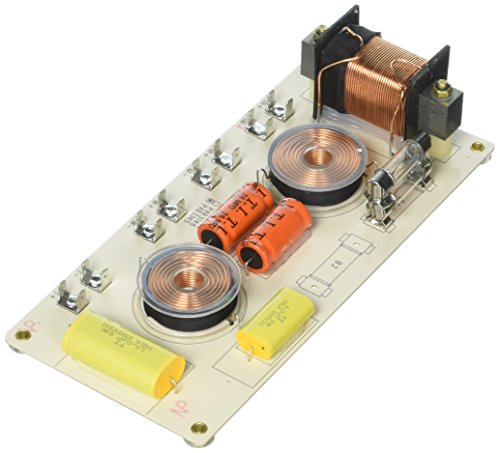
- Three-way board for custom PA cabinets
- 400W capacity with 8-ohm impedance
- 500Hz and 3.5kHz crossover points
Best For: DIY PA, live sound, and installed 8-ohm speaker systems
Compact Multi-Amp Control

- Two-crossover bundle for three-way systems
- Compact footprint for easier installation
- Pure copper wire and low-resistance inductors
Best For: Three-way multi-amplification car audio systems
Flexible 3-Way Value
HiQltyla 200W 3-Way Speaker Crossover

- Two-pack of 3-way crossover boards
- 200W peak rating for 4-8 ohm systems
- Screw terminals and 860Hz/6000Hz split points
Best For: DIY car or home audio with 4-8 ohm drivers
Best DIY Precision Pick
2800Hz 2-Way Speaker Crossover

- 2800Hz crossover point for bass/treble separation
- 12dB low-pass and 18dB high-pass slopes
- 150W handling with 4Ω compatibility
Best For: DIY 4Ω speaker projects
Best Protected Car Audio Design
300W 2-Way Car Audio Crossover

- 300W-rated 2-way design
- ABS housing with heat-dissipation construction
- Solderless plug-in socket for easier wiring
Best For: Simple 2-way car-audio installations
Best Car Audio Value – Audiopipe CRX-203 2-Way Crossover
300 Watts 2 Way Crossover - (2 Pack) Passive Car Audio Speaker Tweeter Mids and Highs CRX-203
Check Price On AmazonFor car-audio installations using separate tweeters and midrange or woofer drivers, the Audiopipe CRX-203 is a practical passive audio crossover option. This two-way, 150-watt RMS crossover uses high-grade polymer capacitors, gold-plated screw terminals, and a compact ABS enclosure.
Best For: Car stereo systems needing a straightforward two-way crossover for tweeter and woofer integration.
Pros:
- Two-way design separates tweeter and woofer frequencies.
- Rated for 150 watts RMS and 300 watts peak.
- Includes gold-plated screw terminals and a compact ABS enclosure.
Cons:
- Designed for car audio rather than general-purpose PA speaker builds.
- It is not waterproof.
The CRX-203 is a sensible choice when you want an enclosed, compact crossover for a wired 12-volt car stereo setup. Verify driver compatibility and power handling before installation.
Best High-Power 3-Way Board – Eminence PXB3:5k0 3-Way Crossover
The Eminence X-Overs PXB3:5k0 is a board-only passive audio crossover for custom 8-ohm speaker cabinets. Its three-way design separates lows, mids, and highs at 500Hz and 5kHz, with Butterworth filtering and a 400-watt rating for demanding pro-audio builds.
Best For: DIY PA cabinets, professional speaker enclosures, and custom 8-ohm builds requiring three-way filtering.
Pros:
- Three-way design provides dedicated low, mid, and high-frequency paths.
- Rated for 400 watts at 8 ohms.
- Uses 12dB low-pass, 6dB mid-pass, and 18dB high-pass slopes.
- Board-only format allows flexible cabinet integration.
Cons:
- Does not include a pre-installed cabinet or enclosure.
- Its board format may require custom installation work.
Choose this Eminence crossover when driver separation and power handling matter more than plug-and-play installation. Confirm that your cabinet and drivers match the 8-ohm design and stated crossover points.
Best Punch Pro Match – Rockford Fosgate PP4-X Passive Crossover
The Rockford Fosgate PP4-X is a specialized passive audio crossover for 4-ohm Punch Pro midrange drivers and tweeters. It supports dual woofer outputs, uses a dedicated 6dB-per-octave low-pass filter, and is rated for 125 watts RMS or 250 watts maximum power.
Best For: Rockford Fosgate Punch Pro car-audio systems using compatible 4-ohm midrange and tweeter drivers.
Pros:
- Designed specifically for 4-ohm Punch Pro midrange and tweeter components.
- Dual woofer outputs support two Punch Pro midrange drivers.
- Includes mounting hardware and a one-year manufacturer warranty.
Cons:
- Compatibility is limited to Rockford Fosgate Punch Pro speakers.
- Sold as a single crossover rather than a pair.
- Its 125-watt RMS rating is lower than some high-power crossover options.
The PP4-X makes the most sense as a system-specific upgrade rather than a universal crossover. Use it only with the compatible Punch Pro components and confirm the speaker impedance before wiring.
Best DIY PA Upgrade – Eminence PXB33K5 3-Way Crossover
The Eminence PXB33K5 is a board-only three-way passive audio crossover for 8-ohm PA and installed-sound cabinets. It uses 500Hz and 3.5kHz crossover points, handles up to 400 watts, and applies separate slopes to low, mid, and high-frequency sections.
Best For: DIY PA cabinets, live sound enclosures, and professional 8-ohm speaker upgrades.
Pros:
- Three-way design separates low, mid, and high frequencies.
- Handles up to 400 watts with an 8-ohm impedance.
- Uses 12dB low-pass, 6dB mid-pass, and 18dB high-pass slopes.
- Board-only construction provides flexibility for custom layouts.
Cons:
- Requires installation inside a suitable cabinet.
- Does not include cabinet mounting hardware.
- It is intended for 8-ohm systems, limiting compatibility with other impedances.
This crossover is a strong fit for builders who want to tune a three-way PA cabinet around professional drivers. Match the impedance, power rating, and crossover points to the enclosure before installing.
Compact Multi-Amp Control – Hertz Mille Pro MPCX-2-TM3
The Hertz MPCX-2-TM3 is a compact option for passive audio crossovers in a three-way, multi-amplification setup. This two-crossover bundle uses 1mm pure copper wire and low-series-resistance inductors, while its small footprint can simplify installation where space is limited.
Best For: Three-way car audio systems using multiple amplifiers and needing compact crossover hardware.
Pros:
- Bundle includes two Hertz Mille Pro Series crossovers.
- Designed for three-way multi-amplification applications.
- Compact 4.02 x 3.01 x 1.46-inch design.
- Uses 1mm pure copper wire and low-series-resistance inductors.
Cons:
- Intended for multi-amplification systems rather than a basic two-way setup.
- Supplied notes do not specify crossover frequency points or power handling.
Choose this model when installation space and multi-amp compatibility matter most. Confirm your system requirements before buying, since the supplied specifications do not list frequency divisions or power ratings.
Flexible 3-Way Value – HiQltyla 200W 3-Way Speaker Crossover
For shoppers comparing passive audio crossovers for car or home audio, the HiQltyla PUV-W3 offers a two-pack of three-way networks with screw terminals for straightforward installation. It is rated at 200 watts peak for 4-8 ohm systems and divides the signal at 860Hz and 6000Hz.
Best For: DIY car or home audio builds using 4-8 ohm bass, midrange, and tweeter drivers.
Pros:
- Two 3-way crossover boards are included.
- Screw terminals avoid the need for welding during installation.
- Supports 4-8 ohm systems with 200-watt peak output.
- Uses 860Hz and 6000Hz frequency division points.
Cons:
- The product notes recommend a mediant speaker larger than 4.5 inches.
- Specified for 12-volt DC supply, which may require system compatibility checks for home use.
- ABS construction may not suit buyers seeking a metal crossover enclosure.
This is a practical, installation-friendly choice when you need two three-way networks with clearly stated electrical parameters. Check driver impedance, midrange size, and power requirements before integrating it into your system.
High-Power 2-Way Filtering – DS18 PRO-CFX Passive Crossover
The DS18 PRO-CFX is a two-pack of passive audio crossovers built for car audio systems using tweeters and mid-range speakers. Its 300-watt RMS capability, compact 6.3 x 3.5 x 1.5-inch dimensions, and wired installation make it a straightforward way to filter frequencies while using one amplifier channel for two speakers.
Best For: Car audio systems needing compact two-way filtering for tweeter and mid-range components.
Pros:
- Two passive crossovers are included.
- Handles up to 300 watts RMS according to the supplied notes.
- Designed to run two speakers from one amplifier channel.
- Compact size supports easier car-audio installation.
Cons:
- It is a two-way design, not a three-way crossover.
- Supplied specifications list a 3.5kHz frequency response point but do not provide a full crossover curve.
- Designed specifically for wired car-audio applications rather than waterproof use.
The PRO-CFX is a focused choice for a high-power two-way car audio setup. Verify amplifier output and speaker compatibility before installation, especially if your system requires a different crossover point or three-way operation.
Best DIY Precision Pick – 2800Hz 2-Way Speaker Crossover
For DIY builders seeking passive audio crossovers with clearly defined frequency separation, this 2-way board uses a 2800Hz crossover point to divide bass and treble. Its mixed 12dB/octave low-frequency and 18dB/octave high-frequency slopes are suited to compatible 4Ω speaker projects.
Best For: DIY speaker projects using 4Ω drivers and up to 150W of power.
Pros:
- 2800Hz crossover point supports distinct bass and treble separation.
- Uses oxygen-free copper inductors and polypropylene film capacitors.
- Screw terminals make speaker-wire connections straightforward.
- Supplied as a 2-pack for multiple-driver or replacement projects.
Cons:
- Designed for 4Ω speakers, so compatibility should be confirmed before installation.
- 150W power handling may not suit higher-powered systems.
With its specified crossover point, asymmetric filter slopes, and DIY-friendly terminals, this board is a practical choice when you want predictable division between bass and treble in a compact speaker build.
Best 3-Way Car Audio Value – CRX-303 4Ω 3-Way Crossover
This 3-way option gives car-audio builders a way to divide signals across woofer, midrange, and tweeter drivers. Among passive audio crossovers, it stands out for its 300W maximum power rating and broad listed frequency ranges.
Best For: 4Ω car-audio systems using separate woofer, midrange, and tweeter drivers.
Pros:
- 3-way design separates woofer, midrange, and tweeter ranges.
- Supports up to 300W maximum power.
- Listed ranges cover 20Hz–316Hz for the woofer, 700Hz–4kHz for midrange, and 1.5kHz–20kHz for tweeter.
- Uses polymer capacitors with ferrite and air-cooled spools.
Cons:
- Specified for 4Ω systems, limiting use with other impedances.
- Its listed application is car audio rather than general-purpose home speaker building.
- The supplied specifications identify a 2-pack but also list a unit count of one, so package contents should be verified.
The CRX-303 is the more specialized choice here for a multi-driver vehicle system, particularly when a 3-way layout and higher stated power capacity are more important than a simple two-way design.
Best Protected Car Audio Design – 300W 2-Way Car Audio Crossover
300 Watts 2 Way Crossover, Car Audio Crossover Universal Heat Dissipation Speaker Frequency Divider
Check Price On AmazonFor a car-audio installation where housing and connection convenience matter, this 2-way unit combines a bass inductor with a high-gloss double-layer ABS enclosure. It is a practical passive audio crossover option for improving driver separation while keeping installation relatively simple.
Best For: Car-audio users wanting a 2-way crossover with a durable housing and plug-in connections.
Pros:
- 300W rating suits a range of car-speaker applications.
- Bass inductor and magnet are designed to improve bass performance.
- Double-layer ABS housing provides heat-dissipation support and durability.
- Solderless plug-in socket simplifies wiring.
Cons:
- The supplied notes do not specify a crossover frequency or speaker impedance.
- It is a 2-way design, so it does not provide separate midrange filtering like a 3-way crossover.
- Compatibility should be checked against the vehicle’s speakers and amplifier before installation.
This Fydun crossover emphasizes installation-friendly construction and enclosure protection. It is a sensible fit when you want a straightforward 2-way car-audio divider, provided the unspecified electrical details match your system.
How We Picked These Passive Audio Crossovers
We selected models representing the most common needs in passive speaker builds: two-way and three-way configurations, car and home audio applications, multiple impedance options, and power handling from compact DIY systems to higher-output installations. We also considered whether each crossover is suited to tweeters and midrange drivers, multi-amplification, board-level customization, or straightforward replacement work.
Specifications should always be checked against the manufacturer’s documentation and your complete speaker system. A stated wattage is not a guarantee of compatibility if the impedance, frequency range, or driver type does not match.
Quick Comparison
| Best For | Configuration | Typical Use |
|---|---|---|
| Simple speaker upgrades | 2-way | Car audio or DIY speaker cabinets |
| Dedicated midrange and tweeter systems | 3-way | Car audio and home Hi-Fi |
| Higher-output pro-audio builds | 2-way or 3-way | PA-style and upgraded speaker systems |
| Custom installations | Board or multi-amplification designs | Advanced DIY and system tuning |
Key Buying Factors for Passive Audio Crossovers
2-Way Versus 3-Way Design
A two-way crossover divides the signal between a woofer or midbass driver and a tweeter. A three-way model adds a dedicated midrange band, which can improve control in larger or more specialized speaker systems. Choose the same layout as the number of driver sections in your cabinet.
Impedance Matching
Confirm whether the crossover is intended for 4-ohm, 8-ohm, or another load. The crossover frequency and filter behavior depend on impedance, so using a nominally incompatible driver can shift the handoff point and affect tonal balance.
Power Handling
Compare the crossover’s continuous or stated power rating with the amplifier’s real output and the drivers’ limits. Leave sensible headroom, and remember that clipped amplifier output can damage tweeters even when the listed wattage appears acceptable.
Crossover Frequency and Slope
The crossover frequency determines where one driver transitions to another, while the slope controls how sharply frequencies are reduced outside each band. Values such as 12 dB or 18 dB per octave may suit different drivers; use the driver manufacturer’s recommended range when available.
Installation and Tuning
Check terminal spacing, enclosure room, wiring access, polarity markings, and mounting requirements before buying. Adjustable or multi-amplification models can offer more tuning flexibility, while compact prebuilt units are usually faster to install.
Who Should Buy Which Passive Audio Crossovers?
Choose a 2-Way Crossover for a Straightforward Upgrade
Two-way units are the practical choice for most car-door speaker replacements, tweeter-and-midrange combinations, and simple DIY cabinets. They generally require less wiring and make system matching easier.
Choose a 3-Way Crossover for Full-Range Driver Systems
If your setup includes a woofer, dedicated midrange, and tweeter, use a three-way model so each driver receives an appropriate frequency band. This is especially useful for larger cabinets and systems designed around separate driver sections.
Choose a Pro or Multi-Amplification Model for Custom Builds
Higher-output installations and advanced builders should prioritize robust construction, accurate impedance matching, and the ability to tune the system. Multi-amplification crossovers are best for users comfortable configuring separate amplifier channels and verifying driver levels.
For the safest result, match the crossover to the actual drivers rather than choosing by wattage alone. Correct impedance, crossover frequency, and wiring polarity usually matter more than a higher headline power rating.