
A projector installation can look great on screen yet still suffer from signal drops, limited placement, or awkward cable runs. The right HDMI extender helps deliver a stable picture over the distance your room requires.
This roundup compares 10 options across wireless transmitters, Cat5e/Cat6 extenders, and high-speed HDMI extension cables. Use the buying guide below to match resolution, range, connectivity, and installation needs to your setup.
Best 10 Hdmi Extenders for Projectors Picks for 2026
Best Wireless Range

- Up to 400ft stated wireless range
- 1080p output at 60Hz with 4K decoding
- Mirroring and extended-display modes
Best For: Flexible projector setups without long HDMI cables
Best Wired 4K Option

- Up to 131ft at 4K@30Hz
- IR pass-through and PoC support
- HDMI loop out for local monitoring
Best For: Permanent projector installations with direct CAT6 cabling
Best Simple Wireless Setup
328ft Plug-and-Play Wireless Extender

- Up to 328ft stated wireless range
- No Wi-Fi, app, or Bluetooth required
- 1080p/60Hz with mirroring and extension
Best For: Quick projector connections for meetings and home use
Best for PoC Installations

- Up to 230ft at 1080p
- One-way PoC reduces remote power needs
- IR, EDID, and HDMI loop-out features
Best For: Fixed projector systems using direct CAT5e or CAT6 cabling
Best Short-Run Upgrade
Silkland 8K HDMI Extension Cable
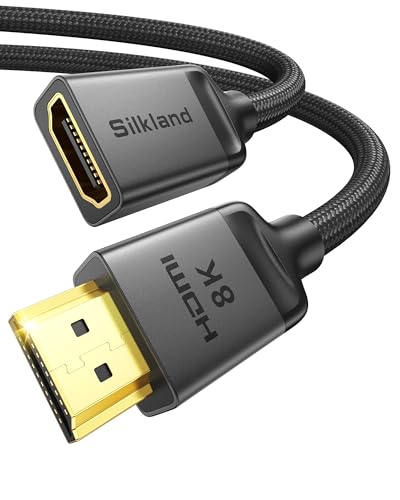
- 8K/60Hz and 4K/120Hz support
- Braided, shielded construction
- Multiple lengths and two-year service
Best For: Compact projector, gaming, and home theater setups
Best Long-Distance Solution

- Transmission up to 196 feet
- Supports 1080p/60Hz with no stated video latency
- EDID copy and plug-and-play setup
Best For: Long 1080p projector runs and commercial-style installations
Best Compact Port Saver
Highwings 8K HDMI Extension Cable
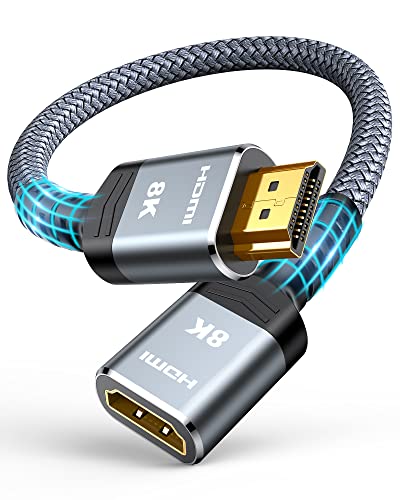
- 8K/60Hz and 4K/120Hz support
- Compact one-foot male-to-female design
- Flexible nylon cable with gold-plated ports
Best For: Short projector connections and tight home theater spaces
Best Long-Run 1080p Kit

- 1080p at 60Hz and 3D up to 164 feet
- PoC uses one included power adapter
- EDID copy supports display compatibility
Best For: Full HD projector installations over longer Cat5e/Cat6/Cat7 runs
Best Wall-Mountable Option
CENMATE 197-Foot HDMI Extender

- 1080p at 60Hz and 3D up to 197 feet
- Wall-mountable aluminum-alloy housing
- PoC and EDID support for installation flexibility
Best For: Permanent Full HD projector installations needing maximum stated range
Best Wireless Range – 400ft Wireless HDMI Extender
For buyers comparing hdmi extenders for projectors, this wireless model stands out when you need flexible placement without running a long cable. It supports up to 400 feet in stated conditions, offers mirroring or extended-display modes, and outputs 1080p at 60Hz while decoding 4K sources.
Best For: Home theaters, offices, classrooms, events, and installations where cable-free projector placement is a priority.
Pros:
- Wireless range of up to 400 feet with dual-band 5G and 2.4G transmission.
- Supports screen mirroring and extended display modes.
- Plug-and-play setup with no Wi-Fi, app, or Bluetooth settings required.
- Supports one receiver with up to 12 transmitters and up to five sets in the same environment.
Cons:
- Maximum stated output is 1080p at 60Hz, despite 4K decoding support.
- Wireless performance can depend on interference and environmental conditions.
This is a versatile choice when a projector cannot conveniently sit near the source. Its long stated range and multi-transmitter support make it especially useful for larger or changing setups, while buyers seeking native 4K output should look elsewhere.
Best Wired 4K Option – OREI HDMI Extender Over Cat6
This OREI unit is a practical wired pick among hdmi extenders for projectors, using one direct CAT6 cable to carry HDMI video and audio over long distances. It supports up to 230 feet at 1080p or 131 feet at 4K@30Hz, with IR control and a local HDMI loop output.
Best For: Conference rooms, classrooms, home theaters, digital signage, and permanent projector installations using direct CAT5e or CAT6 cabling.
Pros:
- Transmits uncompressed video and audio over a single CAT6 cable.
- Supports 4K@30Hz, 1080p, and up to 7.1-channel HD audio.
- HDMI loop out supports local monitoring and cascading.
- Includes one-way IR pass-through, PoC, and EDID copy features.
Cons:
- 4K support is limited to 30Hz.
- Requires a direct cable connection and should not be used through network switches or routers.
Choose this model when reliability and installation control matter more than wireless convenience. Its loop output and remote-control features add flexibility, but the 4K@30Hz ceiling makes it better suited to standard presentation and theater use than high-frame-rate gaming.
Best Simple Wireless Setup – 328ft Plug-and-Play Wireless Extender
For straightforward projector connections, this wireless option keeps setup simple and avoids a long HDMI run. It provides a stated range of up to 328 feet, supports 1080p/60Hz video, and can mirror or extend a compatible source display.
Best For: Meetings, classrooms, home theaters, church presentations, and occasional projector use where quick installation is important.
Pros:
- Up to 328 feet of stated wireless transmission range.
- Plug-and-play operation without Wi-Fi, apps, or Bluetooth.
- Supports screen mirroring and screen extension.
- Compatible with PCs, laptops, cameras, TV boxes, projectors, monitors, and certain mobile devices with HDMI output.
Cons:
- Both transmitter and receiver must be powered through the included USB cables.
- Walls and obstacles may reduce transmission distance and speed.
- 4K is decoded, but stated streaming output is 1080p at 60Hz.
This is a sensible pick for users who want a wireless projector link with minimal configuration. Check the source device carefully—especially phones and tablets—because the source must support HDMI signal output, and both units need USB power.
Best for PoC Installations – OREI HDMI Extender Over Cat5
This OREI extender is designed for structured installations that use a direct CAT5e, CAT6, or CAT7 cable. It carries HDMI video and audio up to 230 feet at 1080p or 131 feet at 4K@30Hz, while one-way Power over Cable can reduce the number of power connections at the remote projector.
Best For: Conference rooms, classrooms, home theaters, CCTV extensions, presentations, and other fixed projector systems.
Pros:
- Supports 1080p over up to 230 feet and 4K@30Hz over up to 131 feet.
- One-way PoC can power the receiver from the transmitter side.
- HDMI loop out allows local display monitoring.
- Includes IR pass-through and EDID copy for remote control and compatibility management.
Cons:
- Does not support 4K@60Hz.
- Not compatible with HDMI ARC.
- Requires a direct CAT5e/CAT6 connection and is not IP/network based.
This model makes sense when you want a tidy, wired projector installation and value remote control and PoC features. It is best matched with standard 1080p or 4K@30Hz sources rather than setups requiring HDMI ARC or higher 4K refresh rates.
Best Short-Run Upgrade – Silkland 8K HDMI Extension Cable
If your projector setup needs a little more reach without replacing an existing cable, this HDMI male-to-female extension is a practical option. It supports HDMI 2.1 features including 8K at 60Hz, 4K at 120Hz, dynamic HDR, 3D, eARC, and up to 48Gbps bandwidth, while remaining compatible with HDMI 2.0 and 1.4 equipment.
Best For: Projector owners extending a short HDMI cable in compact home theater, gaming, or presentation setups.
Pros:
- Supports high-bandwidth 8K, 4K/120Hz, HDR, 3D, and eARC features.
- Braided construction, triple shielding, and gold-plated connectors are designed for durability and signal stability.
- Available in multiple lengths, including this 3.3-foot version, with a two-year replacement service.
Cons:
- This is a male-to-female extension cable, not a complete long-distance HDMI transmission system.
- The notes caution that very thin standard HDMI cables may cause black screens or compatibility issues.
For short projector runs where you want modern HDMI 2.1 bandwidth and extra cable protection, the Silkland is a flexible choice. Check connector orientation and use it with a suitable standard HDMI cable for the most dependable result.
Best Long-Distance Solution – HDMI Extender Over Cat6
For projector installations where the source and display are far apart, this HDMI extender sends video and audio over a separate CAT5e/6/7 Ethernet cable. It is rated for up to 196 feet at 1080p/60Hz and uses a sender-and-receiver design with EDID copying to help the source and display negotiate compatible image and sound settings.
Best For: Long projector cable runs in classrooms, conference rooms, home theaters, outdoor displays, and video installations.
Pros:
- Extends 1080p video and audio up to 196 feet over a recommended oxygen-free copper CAT6 cable.
- Supports zero video latency and audio formats including DTS-HD, Dolby TrueHD, DTS, Dolby AC3, and DSD.
- Plug-and-play design includes EDID copy, automatic adjustment, and ESD protection features.
Cons:
- Resolution is limited to 1080p at 60Hz, so it is not intended for 4K or 8K projector systems.
- Requires a suitable CAT5e/6/7 cable and separate sender and receiver units.
This is the more suitable pick when distance matters more than ultra-high resolution. It provides a practical way to route a 1080p projector signal across a room or building, provided you have the required network cable available.
Best Compact Port Saver – Highwings 8K HDMI Extension Cable
The Highwings HDMI extension cable adds one foot of reach to an existing connection, making it useful when a projector or source is cramped behind furniture or in a home theater rack. Its HDMI 2.1 specification supports up to 48Gbps, 8K at 60Hz, 4K at 120Hz, HDR, ARC, Ethernet, and 3D, while retaining compatibility with common HDMI 2.0 resolutions.
Best For: Projector users who need a short, flexible extension for port access, cable routing, or space-saving installations.
Pros:
- Supports 8K/60Hz, 4K/120Hz, 48Gbps bandwidth, HDR, ARC, and 3D.
- One-foot male-to-female design helps extend an existing cable and ease connection angles.
- Nylon construction, gold-plated ports, and a stated 25,000-flex-cycle rating support frequent use.
Cons:
- The one-foot length may not solve larger distance problems.
- It extends an existing HDMI cable rather than replacing a complete long cable run.
Choose the Highwings when you need a compact port saver with strong bandwidth for a modern projector or gaming setup. Its short length is best viewed as a routing and accessibility fix, not a substitute for a dedicated long-distance extender.
Best Long-Run 1080p Kit – Steetek HT202P HDMI Extender
For shoppers comparing HDMI extenders for projectors, the Steetek HT202P is a practical point-to-point option for sending uncompressed 1080p video and audio over a single Cat5e, Cat6, or Cat7 cable. It supports runs up to 164 feet and includes EDID copy and PoC features for easier installation.
Best For: Home theaters, classrooms, offices, and commercial AV setups that need a Full HD projector connection over a longer Ethernet-cable run.
Pros:
- Extends 1080p at 60Hz and 3D content up to 164 feet.
- Uses one Ethernet cable for uncompressed HDMI video and audio.
- PoC requires only one included power adapter, reducing cable clutter.
- EDID copy helps establish a compatible display resolution.
Cons:
- Limited to 1080p rather than 4K output.
- Requires a separate Cat5e, Cat6, or Cat7 cable for the connection.
The HT202P is a strong fit when dependable Full HD distance matters more than 4K support. Its plug-and-play transmitter-receiver design and single-adapter power setup can simplify projector installations.
Best Short Extension – VCE 4K HDMI Extension Cable
Among HDMI extenders for projectors, this VCE model is a compact male-to-female HDMI extension cable rather than a long-distance Ethernet kit. It is designed to make hard-to-reach ports easier to access while supporting 4K at 60Hz and 18 Gbps bandwidth.
Best For: Projectors, streaming devices, laptops, and home-theater components where a short HDMI extension is needed to relieve port strain or accommodate tight spaces.
Pros:
- Supports 4K at 60Hz with 18 Gbps bandwidth.
- Compatible with HDR, 3D, Dolby Atmos, ARC, and standard HDMI interfaces.
- Braided and foil shielding help block EMI and RFI.
- Gold-plated connectors resist corrosion, and a dust cap is included.
Cons:
- At 5.5 inches, it is intended for short extensions, not room-to-room cable runs.
- It does not provide the transmitter-receiver or Ethernet-based design of active extenders.
This cable is best viewed as a simple port-access solution. Choose it when your projector setup needs a little extra reach or flexibility while retaining modern 4K and home-theater format support.
Best Wall-Mountable Option – CENMATE 197-Foot HDMI Extender
The CENMATE HD50POC-1080P60Hz is one of the longer-range HDMI extenders for projectors, carrying 1080p at 60Hz and 3D signals up to 197 feet over recommended Cat5e, Cat6, or Cat7 cable. Its wall-mountable housing and aluminum-alloy construction suit permanent installations.
Best For: Classrooms, video-conference rooms, home theaters, LED displays, and other projector installations requiring a long Full HD connection with tidy mounting.
Pros:
- Supports 1080p at 60Hz and 3D transmission up to 197 feet.
- PoC sends power through the connecting cable, requiring one 12V DC supply.
- EDID matches display parameters to improve resolution compatibility.
- Wall-mountable aluminum-alloy housing supports heat dissipation.
Cons:
- Mounting bolts are not included.
- Supports Full HD rather than 4K resolution.
- A suitable Cat5e, Cat6, or Cat7 cable is required and not specified as included.
With the longest stated reach in this group, the CENMATE is a sensible choice for fixed projector systems where installation distance and mounting flexibility are priorities. Its 1080p limit makes it less suitable for 4K-focused setups.
How We Picked the Best Hdmi Extenders for Projectors
We evaluated these Hdmi Extenders for Projectors according to the factors that matter most during installation: supported resolution and refresh rate, stated transmission distance, connection type, setup complexity, and useful features such as EDID, HDCP support, power over cable (PoC), infrared control, and loop output. We also separated short HDMI extension cables from active wired and wireless systems because they solve different problems.
Specifications should be treated as maximum ratings rather than guaranteed performance in every room. Cable quality, source devices, projector compatibility, interference, and the number of connections in the signal path can all affect results.
Quick Comparison
- Wireless models: Best when running Ethernet or HDMI cable is impractical. They offer flexible placement but may be more sensitive to interference and usually require line-of-sight or careful positioning.
- Cat5e/Cat6/Cat7 extenders: A practical choice for long, permanent runs. They use affordable network cable and commonly include PoC, EDID, or IR features.
- Short HDMI extension cables: Ideal for adding a few feet between a source and projector, improving port access, or protecting a hard-to-reach HDMI socket.
- 4K and 8K-capable options: Better suited to newer projectors and high-resolution sources, but the source, display, cable, and extender must all support the intended mode.
Key Buying Factors for Hdmi Extenders for Projectors
Resolution, Refresh Rate, and Compatibility
Choose an extender that supports your actual source and projector combination. A 1080p projector does not benefit from paying for 8K bandwidth, while a 4K gaming or home-theater setup may need 4K at 60Hz or higher. Check HDMI version, HDR, 3D, HDCP, and audio compatibility before buying.
Distance and Cable Infrastructure
Measure the complete route, including vertical drops and wall slack. Ethernet-based extenders are generally preferable for long runs, while short extension cables are only appropriate for nearby devices. For in-wall installation, use suitable, code-compliant cable and leave room for routing and service.
Power, Control, and Installation Features
PoC can reduce the number of power adapters, but verify which unit requires power. EDID support can improve handshaking between source and projector, and IR pass-through is useful when the source device is located away from the viewing area. Wireless systems are simpler to position but need dependable power and a low-interference environment.
Who Should Buy Which Hdmi Extenders for Projectors?
Choose a wireless extender for temporary setups, rented spaces, conference rooms, or rooms where drilling and cable routing are undesirable. Choose a Cat5e/Cat6 extender for a stable long-distance home theater, classroom, office, or commercial installation. Choose a high-speed HDMI extension cable when the gap is short and you mainly need extra reach or easier port access. For modern 4K systems, prioritize the required refresh rate and copy-protection support rather than choosing by resolution wording alone.