
The best resin printers for engineering students make it easier to produce accurate prototypes, functional concept models, and finely detailed parts without demanding an industrial-sized workspace. The right choice depends on more than resolution: print volume, setup simplicity, wash-and-cure workflow, material compatibility, and operating cost all matter.
This roundup compares 10 current options across compact, high-speed, large-format, and bundle configurations so you can match a printer to your projects, budget, and available lab or dorm space.
Best 10 Resin Printers for Engineering Students Picks for 2026
Best for Easy Operation

- Factory-calibrated automatic leveling
- AI monitoring and resin-level detection
- 14K detail with support for high-viscosity resins
Best For: Students who want simpler setup and print monitoring
Best High-Resolution Choice

- 14 x 19 micrometer XY resolution
- Automatic heated resin tank
- Large build volume with 150mm/h stated speed
Best For: Students printing large, highly detailed engineering models
Best for Batch Production

- 33 x 18.5 x 30 cm build plate
- 43-micrometer XY detail from an 8K LCD
- Designed for high-volume batch printing
Best For: Teams and labs producing many models per cycle
Best Beginner-Friendly Pick
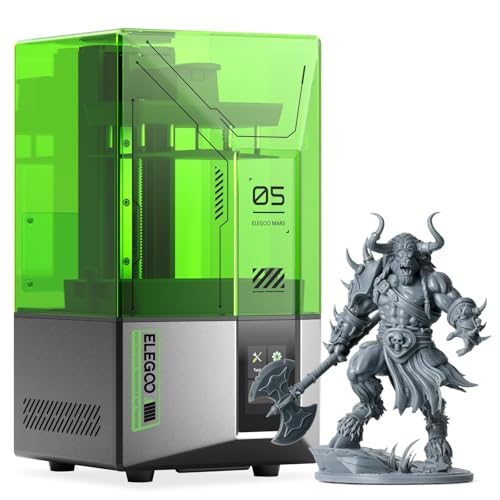
- One-click automatic leveling
- 4K mono LCD for detailed prints
- Built-in checks and overheat protection
Best For: Students wanting an approachable printer for detailed prototypes
Best High-Precision Workflow

- 16K resolution for fine prototype details
- Factory pre-leveling and resin heating
- Remote monitoring through the app
Best For: Students producing intricate prototypes in a dedicated workspace
Best Complete Post-Processing Bundle

- 10K resolution with 17μm pixels
- 153.4 × 87 × 165 mm build volume
- Includes Wash & Cure 3.0 with 4L bucket
Best For: Students wanting printing, washing, and curing in one package
Best Easy-Start Pick

- Automatic leveling simplifies setup
- 4K detail at 35 μm XY resolution
- Built-in sensor checks and cooling
Best For: Students wanting a straightforward resin-printing workflow
Best High-Speed Detail Pick

- 14K resolution with 16.8 μm XY detail
- Up to 170 mm/h with high-speed resin
- Automatic filling and temperature control
Best For: Frequent, highly detailed prototype production
Best Balanced Student Pick

- 10K detail at 17 μm XY resolution
- Useful 153.4 × 87 × 165 mm build area
- Power-resume and adhesion-focused platform
Best For: General coursework and detailed prototype projects
Best Complete Setup – Saturn 4 Ultra 16K with Mercury Plus V3.0
For engineering students seeking resin printers for engineering students, this bundle combines the high-resolution Saturn 4 Ultra 16K with a dedicated wash-and-cure station. Its heated resin tank, fast printing, and included post-processing equipment make it a practical choice for detailed prototypes and repeated coursework projects.
Best For: Students who want a complete print, wash, and cure workflow in one purchase.
Pros:
- 16K resolution supports intricate model details.
- 150mm/h printing speed helps shorten production time.
- Large 8.33 x 4.66 x 8.66-inch build volume suits substantial prototypes.
- Mercury Plus V3.0 adds a 7.5-liter wash-and-cure capacity.
Cons:
- The combined setup requires more workspace than a printer alone.
- The bundle is heavier and less portable for students moving between workspaces.
This is the most convenient option for students who do not already own post-processing equipment. The printer’s capacity and speed are useful for engineering models, while the included station simplifies the finishing workflow.
Best for Easy Operation – ANYCUBIC Photon P1 14K
The ANYCUBIC Photon P1 is one of the more approachable resin printers for engineering students because it combines factory-calibrated auto-leveling with monitoring features designed to catch problems early. Its 14K screen and stable motion system are suited to detailed technical models.
Best For: Students who prioritize setup convenience, print monitoring, and reliable detail.
Pros:
- Factory-calibrated Smart Leveling 3.0 reduces manual setup.
- AI monitoring checks plate installation, separation, resin level, and vat residue.
- 14K resolution and 16.8 x 24.8 micrometer XY pixel size support fine details.
- Supports resins with viscosity up to 8,000 cps.
Cons:
- Its listed dimensions and 29.7-pound weight require a dedicated workspace.
- Post-processing equipment is not included in the supplied configuration.
The Photon P1 is a strong fit for students who want to spend less time leveling and troubleshooting. Its advanced resin compatibility is particularly useful for projects that move beyond standard materials.
Best High-Resolution Choice – ELEGOO Saturn 4 Ultra 16K
The ELEGOO Saturn 4 Ultra 16K is designed for engineering students who need highly detailed prototypes without giving up a sizable build area. Automatic resin heating, leveling, camera monitoring, and Wi-Fi transfer make it well suited to iterative project work.
Best For: Students creating large, intricate parts and wanting automated print supervision.
Pros:
- 16K LCD provides 14 x 19 micrometer XY resolution.
- Automatic tank heating helps maintain suitable resin temperatures.
- 150mm/h printing speed supports faster iteration.
- AI camera and smart sensors monitor prints and detect several potential issues.
Cons:
- The 35.4-pound printer is not especially portable.
- Wash-and-cure equipment is not included with this standalone version.
Choose this model when detail and automation matter more than a compact footprint. Its large build volume and high-resolution screen give students room to develop complex components, while the monitoring features can make long prints easier to supervise.
Best for Batch Production – Phrozen Sonic Mega 8K S
For engineering students handling team projects or repeated prototype runs, the Phrozen Sonic Mega 8K S stands out among resin printers for engineering students with its exceptionally large build area. It is built for high-volume output while retaining 43-micrometer XY detail.
Best For: Advanced student teams, labs, or makerspaces producing many models in each print cycle.
Pros:
- Large 33 x 18.5 x 30 cm build plate supports batch production.
- 15-inch 8K mono LCD delivers 43-micrometer XY resolution.
- ACF film and TR300 resin are stated to enable speeds up to 10 times faster than standard mid-size printers.
- Built-in metal drip hanger helps recover excess resin and reduce mess.
Cons:
- At 57.3 pounds, it is substantially heavier than the other listed options.
- Its 18.6 x 15 x 22.3-inch dimensions demand significant workspace.
- The stated maximum speed depends on the ACF and TR300 resin setup.
This is an overqualified choice for occasional individual prints but compelling for a lab or student team with sustained production needs. Its scale and batch capacity can reduce the number of print cycles for repeated parts and prototypes.
Best Beginner-Friendly Pick – ELEGOO Mars 5
For engineering students seeking resin printers for engineering students, the ELEGOO Mars 5 emphasizes straightforward setup and dependable operation. One-click automatic leveling, self-checks, and residue detection help reduce calibration issues and wasted resin, while its 4K mono LCD is suited to detailed prototypes and small components.
Best For: Students who want an approachable printer for detailed project models and routine prototyping.
Pros:
- One-click automatic leveling simplifies setup.
- 4K mono LCD and COB light source support detailed prints.
- Residue detection, resin-shortage alerts, and self-checks help prevent avoidable failures.
- Overheat protection automatically stops printing above the specified temperature threshold.
Cons:
- Its listed dimensions and build capacity are not provided in the supplied notes, making project-size planning less certain.
- It does not include a wash-and-cure station in the listed package.
The Mars 5 is a practical choice when ease of use matters as much as print detail. Its automated checks can be especially helpful for students balancing fabrication with coursework.
Best High-Precision Workflow – UniFormation GK3T 16K
The UniFormation GK3T is a strong candidate among resin printers for engineering students who need highly detailed prototypes and a more automated workflow. Its 16K display, factory pre-leveling, resin heating, remote monitoring, and compatibility with wash-and-cure stations support repeatable project work.
Best For: Engineering students handling intricate prototypes who value precision, temperature control, and remote oversight.
Pros:
- 16K resolution and 14×19μm pixels target exceptionally fine detail.
- Factory pre-leveling, smart resin feeding, and a quick-release build plate streamline operation.
- Built-in heating supports resin fluidity in temperatures as low as 0°C/32°F.
- App-based remote control provides progress monitoring and one-touch start or stop.
Cons:
- At 52.8 pounds, it is substantially heavier than the other listed printers.
- Its larger 12.99 × 15.75 × 20.47-inch footprint requires dedicated workspace.
- The supplied notes describe compatibility with wash-and-cure stations, but not an included station.
The GK3T offers the most feature-rich setup here for students working on detail-sensitive parts. Its size and weight make it better suited to a lab or permanent studio location than a frequently moved dorm-room setup.
Best Complete Post-Processing Bundle – ANYCUBIC Photon Mono 4 Bundle
For engineering students comparing resin printers for engineering students, this ANYCUBIC bundle stands out by combining a detailed 10K printer with a Wash & Cure 3.0 station. The 153.4 × 87 × 165 mm build volume supports a range of student projects, while the included cleaning and curing equipment creates a more complete post-print workflow.
Best For: Students who want a capable printer and dedicated washing and curing equipment in one package.
Pros:
- 10K resolution with 17×17μm pixels supports detailed models.
- LighTurbo matrix lighting is designed for balanced exposure and smoother surfaces.
- Build volume accommodates models up to 153.4 × 87 × 165 mm.
- Wash & Cure 3.0 includes a larger 4L cleaning bucket and gooseneck curing light.
Cons:
- The bundle has a lower stated resolution than the UniFormation GK3T’s 16K display.
- The supplied notes do not specify automatic leveling or remote monitoring features.
- The combined printer and post-processing setup requires additional workspace.
This is an appealing option for students who want to avoid assembling a post-processing setup separately. Its 10K detail and included 4L wash capacity offer a balanced solution for regular prototype work.
Best Easy-Start Pick – ELEGOO Mars 5
For engineering students who want resin printers for engineering students projects without a complicated setup, the ELEGOO Mars 5 emphasizes automatic leveling, print monitoring, and dependable detail. Its 6.6-inch 4K monochrome LCD offers 35 × 35 μm XY resolution, while print speeds reach up to 70 mm/h.
Best For: Students prioritizing straightforward setup, reliable adhesion, and detailed prototypes in a compact desktop printer.
Pros:
- Automatic leveling with an intelligent sensor and spring-assisted system.
- 4K monochrome LCD with 35 × 35 μm XY resolution.
- Built-in checks for low resin, foreign objects, overheating, and other issues.
- COB light source with 92% light uniformity and added cooling hardware.
Cons:
- Its 70 mm/h maximum speed is lower than the faster printers in this roundup.
- Successful printing still depends on correct settings, supports, and prompt tank cleaning.
The Mars 5 is a practical entry point for coursework and prototype work, especially when automatic leveling and guided safety checks matter more than maximum speed or resolution.
Best High-Speed Detail Pick – ANYCUBIC Photon Mono M7 Pro
The ANYCUBIC Photon Mono M7 Pro is a strong option for engineering students who need resin printers for engineering students projects with fine features and quick turnaround. Its 14K monochrome LCD delivers 16.8 × 24.8 μm XY resolution, while print speeds reach up to 170 mm/h with high-speed resin.
Best For: Students producing detailed parts frequently and valuing fast printing, temperature control, and automated resin handling.
Pros:
- 14K resolution supports fine details and holes as small as 0.3 mm.
- Prints at up to 170 mm/h with high-speed resin and 130 mm/h with standard resin.
- Temperature-controlled resin vat helps maintain suitable material conditions.
- Automatic resin filling and one-key recycling streamline material handling.
Cons:
- Its larger 33.3-pound body takes more bench space than the compact alternatives.
- The highest stated speed depends on using high-speed resin.
With six intelligent detection functions and advanced light control, the M7 Pro is suited to demanding student workflows where detail and productivity justify a larger, more feature-rich machine.
Best Balanced Student Pick – ANYCUBIC Photon Mono 4
The ANYCUBIC Photon Mono 4 balances fine detail, useful build volume, and approachable operation for engineering students choosing resin printers for engineering students projects. Its 7-inch 10K monochrome LCD provides 17 × 17 μm XY resolution, and its 153.4 × 87 × 165 mm build area accommodates many classroom-scale parts.
Best For: Students who want high-resolution prototypes, a practical build area, and a printer prepared for relatively simple setup.
Pros:
- 10K LCD and 17 × 17 μm XY resolution provide detailed models.
- Large 153.4 × 87 × 165 mm print volume supports varied projects.
- Re-engineered platform is designed to improve adhesion and reduce lifting or warping.
- Supports print recovery after power is restored and includes a one-year warranty.
Cons:
- It requires first leveling before printing.
- Its stated single-layer exposure time is 1.5 seconds, without a high-speed rating comparable to the M7 Pro.
The Photon Mono 4 is a well-rounded choice for student labs and home workbenches, combining strong resolution with a useful print area and features intended to reduce wasted resin after interruptions.
How We Picked These Resin Printers for Engineering Students
We focused on features that affect student projects in real use: print resolution, build volume, leveling and sensor systems, print speed, software workflow, maintenance demands, and overall value. We also included both standalone printers and bundles with wash-and-cure equipment, since post-processing is an essential part of resin printing.
Resolution is useful for fine mechanical details, threads, enclosures, and presentation models, but it does not guarantee perfect parts by itself. A reliable motion system, consistent exposure, suitable resin, and careful support placement are equally important. Large-format models can produce more parts per run, while compact printers are easier to fit in a dorm, study area, or shared workshop.
Quick Comparison
| Priority | Look For | Best Fit |
|---|---|---|
| Fine detail | High-resolution mono LCD and stable mechanics | Small precision components and visual prototypes |
| Higher throughput | Fast exposure, dependable automation, and larger build area | Multiple parts or frequent project work |
| Easy setup | Auto-leveling, sensors, and guided controls | First-time users and busy students |
| Complete workflow | Printer paired with a wash-and-cure station | Users without separate post-processing equipment |
| Large models | Expanded build volume and rigid construction | Engineering prototypes that exceed desktop dimensions |
Key Buying Factors for Resin Printers for Engineering Students
Build Volume and Project Size
Check the usable build dimensions against the parts you expect to make. A compact printer is often sufficient for brackets, housings, fixtures, and scaled components, while a larger machine reduces the need to split substantial prototypes into sections.
Accuracy, Resolution, and Repeatability
High pixel counts and small XY pixel sizes can reveal fine features, but repeatability is just as important for engineering work. Look for stable mechanics and a dependable build platform, especially when dimensional consistency matters across multiple prints.
Workflow and Post-Processing
Resin prints require washing and UV curing, plus safe handling of liquid resin and contaminated waste. A bundle can simplify the process and reduce accessory costs. If you buy a standalone printer, budget for a compatible wash-and-cure station, gloves, ventilation, cleaning supplies, and replacement films.
Speed, Reliability, and Controls
Fast printing is valuable when deadlines are tight, but advertised speeds depend on layer height, resin, geometry, and exposure settings. Auto-leveling, mechanical sensors, and clear software can reduce setup errors and make repeated student projects less frustrating.
Safety and Running Costs
Resin printing needs ventilation, protective gloves, eye protection, and a dedicated cleanup routine. Compare resin prices, platform size, replacement LCD or film costs, and the availability of spare parts before choosing a printer solely on purchase price.
Who Should Buy Which Resin Printers for Engineering Students?
Choose a compact Mars or Photon model if you are new to resin printing, have limited space, or mainly produce small parts and detailed prototypes. Choose a Saturn, Photon M7 Pro, or UniFormation model if you print frequently and want a stronger balance of detail, speed, and productivity. Choose the Phrozen Sonic Mega if your engineering work calls for unusually large prototypes or batch production. Choose a printer-and-wash-station bundle if you want a more complete setup and do not already own post-processing equipment.
For most students, the best purchase is the model that fits the intended part size while leaving room in the budget for resin, safety equipment, and post-processing supplies. Prioritize dependable workflow and manageable operating costs over headline resolution alone.