
The best samplers for live performances let you trigger clips, reshape recordings, build beats, and improvise without relying entirely on a laptop. The right model depends on your setup, workflow, and how much hands-on control you want onstage.
This roundup compares 10 strong options, including portable grooveboxes, performance samplers, DJ-focused units, and compact instruments for spontaneous sound design.
Best 10 Samplers for Live Performances Picks for 2026
Standalone Powerhouse

- Battery-powered standalone MPC with built-in speakers
- RGB pads, touch display, sampling, and sequencing
- Extensive MIDI, audio, wireless, and CV/Gate connectivity
Best For: Performers seeking a complete computer-free production center
Performance FX Specialist

- Responsive RGB pads and OLED waveform editing
- Extensive resampling, chopping, and performance effects
- Portable design with multiple power options
Best For: Hands-on beatmaking, sample triggering, and live FX
Next-Generation Workstation
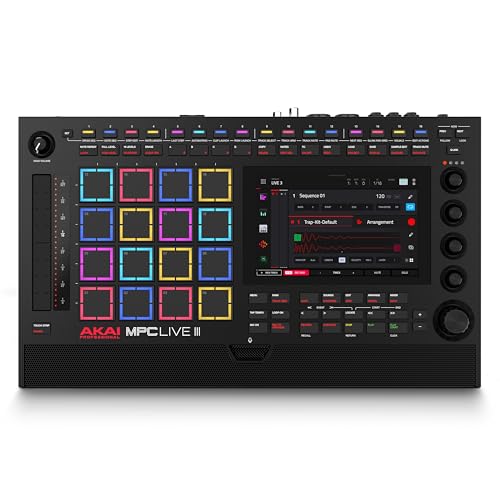
- Powerful standalone MPC with 8-core processing and 8 GB RAM
- MPCe pads, clip launching, live looping, and touch-strip control
- Built-in mic, speakers, battery, and 128 GB internal storage
Best For: Advanced live production, improvisation, and standalone sequencing
Compact Groove Performer

- Eight sample tracks with chainable 32-step patterns
- Records, slices, loops, reverses, and resamples external audio
- Lightweight design with up to four hours of battery life
Best For: Portable beat-focused performances and quick live sampling
Untethered Creation
Ableton Move Standalone Instrument

- Standalone groovebox with battery, speaker, and microphone
- 32 pads with polyphonic aftertouch
- On-device sampling, slicing, and resampling
Best For: Mobile performers and Ableton users needing an all-in-one sampler
Pocket Sound Design
Roland AIRA Compact P-6 Sampler

- Pocket-size sampler with built-in microphone
- Chop, step sampling, and resampling tools
- Chromatic playback and granular sound parameters
Best For: Portable live sampling and experimental sound design
Booth-Ready Performance
Pioneer DJ DJS-1000 Standalone Sampler

- Standalone sampler and sequencer for DJ sets
- 16 velocity-sensitive pads and 7-inch touchscreen
- PRO DJ LINK syncs with CDJs and DJM mixers
Best For: DJs adding live patterns, edits, and samples in the booth
Best Portable Performance Sampler
teenage engineering EP–133 K.O. II
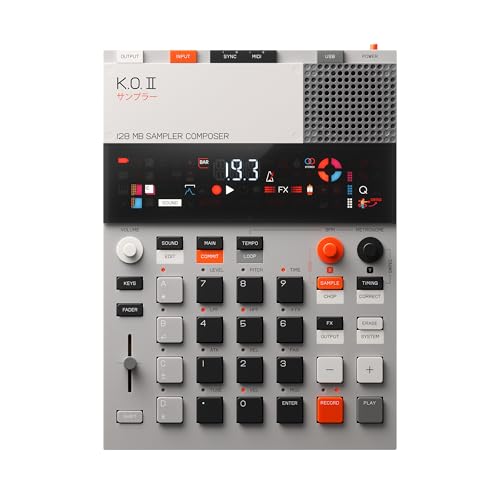
- Portable, battery-powered sampler with built-in microphone and speaker
- Four-group sequencer with 99 patterns per group
- Hands-on fader control for punch-in and stereo effects
Best For: Portable beatmaking and live pattern-based performances
Best for Sound Sculpting

- Four parallel stereo tracks with five processing devices each
- Granular processing with up to 128 grains and a four-second buffer
- Scenes, macros, and modulation support expressive live control
Best For: Experimental, ambient, and texture-focused performances
Best Beginner-Friendly MPC Sampler

- Standalone sampler with rechargeable battery, speaker, and microphone
- Sixteen MPC pads and color display enable quick sample chopping
- Offers onboard effects, resampling, MIDI, sync, and USB-C connectivity
Best For: Beginners, finger drummers, and DAWless live performers
Standalone Powerhouse – Akai MPC Live II
For performers who want a self-contained setup, the Akai MPC Live II is one of the most capable samplers for live performances. Its rechargeable battery, built-in speakers, touch display, pads, and broad connectivity help you create and trigger material without relying on a computer.
Best For: Producers and performers who need a versatile standalone sampler with studio and modular connectivity.
Pros:
- Standalone operation with a rechargeable battery and built-in stereo speakers
- Sixteen velocity-sensitive RGB pads and a 7-inch multi-touch display
- Strong connectivity, including MIDI, USB, Wi-Fi, Bluetooth, audio I/O, and CV/Gate
- Supports sampling, sequencing, MPC Stems, and included MPC software
Cons:
- At 4 kg, it is less lightweight than more compact performance samplers
- Its extensive features may require more setup time for quick, simple performances
The MPC Live II is a powerful all-rounder for performers who want beat making, sampling, sequencing, and external gear control in one portable workstation. Built-in monitoring and battery power make it especially practical for rehearsals and computer-free sessions.
Performance FX Specialist – Roland SP-404MKII
The Roland SP-404MKII is designed around fast, expressive interaction, making it a strong choice among samplers for live performances. Its responsive pads, OLED waveform display, resampling tools, and extensive effects are suited to triggering, transforming, and layering sounds on stage.
Best For: Beatmakers and live performers who prioritize hands-on sample triggering and real-time effects.
Pros:
- Seventeen velocity-sensitive RGB pads with low-latency, click-free playability
- Dedicated performance effects include Vinyl Simulator, DJFX Looper, lo-fi, and cassette effects
- Fast startup, 16 GB internal storage, and extensive onboard sample editing
- Portable power options include USB-C, six AA batteries, and AC power
Cons:
- Its 2.6-pound body is portable, but the compact workflow may take practice to master
- It offers less broad studio and modular connectivity than the MPC models in this roundup
The SP-404MKII is a focused performance instrument rather than an all-in-one workstation. Choose it if your set depends on rapid sample manipulation, distinctive effects, and an immediate pad-based workflow.
Next-Generation Workstation – Akai MPC Live III
The Akai MPC Live III combines standalone production power with performance-focused controls, making it a compelling option among samplers for live performances. Its pressure-sensitive MPCe pads, clip launching, touch-strip control, rechargeable battery, and integrated microphone support a flexible stage workflow.
Best For: Performers who want advanced standalone sequencing, clip launching, sampling, and live sound design.
Pros:
- Eight-core processor, 8 GB RAM, and MPC3 OS support demanding standalone workflows
- Three-dimensional pads provide velocity, pressure, and X/Y control
- Integrated microphone, stereo speakers, rechargeable battery, and 128 GB storage
- Includes clip launching, live looping, touch-strip control, Stems, and extensive connectivity
Cons:
- Its broad feature set may be more than needed for simple sample triggering
- Advanced production functions can involve a steeper learning curve
The MPC Live III is the most performance-oriented full workstation in this selection. It suits artists who want to improvise with clips and loops while retaining the sequencing, sampling, storage, and external-gear integration of a professional production center.
Compact Groove Performer – Novation Circuit Rhythm
The Novation Circuit Rhythm keeps live sampling direct and approachable. With eight sample tracks, hands-on sequencing, resampling, and performance effects, it is a practical pick among samplers for live performances when portability and quick beat creation matter.
Best For: Performers who want a lightweight, battery-powered sampler and groovebox for beat-focused sets.
Pros:
- Eight flexible sample tracks with 32-step patterns chainable to 256 steps
- Records directly from phones, turntables, synthesizers, and other sources
- Hands-on tools include slicing, reversing, looping, resampling, and Grid FX
- Portable 1.9-pound design with up to four hours of battery operation
Cons:
- Its eight-track groovebox format is less expansive than the MPC workstations
- Smaller feature set may be limiting for complex arrangements or broad studio production
The Circuit Rhythm is a strong choice for compact live rigs and sample-driven performances. It offers enough sequencing depth for evolving patterns while keeping the process immediate, portable, and centered on hands-on control.
Untethered Creation – Ableton Move Standalone Instrument
For performers who want samplers for live performances without depending on a computer, the Ableton Move combines sample capture, sequencing, synthesis, and effects in a compact standalone groovebox. Its built-in battery, speaker, microphone, and four flexible tracks support quick sketches and fully untethered sets.
Best For: Mobile performers and Ableton users who want an all-in-one sampler, sequencer, and performance instrument.
Pros:
- Standalone design includes a rechargeable battery, speaker, microphone, and processor.
- 32 velocity-sensitive pads with polyphonic aftertouch provide expressive control.
- Samples can be captured, sliced, resampled, and reshaped directly on the device.
- Includes Ableton Live 12 Intro, built-in effects, wireless integration, and 64 GB of storage.
Cons:
- Four-track architecture may feel limiting for larger arrangements.
- Ableton Live 12 Intro includes limited tracks, instruments, and effects.
The Move is a versatile choice when portability and fast hands-on control matter most. It is especially appealing for performers already working within the Ableton ecosystem.
Pocket Sound Design – Roland AIRA Compact P-6 Sampler
The Roland AIRA Compact P-6 is a pocket-size option for samplers for live performances, offering quick sample capture and extensive sound manipulation in a compact format. Its built-in microphone, onboard keyboard, chromatic playback, and granular controls make it useful for transforming short recordings into playable material.
Best For: Performers and sound designers who prioritize portability, sample chopping, and experimental manipulation.
Pros:
- Built-in microphone enables fast sample capture without external equipment.
- Chop, step sampling, and resampling functions support flexible live workflows.
- Samples can be played chromatically and polyphonically from the onboard keyboard.
- Granular parameters and dedicated filters and envelopes offer detailed sound shaping.
Cons:
- Advanced granular controls may require a learning period.
- Sample editing and import/export rely on the separate P-6 Sample Tool for macOS and Windows.
The P-6 is a strong fit when a small footprint matters but basic triggering is not enough. Its granular engine and sample-sculpting tools give live performers room for more experimental textures.
Booth-Ready Performance – Pioneer DJ DJS-1000 Standalone Sampler
The Pioneer DJ DJS-1000 is built for DJs seeking samplers for live performances without adding a laptop to the booth. Its 16 velocity-sensitive pads, 7-inch touchscreen, step sequencer, and PRO DJ LINK compatibility make it suited to triggering patterns, live edits, and original elements alongside compatible Pioneer DJ equipment.
Best For: DJs who want a dedicated standalone sampler that integrates with CDJs and DJM mixers.
Pros:
- Standalone operation supports laptop-free live performance.
- Sixteen velocity-sensitive pads and a 7-inch touchscreen provide hands-on control.
- Step sequencer supports programming drum patterns and loops during a set.
- PRO DJ LINK synchronizes the sampler with CDJs and DJM mixers.
Cons:
- At 15 pounds, it is less portable than compact pocket samplers.
- Its workflow is particularly oriented toward DJ-booth integration rather than general mobile sampling.
- Supplied specifications list RCA, TRS, USB, and XLR connections but do not detail every routing capability.
The DJS-1000 makes the most sense for a fixed DJ setup where tactile pattern triggering and system synchronization are priorities. It adds live remixing and original performance elements without requiring a laptop.
Best Portable Performance Sampler – teenage engineering EP–133 K.O. II
For performers who want a compact sampler for live performances, the EP–133 K.O. II combines quick beat construction, hands-on effects, and portable sampling in a battery-powered unit. Its built-in microphone, speaker, line I/O, and punch-in effects support fast ideas and on-the-fly performance tweaks.
Best For: Portable beatmaking, live looping-style performance, and performers who want immediate pattern and effects control.
Pros:
- Portable design with built-in microphone, speaker, line-out, and AAA battery power.
- Four-group sequencer with 99 patterns per group for arranging beat variations.
- Multifunctional fader controls stereo and punch-in effects, including filter and pitch changes.
- 128 MB memory, 999 sample slots, MIDI and sync I/O, and USB-C connectivity.
Cons:
- Its 4-track architecture may be limiting for arrangements requiring many independent parts.
- AAA battery power may be less convenient than a built-in rechargeable battery.
The EP–133 K.O. II is a strong choice when portability and immediate hands-on control matter more than a large, studio-style interface. Its pattern workflow and performance effects make it especially practical for compact live rigs.
Best for Sound Sculpting – S4 Sculpting Sampler
The S4 Sculpting Sampler is designed for performers who want deep sound transformation rather than simple sample playback. Four parallel stereo tracks combine granular processing, modulation, filtering, distortion, reverb, and recallable scenes for detailed live sound shaping.
Best For: Experimental performers, ambient artists, and electronic musicians building evolving textures and dynamic live sets.
Pros:
- Four parallel stereo tracks, each with Material, Granular, Filter, Color, and Space devices.
- Granular engine offers up to 128 grains and a four-second audio buffer.
- Scenes recall track states, while global macros provide focused performance control.
- Four freely assignable modulators per track support evolving movement and automation.
Cons:
- Its extensive sound-design workflow may take longer to learn than a simpler sampler.
- Audio connectivity is listed as auxiliary, so users should verify their preferred live-routing setup.
With its scene recall, macros, granular engine, and modulation options, the S4 is suited to performers who treat sampling as an instrument for transformation. It is less about quick beat assembly and more about creating expressive, evolving sound in real time.
Best Beginner-Friendly MPC Sampler – Akai Professional MPC Sample
The Akai Professional MPC Sample offers a straightforward sampler for live performances, with standalone operation, responsive MPC pads, a built-in microphone, and rechargeable battery power. It supports sampling, chopping, sequencing, and effects without requiring a computer or DAW.
Best For: Beatmakers, finger drummers, DAWless performers, and beginners wanting a portable MPC-style workflow.
Pros:
- Standalone, battery-powered design with built-in speaker, microphone, and rechargeable lithium-ion battery.
- Sixteen MPC pads and a 2.4-inch color display support hands-on sampling and beatmaking.
- Instant Sample Chop Mode, timestretch/repitch, resampling, and 60 effect types encourage fast experimentation.
- Includes stereo line I/O, headphones output, MIDI, sync, USB-C audio/MIDI, and microSD storage.
Cons:
- The MIDI DIN adapter is not included.
- Its compact controls and display may feel less spacious for complex arrangements.
The MPC Sample balances portability with a familiar pad-based workflow, making it approachable for new users while retaining useful live-performance connections. It is a practical option for performers who want to sample, chop, and trigger grooves away from a computer.
How We Picked the Best Samplers for Live Performances
We focused on instruments designed for hands-on performance rather than sample playback alone. Our comparison considers portability, workflow speed, pad and control layout, sequencing, effects, connectivity, storage, battery operation, and how easily each sampler can fit into a live rig.
We also included a range of approaches: standalone production centers, compact grooveboxes, DJ samplers, granular instruments, and affordable entry points. Because live setups vary widely, there is no single best choice for every performer.
Quick Comparison
| Best For | What to Prioritize | Ideal Type |
|---|---|---|
| Beat making and full sets | Sequencing, arrangement, effects, and connectivity | Standalone production center |
| Fast sample triggering | Responsive pads, cueing, and performance effects | Dedicated performance sampler |
| Portable songwriting | Battery life, compact size, and built-in sounds | Groovebox |
| Experimental sound design | Granular processing, modulation, and recording | Specialized sampler |
| DJ and remix performance | Timing, touchscreen control, and multiple outputs | DJ sampler |
Key Buying Factors for Samplers for Live Performances
Workflow and Control
Look for controls that match your performance style. Large pads suit finger drumming and clip launching, while touchscreen interfaces can make browsing, editing, and arrangement faster. Dedicated knobs are valuable for filter sweeps, effects, and real-time sound shaping.
Sampling and Sequencing
Check how quickly you can record, trim, loop, resample, and assign sounds. If you perform structured songs, prioritize reliable sequencing and scene or pattern changes. For improvisation, prioritize fast sampling, immediate looping, and flexible resampling.
Portability and Power
Battery power, built-in speakers, and a compact footprint can simplify rehearsals and small performances. Larger units may offer deeper production features, but confirm that their size and power requirements suit your stage setup.
Connectivity and Reliability
Review audio inputs and outputs, MIDI, USB, headphone monitoring, storage options, and synchronization support. A dependable interface matters more than an impressive feature list when changing patterns or routing multiple instruments live.
Who Should Buy Which Samplers for Live Performances?
Choose a full standalone production center if you want one device for arranging tracks, playing instruments, sampling, and managing an entire set. A dedicated performance sampler is better for performers who already have a separate sequencer or synth and need fast triggering plus expressive effects.
Compact grooveboxes suit mobile musicians, beginners, and producers who value immediacy over deep menu-based editing. A DJ-oriented sampler makes more sense for remixing and sample-driven sets, while a specialized granular or stereo sampler is ideal for experimental performers who want unusual textures and evolving effects.
Before buying, map your current setup and identify the tasks you need to perform without stopping the music. The best sampler is the one whose controls, timing, inputs, and sample workflow let you make those changes confidently onstage.