
Choosing the right channel strip can make a podcast sound cleaner, more controlled, and more professional without overcomplicating your workflow.
Whether you want a simple vocal front end or a more advanced rack solution, the best options balance preamp quality, dynamics control, and easy integration with your recording setup.
Best 10 Channel Strips for Podcasting Picks for 2026
Standalone Channel Strip
dbx 286s Mic Preamp & Processor

- One-channel mic preamp with compression, de-essing, enhancer, and gate.
- Rack-mountable 1U unit with XLR mic input and TRS line input.
- Insert jack and LED metering help with flexible vocal chain setup.
Best For: solo podcasters and voice-over users needing hardware vocal control
All-in-One Podcast Rig
RODECaster Pro II Bundle with 4 Mic Packs

- 9-channel console with four mic inputs and APHEX DSP.
- Includes four matching ZDM-1 mic packs with headphones and tripods.
- Dual USB-C, Bluetooth, and wireless features support modern podcast setups.
Best For: multi-host podcast teams wanting a complete studio bundle
Expansion Preamp
Behringer ADA8200 8-Channel Mic Preamp

- Eight-channel mic preamp expansion over ADAT.
- Useful for adding inputs to a larger podcast or studio rig.
- Includes Midas preamps and rack-style form factor.
Best For: ADAT-based systems that need more microphone inputs
Tube Channel Strip
ART VoiceChannel with Digital Outs
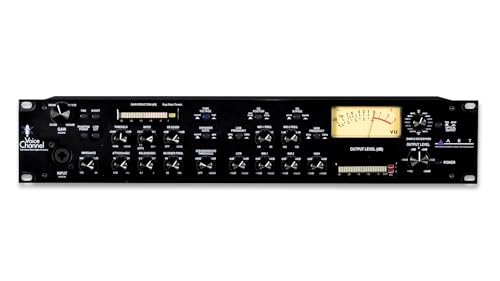
- Tube preamp with compressor, expander, de-esser, and gate.
- Digital outputs include ADAT, AES/EBU, S/PDIF, TOSLink, and USB.
- Single-channel design suits one voice or instrument at a time.
Best For: podcasters and voice-over users wanting tube tone plus digital I/O
Compact 500 Series pick
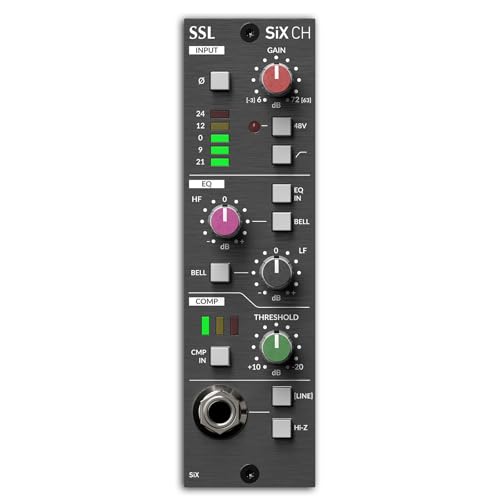
- Mic pre, EQ, and single-knob compressor
- +48V phantom power and 75 Hz HPF
- Front-panel TRS line input with Hi-Z switch
Best For: Podcasters who want a streamlined 500 Series channel strip with basic tone shaping and compression
Rackmount tube option
PreSonus StudioChannel Tube Strip

- 12AX7 tube preamp with mic and instrument inputs
- Variable VCA compressor with auto attack/release
- 3-band EQ plus phantom power and pad
Best For: Podcasters who want a rackmount tube channel strip with flexible inputs and built-in dynamics control
Flexible tube channel strip
ART Pro Channel III Tube Strip

- Mono tube channel strip with impedance switching
- Selectable opto/FET compression voicings
- 4-band semi-parametric EQ
Best For: Podcasters who want a mono tube channel strip with more compression voicing choices and detailed EQ control
Studio-Grade Voice Shaping
SPL Track One MK3 Mono Channel Strip

- Mic/instrument preamp plus compressor/limiter
- 3-band EQ with de-esser for speech control
- Output metering helps with gain staging
Best For: Podcasters wanting a dedicated mono strip for vocal shaping
Classic Color with Control
Rupert Neve Designs Newton Channel Strip

- Class A mic/line preamp with custom transformer outputs
- Silk harmonic enhancement adds tonal color
- Compressor and LED meters aid vocal control
Best For: Creators who want premium analog tone shaping for spoken voice
Channel Strip plus Interface
Neve 1073SPX-D Channel Strip USB Audio Interface

- USB interface with preamp/EQ channel strip features
- 24-bit/192kHz conversion plus insert send/return
- ADAT I/O and headphone amp support expansion
Best For: Podcasters building a recording setup that needs interface and channel strip in one
Standalone Channel Strip – dbx 286s Mic Preamp & Processor
If you want a straightforward channel strip for podcasting that adds compression, de-essing, expansion/gating, and enhancement in one rack unit, the dbx 286s is built for that job. It works as a mic preamp or line processor, and the insert loop makes it easy to integrate extra outboard gear when your setup grows.
Best For: Solo podcasters, voice-over setups, and creators who want hardware vocal processing in a simple 1U rack unit.
Pros:
- Combines mic preamp, compressor, de-esser, enhancer, and expander/gate in one unit.
- Classic dbx compression helps keep vocals clear and present.
- Floating balanced XLR mic input plus 1/4" TRS line input for mics or line-level sources.
- Metering LEDs make level and status checks easy at a glance.
Cons:
- Single-channel design, so it only handles one source at a time.
- Requires rack mounting, which is less convenient than a desktop device.
- Best suited to users who want hardware processing rather than an all-in-one recording console.
For podcasters who want a dedicated vocal front end, the dbx 286s offers a focused set of tools without unnecessary extras. It is especially practical if you value familiar analog controls and want to shape voice tone before it reaches your interface or recorder.
All-in-One Podcast Rig – RODECaster Pro II Bundle with 4 Mic Packs
This bundle is a strong pick if you need channel strips for podcasting and want a complete multi-host workflow in one purchase. The RODECaster Pro II brings 9-channel routing, Revolution preamps, and APHEX DSP, while the included ZDM-1 mic packs cover four hosts with mics, headphones, tripods, windscreens, and XLR cables.
Best For: Four-host podcasts, panel shows, roundtable recordings, and creators who want a ready-to-use studio bundle.
Pros:
- 9-channel console with four mic inputs and onboard APHEX DSP on every input.
- Revolution preamps provide up to 76 dB of gain, which suits dynamic podcast mics.
- Bundle includes four mic packs, so each host gets matched recording and monitoring gear.
- Dual USB-C, Bluetooth, and onboard wireless support give you flexible guest and device routing.
Cons:
- Large bundle may be more than a solo creator needs.
- Requires more table space than a simple channel strip or preamp.
- Best value comes when you actually need all four included mic kits.
For teams building a podcast studio around multiple hosts, this package removes a lot of setup friction. It is less of a minimal channel-strip solution and more of a full production hub, but that is exactly what makes it useful for roundtable workflows.
Expansion Preamp – Behringer ADA8200 8-Channel Mic Preamp
If your podcasting setup needs more microphone inputs, the Behringer ADA8200 is best viewed as an expansion preamp rather than a classic channel strip. It offers eight channels of mic pre amplification over ADAT, which makes it useful when you are adding inputs to a larger recording system.
Best For: Podcasters and recording setups that need to expand input count through ADAT.
Pros:
- Eight-channel design gives you a straightforward way to add more mic inputs.
- Uses ADAT connectivity for integration with compatible systems.
- Compact rack-style unit is practical for studio expansion.
- Midas preamp inclusion is listed in the supplied details.
Cons:
- Does not include the compression or de-essing features found on true channel strips.
- Maximum sample rate is listed at 48 kHz.
- Needs an ADAT-capable setup to be useful as intended.
For buyers searching channel strips for podcasting, this is the least “strip-like” option here, but it solves a common problem: more clean mic inputs. If your main goal is expanding a mixer or interface, it fits that role well.
Tube Channel Strip – ART VoiceChannel with Digital Outs
The ART VoiceChannel is a flexible channel strip for podcasting if you want tube preamp character plus onboard dynamics and digital output options. It combines a tube preamp design with compressor, expander, de-esser, and gate functions, and it can connect by USB or multiple digital formats for recording workflows.
Best For: Podcasters, voice-over creators, and recording users who want a feature-rich vocal strip with digital connectivity.
Pros:
- Tube preamp design is built for warmth and definition.
- Includes compressor, expander, de-esser, and gate for vocal control.
- Flexible digital outputs include ADAT, AES/EBU, S/PDIF, and TOSLink.
- USB direct-connect support makes it easier to integrate with a computer or laptop.
Cons:
- Single-channel unit, so it only handles one source at a time.
- More complex than a basic preamp if you only need simple gain.
- May be more than needed for users who already have digital processing in their interface.
This is a good fit if you want one front-end unit to shape voice before it reaches your computer or interface. Its mix of analog processing and broad digital connectivity makes it especially appealing for creators who want flexibility in how they capture audio.
Compact 500 Series pick – SSL SiX Mono Channel Strip
If you’re comparing channel strips for podcasting, the SSL SiX Channel Strip brings a compact 500 Series format with the core tools for voice shaping and cleanup. It combines a mic pre, EQ, and single-knob compressor, plus +48V phantom power, a 75 Hz high-pass filter, and a front-panel TRS line input with a 1MΩ Hi-Z switch, making it a practical fit for a tight recording chain.
Best For: Podcasters who want a streamlined 500 Series channel strip with basic tone shaping and compression in one mono unit.
Pros:
- Built-in mic pre, EQ, and single-knob compressor in one channel strip
- +48V phantom power for condenser microphones
- 75 Hz high-pass filter helps reduce low-end rumble
- Front-panel TRS line input with 1MΩ Hi-Z switch adds flexibility
Cons:
- Single-channel design only
- Requires a 500 Series setup
- No detailed multi-band processing beyond its onboard EQ and compressor
This is a focused, space-saving option if you want SSL-style front-end control without extra complexity. It suits podcast workflows that need simple gain, filtering, and compression at the input stage.
Rackmount tube option – PreSonus StudioChannel Tube Strip
For podcasters shopping channel strips for podcasting, the PreSonus StudioChannel is a full-featured rack option with a high-voltage Class A 12AX7 vacuum-tube mic/instrument preamp, built-in EQ, and compression. It includes phantom power, a polarity reverse switch, HP filter, pad, and multiple input types, so it can handle a variety of recording setups without adding extra gear.
Best For: Podcasters who want a rackmount tube channel strip with flexible inputs and built-in dynamics control.
Pros:
- High-voltage Class A 12AX7 tube preamp for mic and instrument use
- Variable VCA compressor with auto attack/release and soft/hard knee
- 3-band EQ with variable-q mid band and peak/shelving controls
- Includes phantom power, polarity reverse, HP filter, and -20 dB pad
Cons:
- 1U rack-mount design needs more space than compact units
- More complex than a basic vocal front end
- Tube-based design may be more channel strip than some podcast rigs need
This model is a strong choice if you want more hands-on shaping before the recording hits your interface. Its blend of tube preamp character, flexible EQ, and compressor control makes it well suited to spoken-word capture.
Flexible tube channel strip – ART Pro Channel III Tube Strip
If you need channel strips for podcasting with more voice-shaping options, the ART Pro Channel III offers a mono tube channel strip with switchable microphone impedance, selectable opto/FET compression voicings, and a 4-band semi-parametric EQ. That combination gives you more control over tone and dynamics than a minimal strip, while still staying focused on a single vocal channel.
Best For: Podcasters who want a mono tube channel strip with more compression voicing choices and detailed EQ control.
Pros:
- Mono tube channel strip built around a single vocal path
- Switchable microphone impedance for input matching flexibility
- Selectable opto/FET compression voicings for different responses
- 4-band semi-parametric EQ for more detailed shaping
Cons:
- Mono design only
- Bulkier unit than compact channel-strip options
- May be more involved than a simple podcasting setup needs
This is a good middle-ground pick when you want more sonic control without moving to a larger studio chain. It is especially appealing if you want to fine-tune compression character and EQ directly at the recording stage.
Studio-Grade Voice Shaping – SPL Track One MK3 Mono Channel Strip
If you want one of the more complete channel strips for podcasting, the SPL Track One MK3 gives you a focused mono signal path with the basics covered: mic or instrument preamp, compression/limiting, EQ, de-essing, and output metering. It is the kind of hardware that suits a spoken-word chain where you want straightforward control over tone and dynamics in one unit.
Best For: Podcasters who want a compact, all-in-one mono channel strip with core vocal-processing tools.
Pros:
- Includes a mic/instrument preamp for flexible input use.
- Built-in compressor/limiter helps manage vocal levels.
- 3-band EQ and de-esser add practical voice-shaping control.
- Output metering makes level checking easier during setup.
Cons:
- Mono design is aimed at a single voice source rather than multi-input workflows.
- At 10.26 pounds, it is relatively heavy for a desktop setup.
- May be more channel strip than a simple podcast rig needs.
The SPL Track One MK3 is a sensible pick if you want one hardware box to handle the main stages of podcast vocal processing. It is less about convenience extras and more about giving you the essential controls in a serious mono strip.
Classic Color with Control – Rupert Neve Designs Newton Channel Strip
Among channel strips for podcasting, the Rupert Neve Designs Newton Channel Strip stands out for its Class A mic/line preamp, compressor, and Silk harmonic enhancement. If you are after a polished vocal front end with hardware character, this unit is built to add both control and coloration in one mono strip.
Best For: Podcasters who want premium preamp character and simple onboard dynamics.
Pros:
- Class A mic/line preamp provides a high-end front end.
- Silk harmonic enhancement can add extra tonal character.
- Compressor and 8-segment LED meters support practical vocal control.
- Custom transformer outputs suggest a more refined analog signal path.
Cons:
- Mono channel strip limits it to one source at a time.
- At 9.2 pounds, it is still a substantial piece of hardware.
- Likely more specialized than a basic podcast interface-only setup.
The Newton Channel Strip is a strong fit if you want your podcast voice to benefit from premium analog preamp design and flexible tonal enhancement. It is aimed at creators who value sound character as much as convenience.
Channel Strip plus Interface – Neve 1073SPX-D Channel Strip USB Audio Interface
If you are looking at channel strips for podcasting and want the preamp/EQ section plus computer connectivity, the Neve 1073SPX-D combines a Class A channel strip with USB audio interface features. Its 24-bit/192kHz AD/DA conversion, insert send/return, headphone amp, and ADAT I/O make it a practical hub for recording and monitoring a spoken-word workflow.
Best For: Podcasters who want a hardware channel strip that also works as a USB audio interface.
Pros:
- Combines preamp/EQ channel strip functions with USB audio interface capability.
- 24-bit/192kHz AD/DA supports high-resolution recording.
- Insert send/return and headphone amp add useful studio routing tools.
- ADAT I/O provides expansion options for a larger setup.
Cons:
- Two-channel interface design may be more than some solo podcasters need.
- At 16.3 pounds, it is the heaviest option in this group.
- Its feature set is broader than a simple one-box vocal processor.
The Neve 1073SPX-D is the most versatile choice here if you want one unit to handle both channel-strip duties and computer recording. It is especially appealing for podcasters building a more expandable studio.
How We Picked the Best Channel Strips for Podcasting
We focused on Channel Strips for Podcasting that offer real voice benefits: clean gain, useful compression, de-essing, noise control, and dependable signal routing. We also considered setup flexibility, build quality, and whether the unit makes sense for solo creators, multi-host shows, or studio-style production.
Quick Comparison
Some picks are straightforward analog strips designed to polish a spoken voice at the source, while others are more complete production hubs with added DSP, interface features, or premium mic preamp design. If you want the simplest path, choose a compact strip with compression and gating. If you want a more future-proof chain, look at units with digital output, USB integration, or expandable routing.
Key Buying Factors for Channel Strips for Podcasting
Preamp Quality
A strong preamp gives you cleaner gain and less hiss, which matters a lot for spoken-word recording. This is especially important if you use dynamic microphones that need extra amplification.
Compression and De-Essing
Compression helps even out volume so listeners do not have to ride the volume button. De-essing reduces harsh sibilance on “s” and “sh” sounds, which can quickly become fatiguing in podcasts.
Noise Control and Expansion
For untreated rooms, an expander or gate can reduce background noise between phrases. This is not a substitute for good mic technique, but it can improve perceived polish.
Connectivity and Workflow
Consider whether you need analog outputs, digital connectivity, USB, or ADAT. The best Channel Strips for Podcasting fit your existing interface, mixer, or production workflow without adding unnecessary complexity.
Voice Character
Some units aim for neutral transparency, while others add warmth, color, or tube-style thickness. Match the sonic style to your show: news and interview podcasts often benefit from clarity, while narrative or branded content may welcome a more colored sound.
Who Should Buy Which Channel Strips for Podcasting?
Buy a simpler, feature-focused strip if you want an affordable upgrade from a bare interface and need practical control over voice dynamics. Choose a premium strip if you care about high-end preamps, more refined tone shaping, and long-term studio use. If you also record video or run live streams, a more integrated console-style option may be the smarter all-in-one choice.
In short, the best pick is the one that improves your voice most while staying easy to operate in real sessions. For podcasting, consistency and usability usually matter more than having the most features on paper.