
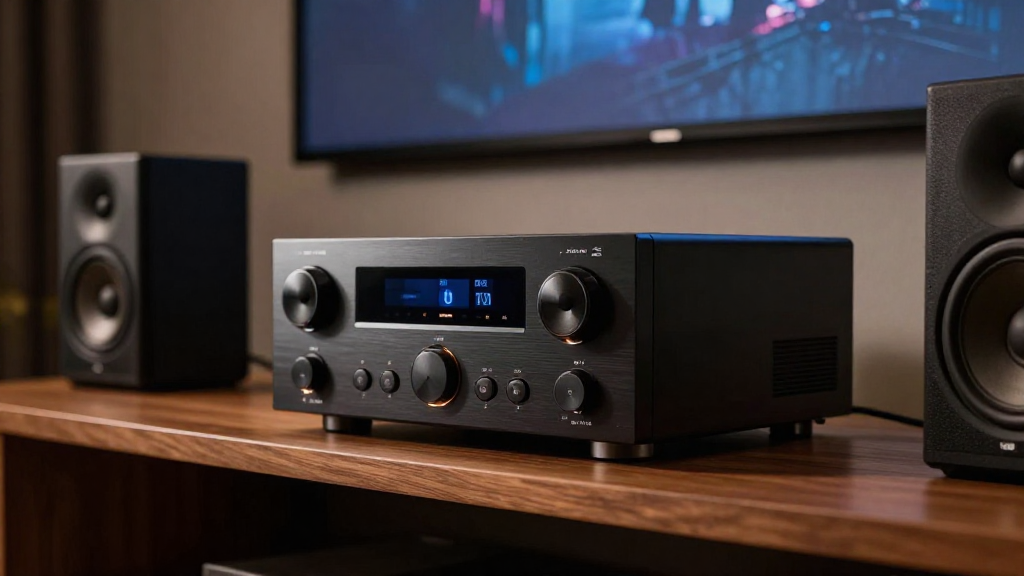
This article explores how home theater receivers work, detailing their functions, components, and how they integrate into your entertainment system.
What Is a Home Theater Receiver?
A home theater receiver is a critical component in any audio-visual setup. It acts as the hub for various devices, managing audio and video signals from multiple sources. Understanding how home theater receivers work can help you optimize your home entertainment experience.
Key Functions
- Audio Processing: Receivers decode audio formats such as Dolby Atmos and DTS:X for immersive sound.
- Video Switching: They manage multiple video inputs, allowing seamless switching between devices.
- Amplification: Home theater receivers amplify audio signals, driving speakers to deliver rich sound.
Types of Home Theater Receivers
There are several types of home theater receivers, including:
- Stereo Receivers: Designed for basic audio systems.
- AV Receivers: Support multiple audio and video formats, ideal for home theaters.
- Integrated Amplifiers: Combine a preamp and a power amp in one unit.
How Do Home Theater Receivers Process Audio?
Audio processing is one of the primary functions of home theater receivers. This involves decoding various audio formats to provide the best sound quality for your setup. Here’s how they do it:
Decoding Formats
Receivers can decode various surround sound formats:
- PCM: Pulse Code Modulation, used in CDs and digital music.
- DTS: Digital Theater Systems, common in films.
- Dolby: Includes Dolby TrueHD and Dolby Digital, offering high-quality audio.
Signal Processing
Signal processing is essential for enhancing audio quality. This includes:
- Equalization: Adjusting frequencies to improve sound clarity.
- Room Calibration: Using microphones to optimize sound based on room acoustics.
- Dynamic Range Control: Ensuring sound levels remain balanced during playback.
How Do Home Theater Receivers Connect Devices?
The connectivity of a home theater receiver is vital for integrating all your devices. This includes everything from gaming consoles to streaming devices. Here’s how they manage connections:
Input Ports
Home theater receivers come equipped with various input ports, such as:
- HDMI: For high-definition audio and video.
- Optical and Coaxial: Digital connections for audio.
- RCA: Analog connections for older devices.
Output Connections
Connecting to speakers and displays is just as important. Receivers typically feature:
- Speaker Outputs: For connecting multiple speakers for surround sound.
- Subwoofer Outputs: For connecting a dedicated subwoofer.
- Video Outputs: Ensuring video signals are directed to the correct display.
What Are the Benefits of Using a Home Theater Receiver?
Utilizing a home theater receiver provides many advantages for your audio-visual setup. Understanding these benefits can help you appreciate their importance:
Enhanced Sound Quality
One of the most significant benefits is improved sound quality:
- Surround Sound: Experience a cinematic feel with multi-channel audio.
- High-Fidelity Audio: Receivers can reproduce audio with high accuracy.
- Advanced Audio Formats: Support for the latest audio technologies.
Centralized Control
Home theater receivers allow centralized control of your devices:
- Single Remote Control: Manage all devices with one remote.
- Unified Interface: Access settings and configurations easily.
- Multi-Zone Capability: Play different audio in different rooms.
How to Choose the Right Home Theater Receiver?
Selecting the right home theater receiver is crucial for optimizing your setup. Here are some factors to consider:
Power Ratings
Check the power ratings of a receiver, as they determine how loud the audio can get. Consider:
- Wattage: Higher wattage means better sound levels.
- Impedance Matching: Ensure compatibility with your speakers.
- Dynamic Power: Look for receivers that can handle peaks in audio.
Connectivity Options
Make sure the receiver has all the necessary connections for your setup:
- HDMI Ports: Ensure enough HDMI inputs for your devices.
- Legacy Connections: Consider RCA or optical for older devices.
- Wireless Capabilities: Look for Bluetooth or Wi-Fi for streaming.
Conclusion
Understanding how home theater receivers work can significantly enhance your home entertainment experience. By knowing their functions, processing capabilities, and the benefits they offer, you can make informed decisions. Whether you’re upgrading your existing setup or starting fresh, a quality home theater receiver is essential for achieving the best audio-visual performance.