
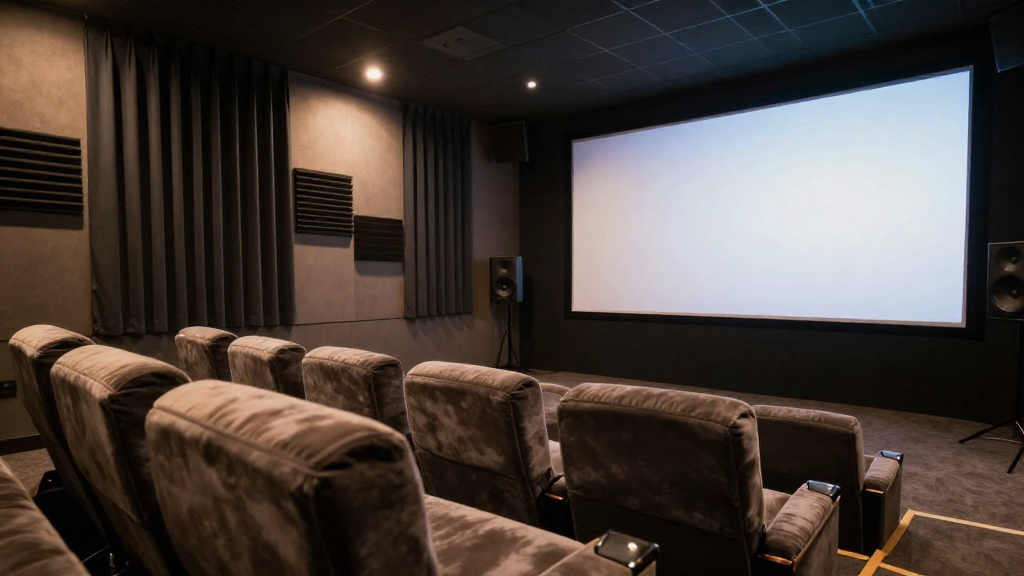
In this article, we will explore the home theater soundproofing basics and how they contribute to an immersive audio experience.
What is Home Theater Soundproofing?
Home theater soundproofing refers to the methods and materials used to minimize sound transmission between rooms and reduce noise from external sources. This process ensures that you can enjoy your movies, music, and games without disturbing others and vice versa.
Why is Soundproofing Important?
Soundproofing is essential for several reasons:
- Enhances Audio Quality: Proper soundproofing prevents sound from leaking in and out, allowing for a clearer and more immersive audio experience.
- Reduces Noise Pollution: It helps to block out external noises like traffic or neighbors, providing a tranquil environment.
- Improves Privacy: Soundproofing ensures that conversations or activities within the home theater remain private.
Common Soundproofing Materials
Several materials are commonly used in home theater soundproofing:
- Acoustic Panels: These help absorb sound and reduce echoes within the room.
- Mass Loaded Vinyl: This dense material adds mass to walls and helps block sound transmission.
- Soundproof Drywall: Specialized drywall designed to reduce sound transfer between spaces.
How Does Soundproofing Work?
The effectiveness of soundproofing relies on two main principles: mass and absorption. By understanding these two concepts, you can implement soundproofing strategies effectively.
Mass and Density
Increasing the mass and density of a wall or barrier can significantly reduce sound transmission. This is because heavier materials are less likely to vibrate and transmit sound waves.
Sound Absorption
Sound absorption materials, like acoustic panels, work by converting sound energy into heat. This helps in reducing echoes and creating a more pleasant auditory environment.
Decoupling Structures
Decoupling involves separating two surfaces to prevent sound waves from traveling through them. Techniques like resilient channels or double wall construction are effective methods for this purpose.
What Are the Best Practices for Home Theater Soundproofing?
Implementing soundproofing in your home theater can be a straightforward process if you follow some best practices.
Identify Weak Points
Start by identifying weak points in your current setup, such as windows, doors, and walls. These areas often allow sound to leak in or out, making them prime candidates for soundproofing.
Use Multiple Layers
Applying multiple layers of soundproofing materials can enhance effectiveness. For instance, combining soundproof drywall with acoustic panels provides superior sound isolation.
Seal Gaps and Cracks
Ensure that all gaps and cracks in walls, doors, and windows are sealed using caulk or weatherstripping. This simple step can make a significant difference in overall soundproofing.
How Much Does Home Theater Soundproofing Cost?
The cost of soundproofing a home theater can vary widely based on materials and methods used. Understanding these factors can help you budget effectively.
Material Costs
Different materials have different price points:
- Acoustic Panels: Typically range from $30 to $100 each depending on size and quality.
- Mass Loaded Vinyl: Can cost between $1 to $3 per square foot.
- Soundproof Drywall: Usually costs around $40 to $60 for a 4′ x 8′ sheet.
Labor Costs
If you hire professionals, labor costs can add significantly to the overall expense. Rates often range from $50 to $100 per hour, depending on the complexity of the project.
DIY vs. Professional Installation
Deciding whether to tackle soundproofing as a DIY project or hire a professional will impact your budget:
- DIY: Offers cost savings but requires time and effort.
- Professional: Ensures quality but comes at a higher cost.
What Are the Challenges of Home Theater Soundproofing?
While soundproofing is beneficial, it does come with its own set of challenges that homeowners should consider.
Space Constraints
In smaller rooms, adding soundproofing materials can reduce space and make the room feel cramped. It’s crucial to choose materials that provide maximum effectiveness with minimal intrusion.
Cost Issues
As previously mentioned, the cost can escalate quickly, especially if you opt for high-end materials or professional installation. Budgeting properly is essential to avoid overspending.
Effectiveness vs. Aesthetics
Some soundproofing solutions can compromise the aesthetics of your home theater. Finding a balance between soundproofing effectiveness and maintaining visual appeal is vital.
Conclusion: Mastering Home Theater Soundproofing Basics
Understanding the home theater soundproofing basics is key to creating an immersive audio experience. By implementing effective strategies, you can enhance your home theater’s sound quality while minimizing disturbances. Remember to assess your space, choose suitable materials, and consider professional help if needed. With the right approach, your home theater can become an oasis of sound, delivering the perfect movie and gaming experience.